What are some interesting facts about gypsy moths?
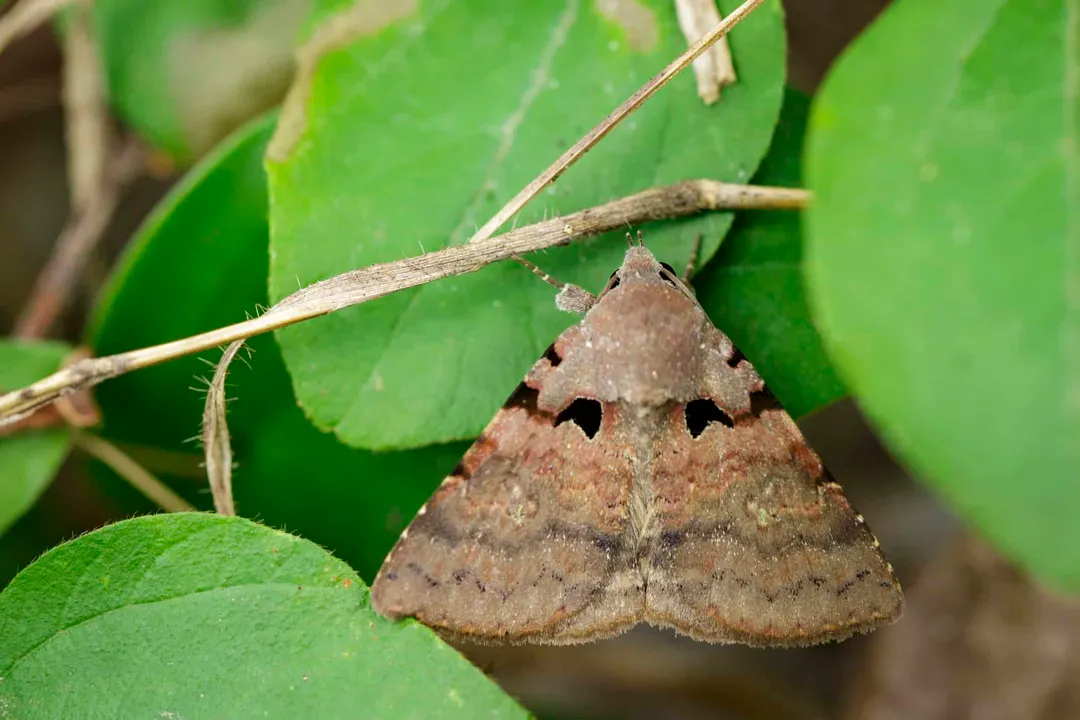
The insect often called the gypsy moth is an organism with a complex history, deeply intertwined with forest ecology across continents. It is a species known for its destructive appetite, capable of causing significant ecological and economic disruption wherever it establishes a strong foothold. While many people recognize the fuzzy caterpillars from summer defoliation events, the creature goes through a complete metamorphosis, presenting very different challenges at each stage of its life cycle. Perhaps one of the most immediate points of interest today is its official name change; to promote clarity and respect cultural sensitivity, the common name has been formally shifted to spongy moth (Lymantria dispar dispar) in North America, although the older moniker still persists in common conversation.
# Nomenclature Shift
The decision to rename the species reflects a broader movement toward inclusive and precise language in scientific and public spheres. For decades, the term "gypsy moth" was standard, but it is now being phased out in favor of "spongy moth". This change helps to avoid confusion and aligns with modern naming conventions. Interestingly, the scientific name itself, Lymantria dispar, remains consistent, but the North American population is specifically categorized as Lymantria dispar dispar. The name "spongy moth" is derived from the appearance of the egg masses—pale, covered in a spongy-looking layer of hair—which is a distinct characteristic observed across its life cycle.
# Life Cycle Stages
The spongy moth completes its life cycle over roughly one year, passing through four distinct stages: egg, larva (caterpillar), pupa, and adult moth. Understanding this cycle is key to understanding its impact, as the devastating feeding occurs only during the larval stage.
# The Egg Stage
The cycle begins with the egg masses, usually laid in late summer or early fall. A single female moth can deposit between 500 and 1,000 eggs in one mass. These masses are often deposited on protected surfaces, such as the undersides of branches, tree trunks, stone walls, firewood stacks, and even outdoor furniture or recreational vehicles. The female covers the eggs with hairs shed from her abdomen, giving the mass its characteristic pale, felt-like, or "spongy" appearance. These masses overwinter, and the tiny caterpillars emerge the following spring when temperatures are right.
# Larval Feeding Frenzy
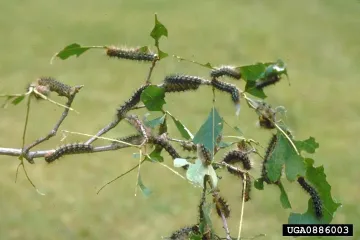
The larval stage is the time of primary concern for forest managers and homeowners. Once the caterpillars hatch, they begin to feed voraciously. They are identifiable by their hairy bodies, typically displaying rows of red and blue dots along their backs—six pairs of red spots followed by twelve pairs of blue spots. The caterpillars do not specialize strictly; they are generalist feeders, but they have a strong preference for oak trees, making oaks particularly vulnerable to severe defoliation. However, they are known to feed on the leaves of hundreds of different tree and shrub species. Their appetite is immense; a large infestation means that millions of tiny mouths can strip entire stands of their leaves relatively quickly.
# Pupation and Adult Forms
After several weeks of intense feeding, the caterpillar stops eating and enters the pupal stage, often hanging from a twig or leaf. From the pupa emerges the adult moth. Here, the sexes are quite different in appearance and behavior.
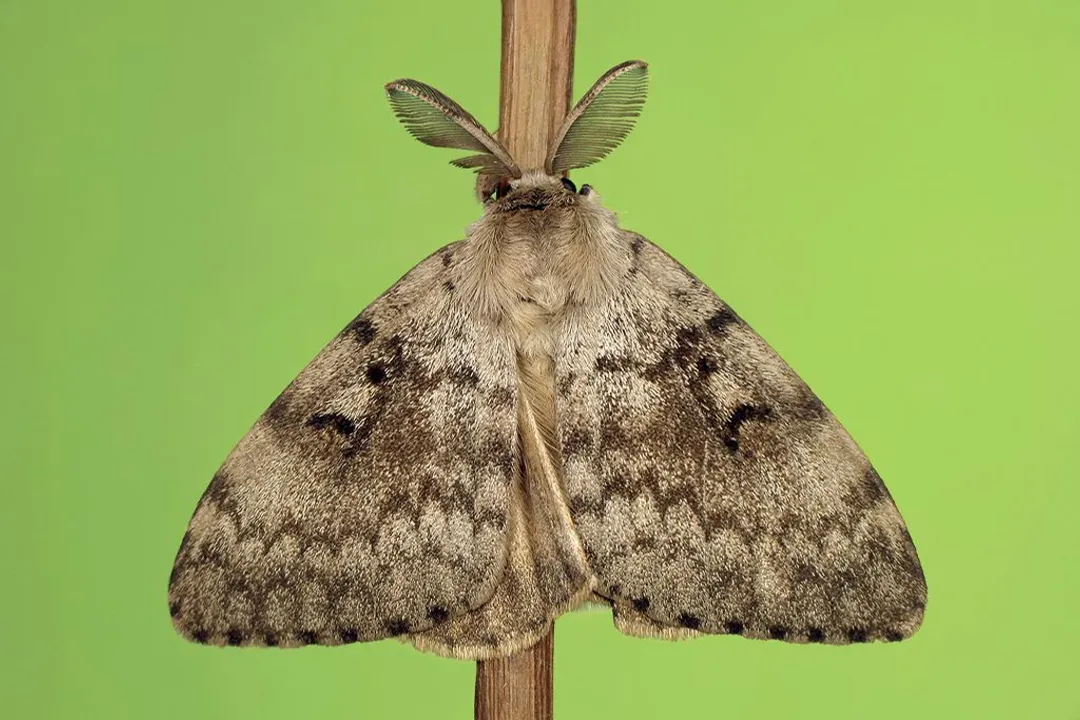
- Male Moths: Are smaller, about an inch long, and are dark brown or yellowish with wavy dark lines on their wings. Critically, the males are strong fliers, capable of traveling significant distances in search of females.
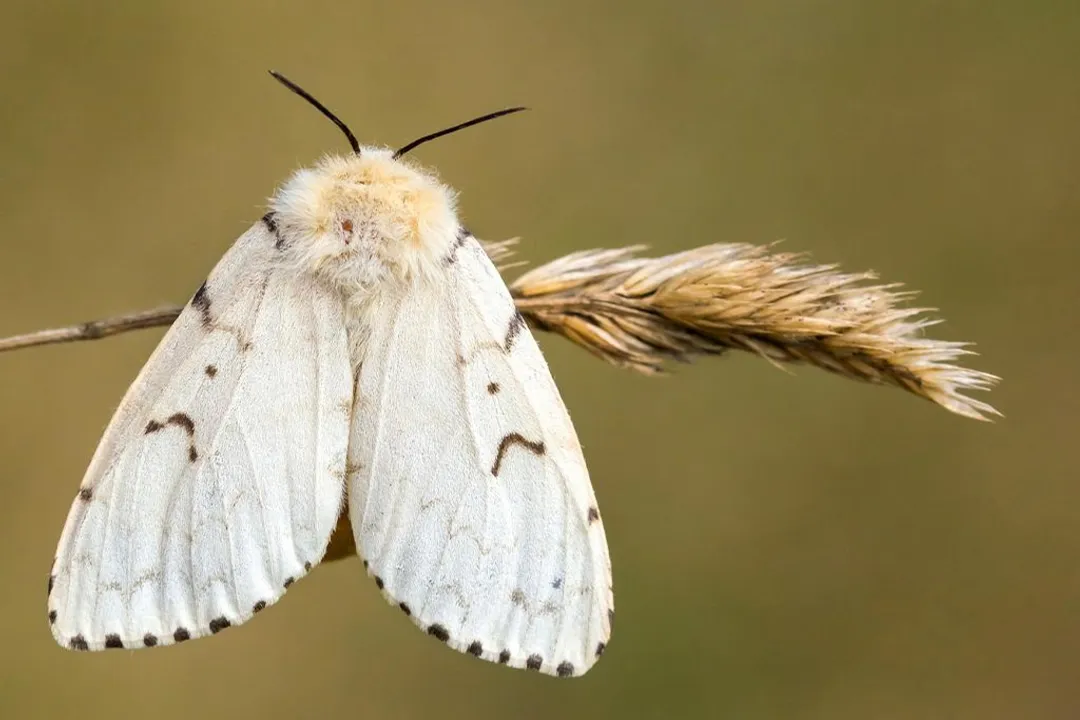
- Female Moths: Are larger, typically whitish or pale cream-colored. A key distinction is that the female's wings are often too small for sustained flight; they usually crawl only short distances from their pupal case to mate.
The adult moths do not feed; their sole purpose is reproduction, living only for a short time before the cycle starts again with egg-laying.
# Origin and Introduction

The spongy moth is not native to North America; it originates from Europe, Asia, and Northern Africa. Its arrival on the continent is traced back to a well-documented, accidental introduction in the United States. In 1869, they were introduced near Medford, Massachusetts, initially intended for silk production, an endeavor that thankfully failed, though the moths themselves succeeded far too well as an invasive pest. From that initial point, they have spread aggressively across the Northeast and continue to advance westward.
# The Mechanism of Spread

The geographical expansion of this pest is fascinating, as it relies on both natural mechanisms and human assistance. The primary natural dispersal method involves the young caterpillars, known as "ballooning". Newly hatched larvae release silk threads from their bodies, allowing the wind to carry them, sometimes for miles, to new host trees or locations. This aerial transport is highly effective for spreading the insect across large, continuous forest tracts.
However, human activity provides a major shortcut for long-distance jumps. The movement of outdoor household goods, furniture, recreational vehicles, and, most significantly, firewood, can transport egg masses far outside the established quarantine zones. A single, apparently innocuous egg mass stuck to the bottom of a grill or in the wheel well of a camper can introduce the species to a completely new area, making compliance with firewood movement regulations a small but vital piece of local forest protection.
# Severe Forest Impact
The damage caused by the spongy moth is directly linked to the sheer number of caterpillars present during their feeding phase. When defoliation reaches severe levels—meaning 70 percent or more of the canopy leaves are gone—it puts immense stress on the host trees. While a healthy, mature tree can often survive a single year of complete defoliation by producing a second flush of leaves, repeated stress is often fatal. Trees that are already weakened by drought, disease, or age are much more susceptible to dying after just one or two major defoliation events.
Oak species, including red and white oaks, are highly preferred hosts, meaning they bear the brunt of the feeding pressure. When oaks decline, the entire structure and composition of the forest can change, impacting countless other species that rely on those trees for habitat and food. This shift in forest character is a significant ecological consequence of uncontrolled outbreaks.
When considering the cumulative effects, it's worth noting that while native pests can also cause defoliation, the consistent, heavy pressure from the spongy moth, especially as it pushes into new, unadapted forest ecosystems, presents a different challenge. In native ecosystems, there are often natural checks and balances, or the native trees have evolved better recovery mechanisms against local threats. The introduction of L. dispar dispar in areas like the northeastern U.S., where its natural European predators and diseases are absent, means the population cycle can accelerate and sustain higher densities for longer periods, fundamentally altering the tree community structure over a span of years rather than just one season.
# Identifying Infestation Signs
Monitoring for the spongy moth is crucial for early intervention, which is far more effective than attempting mass control during a severe outbreak. While checking tree canopies during the summer for stripped branches is obvious, homeowners should focus on finding those resilient egg masses during the non-feeding months.
A practical check-list for property owners during late fall, winter, or early spring involves inspecting anything that offers shelter:
- Examine the rough bark of trees, especially oaks, looking for tan or buff-colored masses the size of a thumbnail or larger.
- Inspect the underside of deck railings, picnic tables, and outdoor wooden furniture.
- Thoroughly check firewood piles, ensuring wood is properly covered or stored off the ground, as masses love the gaps between stacked logs.
- Look closely at the crevices, tires, and hitches of campers, boats, or utility trailers stored outside, as these often harbor egg masses unknowingly transported from infested regions.
If an egg mass is found, scraping it into a container of soapy water and letting it soak for 48 hours is an effective way to destroy the potential next generation before they hatch.
# Adult Differences and Flight Capability
One fascinating divergence in the moth's lifecycle is the physical difference between the sexes in the adult stage. The male moth is equipped for flight, which serves the purpose of locating a female to mate with. They are generally smaller and darker. The female, being significantly larger, has vestigial wings that are barely functional for sustained flight, meaning she generally crawls away only a short distance from her pupal case after emerging. This physical limitation means that while males can disperse the genes widely in search of mates, the establishment of a new, isolated colony usually requires human assistance or the initial ballooning dispersal of the preceding larval stage. This contrasts sharply with moth species where both sexes are strong fliers, allowing for much faster, uniform spread across a contiguous area.
# Control Efforts
Because the spongy moth can reach such high population densities, management strategies are often necessary to protect valuable trees and limit widespread defoliation. These efforts can range from large-scale aerial spraying programs aimed at killing young caterpillars to targeted treatments for individual, high-value landscape trees. For instance, applying burlap wraps around tree trunks allows caterpillars to congregate underneath during the day, making it easier to collect and destroy large numbers of larvae. The selection of the appropriate control method often depends on the scale of the infestation, the type of trees threatened, and the ecological sensitivity of the area. Successful long-term management often involves encouraging the natural predators and diseases that help keep the population in check in its native range, though this is a slow process.
Related Questions
#Citations
Spongy Moths
Gypsy Moth Insect Facts - Lymantria dispar
gypsy moth fact sheet
Spongy Moth
Gypsy Moth
Gypsy Moth FAQ (Facts & Stats)
Spongy Moth - Cornell Cooperative Extension Dutchess County
Invasive Species — Gypsy Moth (Lymantria dispar) Biological ...
Forest Health Factsheet Gypsy Moth