How do the forewings of the Lesser Wax Moth (*Achroia grisella*) compare to *Galleria mellonella*?
Answer
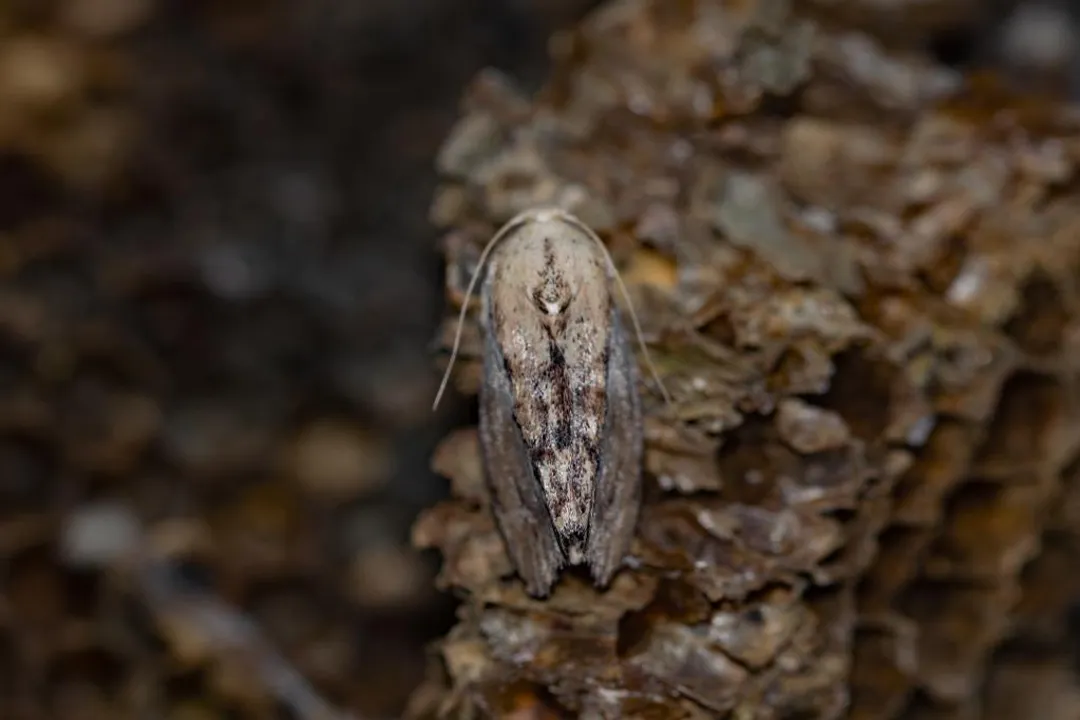
Forewings have smoother, straighter edges
A critical aspect of distinguishing between the two primary wax moth species involves close examination of the adult moths' wings. The Lesser Wax Moth, scientifically named *Achroia grisella*, possesses forewings that are characterized by having smoother, straighter edges, contributing to a duller overall appearance compared to its counterpart. This contrasts markedly with the Greater Wax Moth (*Galleria mellonella*), whose forewings are distinctly marked with scalloped or wavy margins and a darker, more mottled coloration. These subtle wing characteristics often aid beekeepers or researchers in differentiating the less destructive Lesser species from the more damaging Greater species.
Related Questions
Which stage of the wax moth causes substantial damage to hive materials?What distinguishes the Greater Wax Moth (*Galleria mellonella*) wingspan?What cold temperature kills all wax moth stages in stored comb?What resources, besides beeswax, do wax moth larvae consume?How do strong, healthy honeybee colonies primarily defend against wax moths?What minimum temperature is required for effective heat treatment of infested combs?Outside of apiculture, what role does *Galleria mellonella* larva serve in laboratories?How do the forewings of the Lesser Wax Moth (*Achroia grisella*) compare to *Galleria mellonella*?What granular substance found in the comb indicates active feeding by wax moth larvae?What is a primary outcome when wax moth larvae infest a weak honeybee colony?Besides visual inspection, what physical property might warn of severe wax moth damage in stored supers?