What life history feature imposes a significant evolutionary constraint on woolly monkey population recovery?
Answer
Long interbirth intervals coupled with high infant dependency.
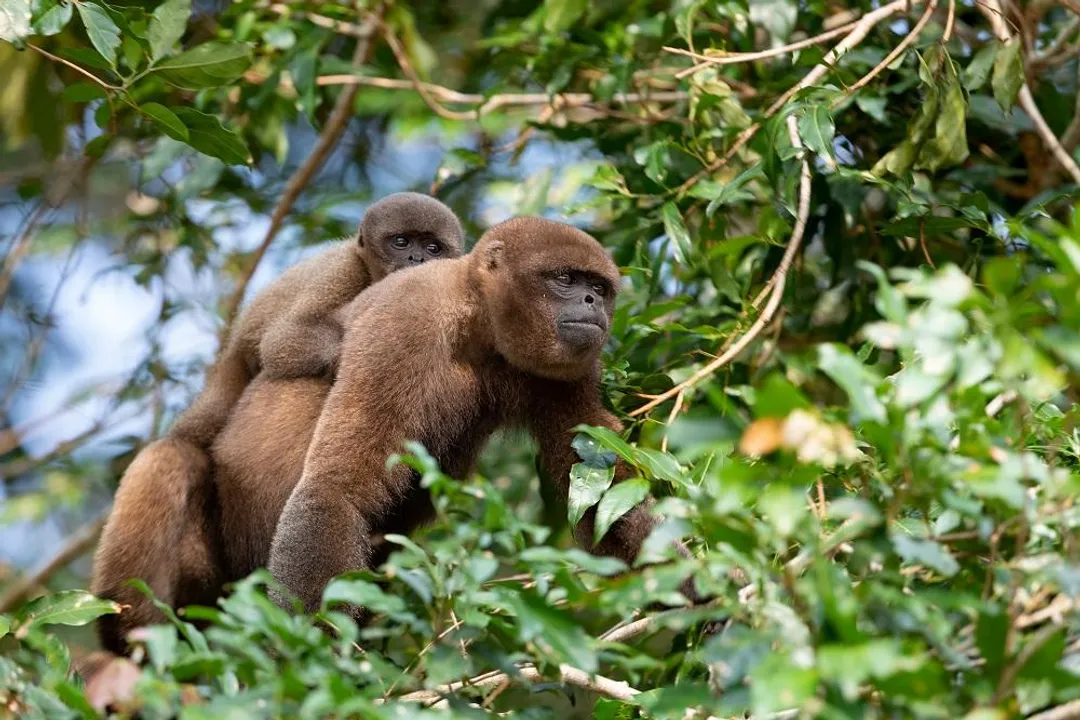
Woolly monkeys exhibit slow life history patterns typical of larger, specialized primates. This pattern is characterized by long interbirth intervals, meaning that mothers require an extended period to nurse and care for a single infant before becoming reproductively available again. Coupled with a relatively late age of sexual maturity, this slow reproductive pace severely limits the ability of populations to rebound quickly from external pressures such as habitat loss or intense hunting pressure. This investment strategy is successful in stable environments but proves to be a major liability when faced with the rapid pace of modern environmental change.
Related Questions
What dispersal mechanism is hypothesized for the haplorhine ancestor reaching South America?What defining function does the powerful prehensile tail of the woolly monkey enable during feeding?Which specific family includes *Lagothrix* alongside spider monkeys and howler monkeys?What environmental factor likely drove the evolutionary advantage of the woolly monkey's thick, dense fur?What characteristic of *Lagothrix* locomotion contrasts with the more agile spider monkey (*Ateles*)?What life history feature imposes a significant evolutionary constraint on woolly monkey population recovery?What specific anatomical structure on the prehensile tail enhances its gripping sensitivity?What speciation mechanism is evidenced by the varied geographic ranges of *Lagothrix* species?Which recognized species of woolly monkey is specifically noted in the taxonomy summary as Critically Endangered?What future evolutionary selection pressure might arise if *Lagothrix* is forced into small, fragmented reserves?