Woolly Monkey Scientific Classification
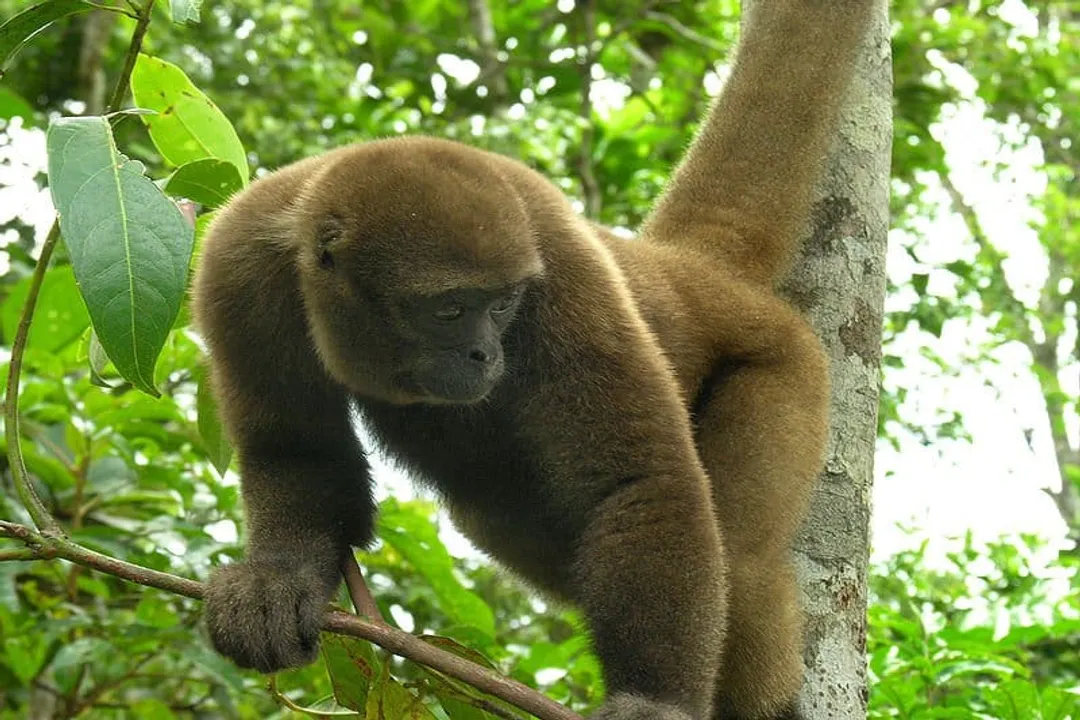
The designation of the woolly monkey within the grand catalog of life begins by placing it squarely within the most familiar of biological kingdoms, Animalia. [9] This initial placement signals a multicellular, heterotrophic organism—one that must consume other life forms for energy. Moving through the Linnaean hierarchy, the animal’s characteristics quickly narrow its focus toward the arboreal, social realm of mammals. It belongs to the class Mammalia, [4][6][9] characterized by features like nursing their young with milk and possessing hair or fur, a trait immediately evident in the animal's namesake soft coat. [1][9]
# Primate Order
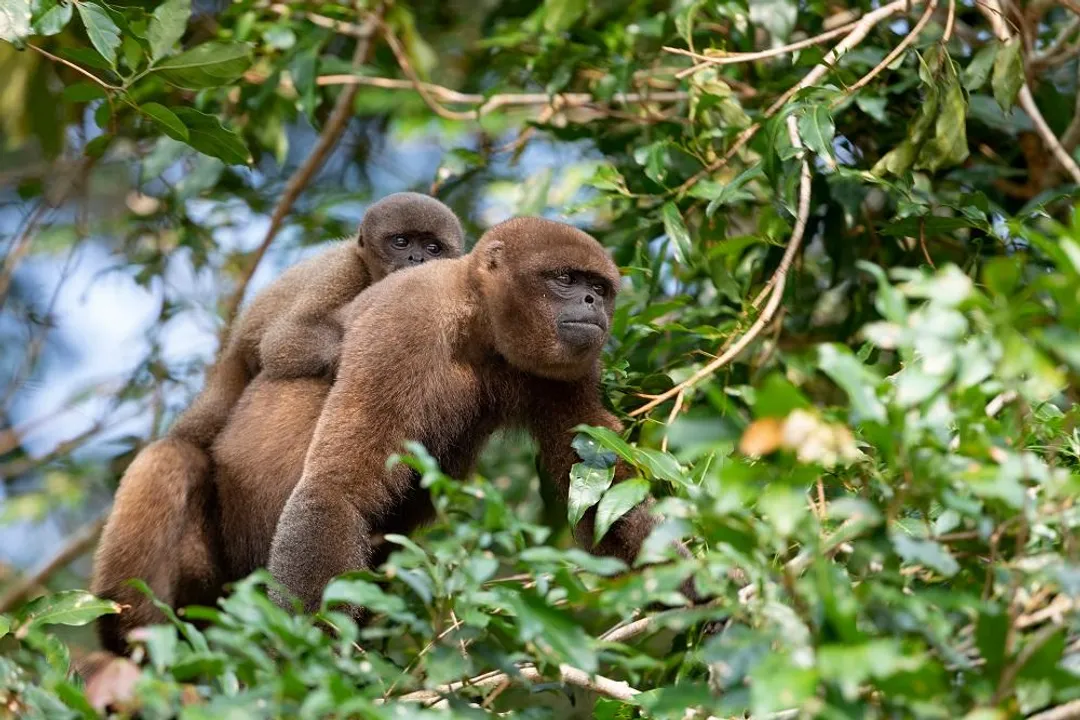
The next crucial step in classification elevates the woolly monkey to the order Primates. [4][6][9] This grouping is significant, associating them with all monkeys, apes, and prosimians. Membership in Primates implies a shared evolutionary history marked by adaptations for an arboreal existence, such as relatively large brains, forward-facing eyes providing stereoscopic vision, and grasping hands and feet. [9] Within this vast order, woolly monkeys are categorized as New World monkeys, meaning they originate from Central and South America, a distinction often made clear by their nasal structure—their nostrils are spaced widely apart and point sideways. [1] This broader grouping establishes the baseline for understanding their complex social structures and dietary needs, which are typical of many South American primates. [1]
# Family Atelidae
Zooming in further, the woolly monkey finds its home in the family Atelidae. [1][4][9] This family is particularly interesting because it groups together some of the most specialized and large-bodied primates of the Americas. Atelidae includes the spider monkeys, howler monkeys, and, of course, the woolly monkeys. [1][9] Sharing this family designation points toward a common ancestry that equipped these primates with similar, highly developed physical tools for navigating the forest canopy. A key shared feature within Atelidae is the presence of a fully prehensile tail, which functions as a fifth limb. [1][9] While all three sub-groups possess this adaptability, the woolly monkey's tail is particularly strong and essential for their locomotion and feeding, often being used for suspension while they reach for food. [9] The evolutionary path that led to this family seems heavily influenced by the demands of life high above the forest floor, resulting in these highly agile, yet sometimes bulky, canopy dwellers. [1]
Considering the close relationship within Atelidae—placing them alongside the loud howlers and the slender spider monkeys—it suggests that selective pressures favored large body size and exceptional grasping abilities in this lineage of South American primates. [1][9] While spider monkeys are known for their extreme slenderness and howlers for their vocalizations, the woolly monkeys represent a slightly different architectural solution to canopy life, relying on dense fur and powerful limbs in addition to their prehensile tail. This shared familial blueprint suggests an ancient divergence where specialized feeding strategies—like the frugivorous focus of woolly monkeys [1]—began to shape the morphology of each subgroup differently, yet all retained the core Atelid adaptations for arboreal mastery.
# Genus Lagothrix
The genus that captures the woolly monkeys is Lagothrix. [1][5][9] This term, derived from Greek roots meaning "hare tail," speaks directly to a prominent physical feature, though perhaps the description of their fur is more defining to the layperson. The term Lagothrix formally groups species characterized by their thick, soft, woolly fur and their robust build. [1][9] This dense coat, far from being mere decoration, is crucial for thermoregulation in the often-damp, cool, high-altitude sections of their Andean cloud forest habitats, distinguishing them ecologically even within the broader New World monkey category. [1]
Within the genus Lagothrix, scientific classification currently recognizes at least two major species groups, though ongoing taxonomic work sometimes shifts their status. The most commonly referenced are the Common Woolly Monkey and the Yellow-tailed Woolly Monkey. [1][2] The existence of this genus highlights a lineage committed to a particular lifestyle—a larger, more powerfully built primate compared to, say, some of the smaller capuchins or squirrel monkeys found elsewhere in the order Primates. Their classification under Lagothrix mandates a suite of shared behaviors and physiological traits that differ from their Atelid relatives, the spider monkeys or howlers, even if the tail prehensility is shared. [9]
# Species Variation
The classification framework becomes more granular and, occasionally, more contentious at the species level, reflecting subtle but significant genetic and geographic differences among populations. [2][5]
# Common Woolly Monkey
The Common Woolly Monkey carries the specific scientific name Lagothrix lagotricha. [1][5][9] This species is widely recognized and has been the subject of extensive ecological study. [1] Its distribution historically covered significant portions of the Amazon basin tributaries in countries like Colombia, Ecuador, Peru, and Brazil. [1] The classification of L. lagotricha is vital for conservation, as this particular species is currently listed as Critically Endangered. [1] The urgency associated with this classification means that management and protection plans are often tailored specifically to the ecological requirements of this widely distributed, yet highly threatened, species. [1]
# Yellow-tailed Monkey
A distinct member of the group is the Yellow-tailed Woolly Monkey, which presents a fascinating example of taxonomic flux. While sometimes referenced in older literature or even by some modern sources under Lagothrix flavicauda, [5] it has also been recognized separately, sometimes under the genus Oreonax, as Oreonax flavicauda. [2] The distinction often rests on morphological differences, particularly the coloration—the prominent yellow or orange tail hairs that give the species its common name, which are absent or different in L. lagotricha. [2] This divergence highlights how geographically isolated populations within the broader Lagothrix lineage can evolve distinct, defining characteristics significant enough to warrant species separation. For conservationists, recognizing Oreonax flavicauda as a unique entity is paramount, as its population is even more restricted and imperiled, often cited as being endemic to a small area of the Peruvian Andes. [2]
The difference in classification, whether Lagothrix flavicauda or Oreonax flavicauda, often boils down to the weighting assigned to genetic divergence versus shared ancestral traits. If the separation is deep enough to warrant a shift in genus from Lagothrix to Oreonax, it suggests a deeper evolutionary split than simply a species-level distinction within Lagothrix. [2][5]
To visualize the relationship across the documented species within this classification context:
| Taxonomic Rank | Common Woolly Monkey (L. lagotricha) | Yellow-tailed Woolly Monkey (O. flavicauda) |
|---|---|---|
| Kingdom | Animalia | Animalia |
| Class | Mammalia | Mammalia |
| Order | Primates | Primates |
| Family | Atelidae | Atelidae |
| Genus | Lagothrix | Lagothrix or Oreonax |
| Conservation Status (General) | Critically Endangered [1] | Highly Threatened [2] |
# Physiological Markers
The scientific classification is not solely based on external appearance or geographic origin; it is deeply rooted in physiology and genetics. One fascinating aspect noted in the comparative studies of primate placentation reveals shared mammalian traits within the order Primates that extend to the woolly monkey. [4] Woolly monkeys, like many other primates, possess a zonary, labyrinthine placenta. [4] This type of placental structure is specialized, offering a large surface area for nutrient and waste exchange between the mother and fetus, which supports the development of relatively large-brained, long-gestation infants typical of higher primates. [4] This specific physiological classification marker provides concrete evidence linking them closely with other monkeys and apes, solidifying their placement in the higher echelons of the Primate order, separate from more distantly related mammals. [4]
Furthermore, the very essence of being a Lagothrix monkey dictates certain ecological roles. Their classification as primarily frugivorous, [1] meaning their diet relies heavily on fruits, places a specific demand on the ecosystems they inhabit. A group of primates heavily reliant on ripe fruit biomass exerts a unique selective pressure on the forest structure itself, as they act as important seed dispersers across their range. [1] An interesting observation from this dietary specialization is that a troop of woolly monkeys, being quite large and consuming large quantities of fruit, may transport seeds over much greater distances than smaller, less mobile frugivores, potentially shaping the long-term genetic connectivity of plant populations across the fractured Amazonian landscape. This ecological function, implied by their classification and diet, makes their conservation status all the more critical to the health of their home range. [1]
# Taxonomic Stability
Maintaining accurate classification is an ongoing scientific endeavor, especially in rapidly changing environments. The fluid status between Lagothrix and Oreonax for the Yellow-tailed Woolly Monkey exemplifies the dynamic nature of taxonomy. [2][5] Modern science relies heavily on molecular data to confirm evolutionary relationships, sometimes overturning older classifications based purely on morphology—like tail color or skull shape. When a species like L. lagotricha is listed as Critically Endangered, [1] the precision of its classification is not just an academic exercise; it directly informs international trade restrictions, funding allocation for field research, and the definition of protected areas. If a newly recognized subspecies within L. lagotricha is found to have a drastically smaller range, its unique taxonomic designation could trigger immediate, specialized protective measures that the broader species designation might overlook. [1]
The inclusion of the Lagothrix genus under the family Atelidae, confirmed across multiple authoritative taxonomic databases, [1][5] provides a stable anchor point in the classification system. While the boundaries between Lagothrix and Oreonax may shift as new genetic evidence emerges, their shared lineage within the Atelidae family remains undisputed, linking them inextricably to the New World's large, arboreal specialists. [9] This hierarchical structure allows scientists to make informed predictions about behavior, physiology, and evolutionary history based on what is known about their closest relatives, such as the spider monkeys and howler monkeys, even when data on a specific species, like the critically endangered Yellow-tail, is scarce. [2]
Related Questions
#Citations
Common Woolly Monkey, Lagothrix lagothricha
Yellow-tailed woolly monkey
Common woolly monkey - Wikipedia
Woolly Monkey - Center for Perinatal Discovery
Lagothrix lagothricha • Common Woolly Monkey
Woolly Monkeys - Explore the Taxonomic Tree | FWS.gov
Woolly Monkey - Lagothrix Lagotricha - A-Z Animals
taxonomy:9518 - NCBI - NIH
Lagothrix lagotricha (Humboldt's woolly monkey) | INFORMATION