What is the status of the De Brazza monkey?
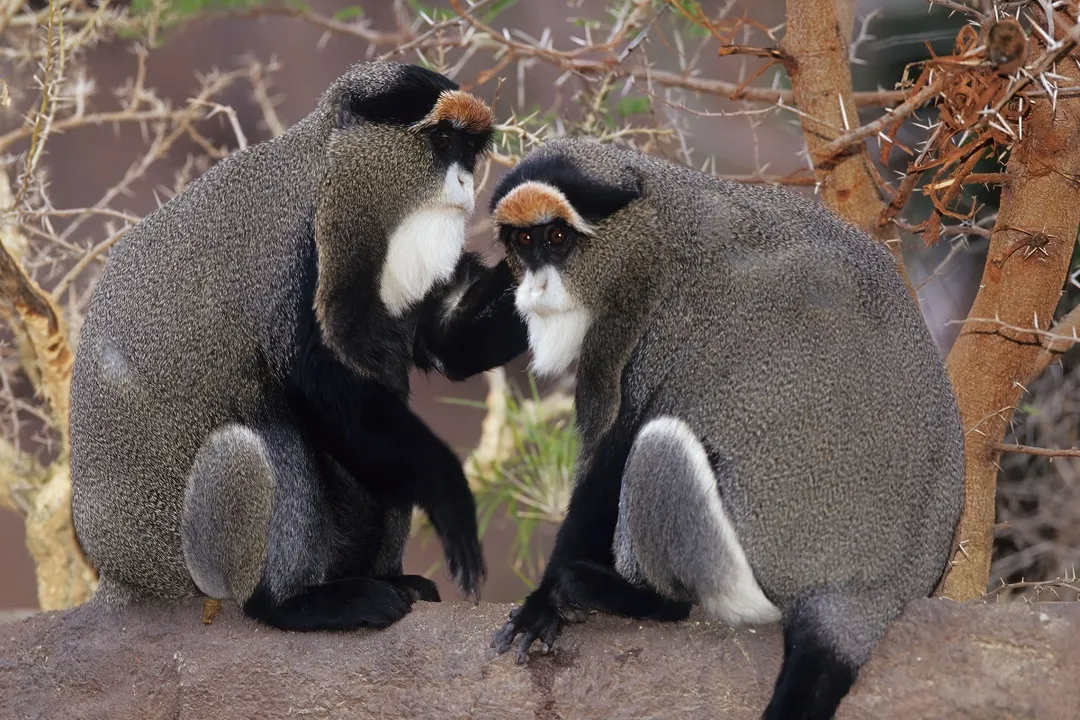
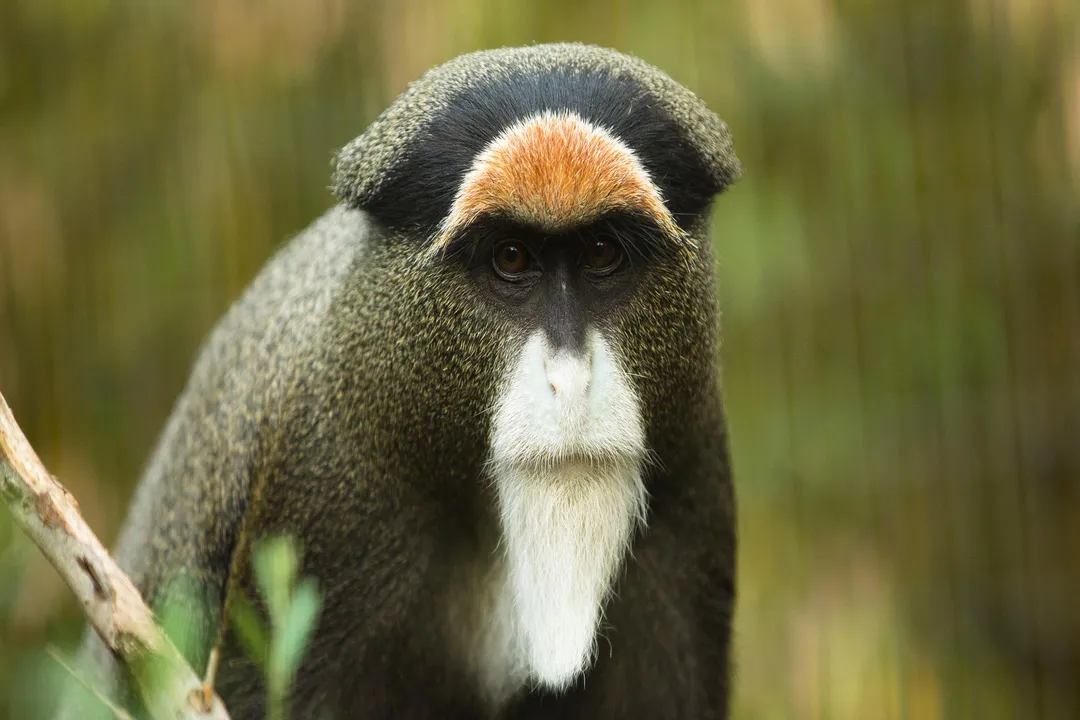
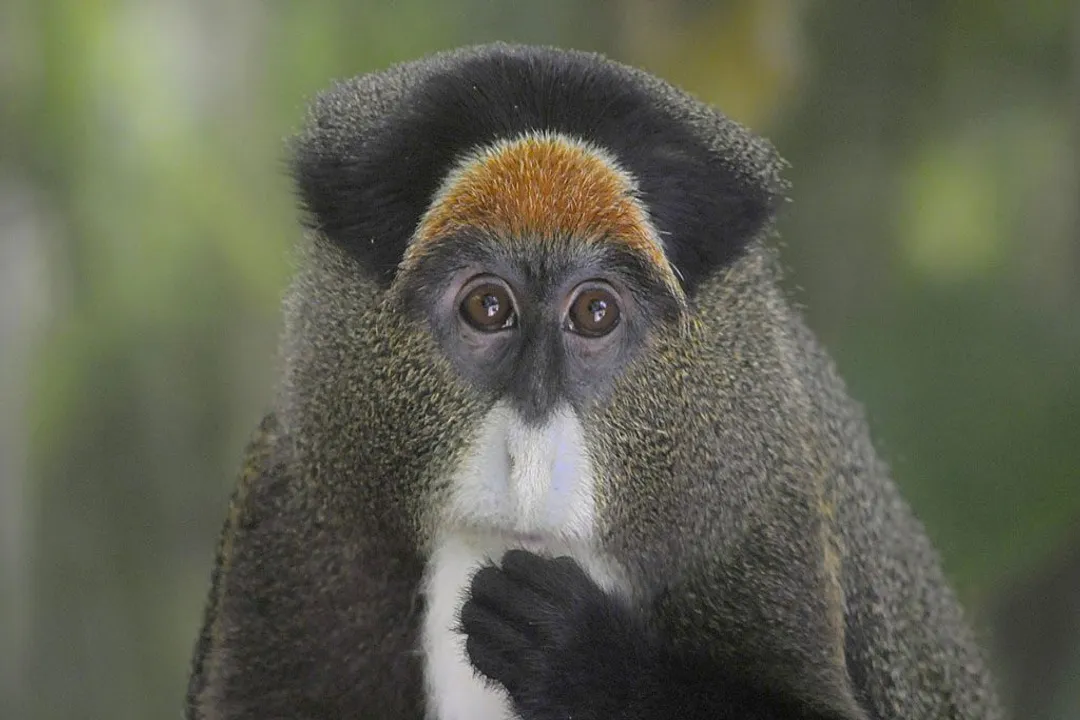
The De Brazza’s monkey, Cercopithecus neglectus, is perhaps one of Africa’s most distinct primates, instantly recognizable by its unique facial adornments that give it an almost philosophical air. Named in honor of the Italian-French naturalist Pierre Savorgnan de Brazza, this species earned its scientific designation, neglectus, due to its remarkable ability to remain hidden or overlooked in its dense forest home. With a gray-brown body set against striking white features—a long white beard, a white muzzle, and a bright reddish-orange crown—it presents a captivating sight, provided one has the patience to find it. While their shy nature makes them elusive to spot in the wild, understanding their current population status requires looking beyond the immediate visual impression and examining the global conservation framework.
# Counted Least Concern
The official conservation status assigned to the De Brazza’s monkey by the International Union for Conservation of Nature (IUCN) is Least Concern (LC). This classification suggests that, across its broad geographic range, the species is currently not facing an immediate threat of extinction. The species is known to be widespread, inhabiting a large swath of Central and East Africa, spanning countries from Cameroon and Ethiopia down to Angola. Furthermore, many individuals reside within legally protected areas, such as Cameroon’s Dja Reserve or Uganda’s Semuliki National Park.
However, labeling a species as Least Concern can sometimes mask critical regional issues. While the overall numbers may seem stable enough to warrant this classification—perhaps due to their excellent camouflage or difficulty in population counting—the localized pressures are significant. Reports consistently mention that in specific areas, populations are declining or threatened. This discrepancy highlights a complexity in conservation management: a species can be globally 'safe' while being severely impacted by local habitat destruction or specific hunting pressures in distinct parts of its territory. For example, while they are widely distributed, fragmentation from expanding human populations, agriculture, and logging actively degrades the swamps and dense forests they rely upon. This means that while the global status is relatively secure for now, monitoring must remain strict at the national and regional levels.
# Appearance and Identity
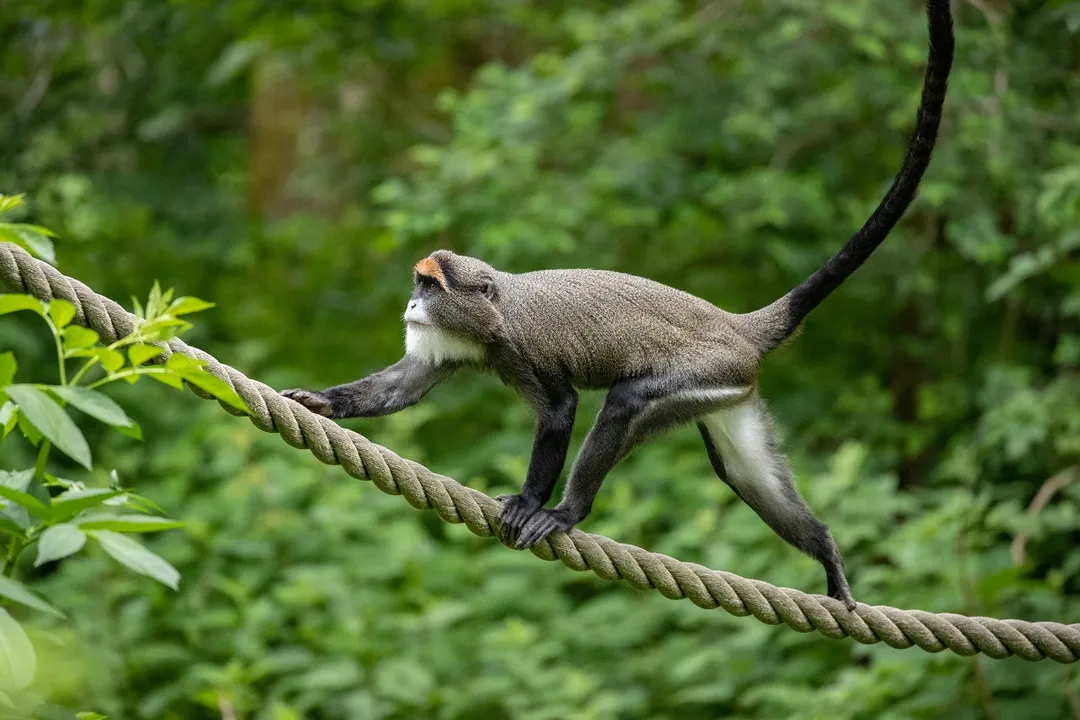
The striking appearance of the De Brazza’s monkey is one of its defining features, particularly its clear sexual dimorphism, where males are notably larger than females. Males can weigh up to 7 kg (or around 15–17 pounds), while females average about 4 kg (or 8 pounds). Their body lengths range between 40 and 63.5 cm, not including their long, non-prehensile tail used for balance.
Beyond the size difference, the facial markings are unmistakable. They possess a black crown, bright orange forehead markings, and the defining white beard and muzzle. Their body fur is generally speckled olive-gray, with black limbs and a characteristic white stripe along the hindquarters. A peculiar detail noted in descriptions is that the adult males display a distinct blue scrotum, which may play a role in mate attraction. In contrast to their mature coloring, newborns are covered in soft golden fur and have pink faces, only developing their characteristic markings after transitioning into juveniles between six and twelve weeks old.

# Habitat and Lifestyle
De Brazza’s monkeys are highly adapted generalists within a very specific ecological niche. They thrive in Central African wetland forests, seasonally flooded areas, and dense vegetation, showing a strong preference for remaining near rivers or swamps—a dependency that earns them the nickname "swamp monkey". They generally prefer to stay within about one kilometer of water sources. Although they are arboreal, spending most of their time in the lower canopy, they are also perfectly comfortable on the ground and are known to be excellent swimmers, even submerging themselves in water to escape danger.
Their daily activity is diurnal, often split between foraging in the early morning and late evening, utilizing all four feet for movement. A fascinating survival adaptation comes into play when threats are present. Unlike some primates that flee aggressively, the De Brazza’s monkey’s first response is often to freeze—becoming completely motionless to blend into the dense foliage. They can maintain this stillness for surprisingly long durations, with records indicating they may remain motionless for up to eight hours. This freeze behavior, combined with their cryptic coloration, makes them difficult to spot, contributing to their neglectus designation.
# Social Order and Cues
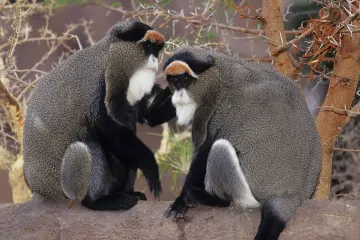
These monkeys live in relatively small social units, or troops, typically consisting of four to ten individuals, though larger groupings of up to 35 have been documented. The structure usually revolves around a dominant breeding male, several adult females, and their young. A key factor in maintaining genetic diversity is male dispersal; males leave their natal group upon reaching sexual maturity (around five to six years old) to establish or take over a new troop, while females generally remain with the group they were born into for life. While this suggests a polygynous system, some regions report instances of monogamous pairs, suggesting their social structure is somewhat flexible, potentially adapting to group size or local resource availability.
Communication within the troop is sophisticated, heavily relying on non-verbal cues. While they do use vocalizations, such as a deep "booming" call that travels long distances or isolation calls when separated, much of their interaction is visual and tactile. They communicate tension or dominance through facial displays like staring, head bobbing, and yawning to show off their canines. Interestingly, they demonstrate a rare level of interspecies tolerance; they are generally hostile toward other primates but coexist peacefully with colobus monkeys, likely because their digestive systems favor different food sources, thus eliminating direct competition.
# Threats and Future Outlook
Despite the "Least Concern" status, the threats facing wild De Brazza’s monkeys are tangible and immediate in many areas. The primary driver of population decline is habitat loss. Their preferred environment—dense, riverside swamps and tropical forests—is rapidly being converted for logging and agriculture, including coffee plantations, which fragments their necessary watery habitat.
Beyond habitat destruction, direct threats persist. They are hunted for bushmeat in some regions, such as in Zaire and Cameroon. In the eastern part of their range, they are sometimes killed by farmers who view them as agricultural pests. Additionally, they are collected for the international pet trade. Given that they are prized for their looks and are naturally shy, they are attractive captures for illegal wildlife commerce. It is a peculiar conservation challenge when a species is listed as Least Concern yet suffers targeted persecution in localized areas; this implies that an aggregated count masks critical local extinctions that may eventually lead to a down-listing in the future if current trends are not addressed regionally. The survival of this species hinges less on a global crisis and more on effective local protection in key areas like Uganda and the DRC.
# Captive Care Role
In managed care settings, such as those in accredited zoos, the focus shifts from immediate survival to maintaining a healthy, genetically varied safety net population. Zoos participate in the De Brazza’s monkey Species Survival Plan (SSP), a cooperative breeding and management program. This is vital even for LC species, ensuring that if wild populations face sudden, catastrophic declines—perhaps due to an unknown disease or severe drought affecting swamp habitats—a viable captive population exists for potential future reintroduction efforts.
Zoo staff pay close attention to behaviors like foraging and social interaction. For instance, De Brazza’s monkeys are known for storing food in their large cheek pouches to move it to a safer location before consuming it. Observing how quickly and effectively captive individuals can fill and utilize these pouches offers researchers valuable data on their inherent foraging efficiency, which is a direct predictor of their survival capability in the wild where finding food requires careful negotiation of open foraging ground versus secure feeding spots. This insight, gained through careful observation in controlled environments, adds depth to our understanding of their ecological fitness that goes beyond just documenting their physical attributes.
The De Brazza’s monkey remains a fascinating subject: a visually stunning primate that has evolved a highly cautious, nearly invisible existence in the swamps of Central Africa. While the global status offers a measure of relief, the reality on the ground—marked by habitat encroachment and direct persecution—demands that conservation efforts remain proactive and informed by detailed knowledge of their unique behaviors. Supporting organizations that work within their native range, through responsible eco-tourism or direct support, directly contributes to safeguarding the quiet majesty of these swamp dwellers.
Related Questions
#Citations
DeBrazza's Monkey, Cercopithecus neglectus
Cercopithecus neglectus (De Brazza's monkey) - Animal Diversity Web
De Brazza's Monkey | Birmingham Zoo
De Brazza's Monkey | Lincoln Park Zoo
De Brazza's Monkey | Cape May County, NJ - Official Website
De Brazza's Monkey | Franklin Park Zoo
Monkey, De Brazza's - Safari West
Minnesota Zoo De Brazza's Monkey - Animals
De Brazza's Monkey in Uganda (Cercopithecus neglectus)