Woolly Monkey Locations
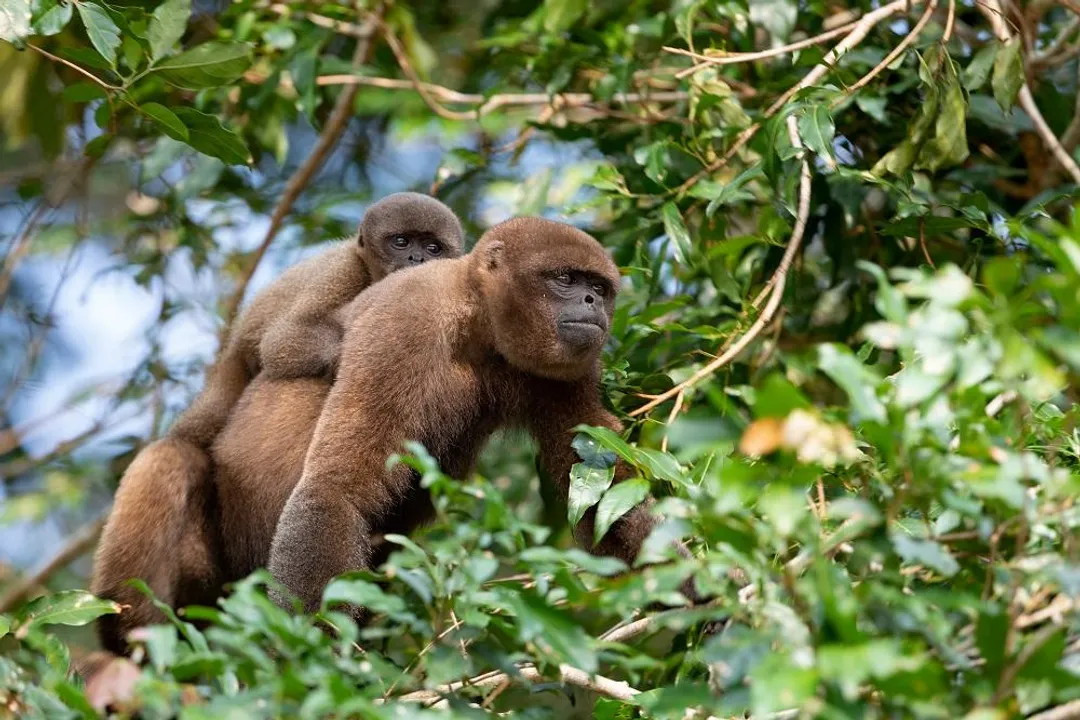
The distribution of woolly monkeys across South America paints a picture of a primate group deeply connected to dense, humid tropical environments. These monkeys, belonging to the genus Lagothrix, are generally situated within the vast expanse of the Amazon basin, though specific species occupy different ecological niches within that broad region. Their presence is geographically limited to the northwestern quadrant of the continent, specifically within the rainforests of Colombia, Ecuador, and Peru.
The notion that all woolly monkeys share a singular, overlapping location proves inaccurate when examining the species closely. While the genus as a whole claims the tropical forests of South America as its home range, conservationists and primatologists must differentiate between the ranges of the Common Woolly Monkey (Lagothrix lagotricha) and its more specialized relatives. Understanding their locations is intrinsically linked to understanding the specific type of forest they inhabit, whether it is the humid, lowland Amazonian jungle or the cooler, higher-elevation cloud forests.
# South American Spread

The collective geographic footprint of woolly monkeys spans several countries, reflecting the immense size and biological diversity of the Amazon watershed. They are quintessential inhabitants of the tropical rainforests. Colombia, Ecuador, and Peru serve as the primary nations harboring these distinctive primates. For the Common Woolly Monkey, specifically, this means thriving within the Amazon basin sections of these three nations.
It is fascinating to consider that while the genus is associated with the Amazon lowlands, the different species have adapted to slightly varying altitudinal bands within those countries. For instance, a research team surveying biodiversity in a place like Yasuní National Park in Ecuador would fully expect to encounter populations of the common woolly monkey, as these protected areas represent the core habitat structure they require. The presence of these monkeys is often used as an indicator of forest health, as they require extensive tracts of primary or mature secondary forest to support their social groups and foraging needs.
# Specific Country Habitats
Delving into the national distribution reveals important nuances. In Ecuador, woolly monkeys are found within the Amazonian lowlands, which makes areas like the Yasuní region particularly important for their survival. This region provides the dense canopy layers these monkeys prefer for locomotion and safety.
Moving across the border to Peru, the picture becomes more complicated due to the presence of a distinct, critically endangered species. While some populations of the common woolly monkey likely exist in the Peruvian Amazon lowlands corresponding to the ranges found in Colombia and Ecuador, Peru is also home to the species that occupies a completely different habitat type.
Colombia also maintains populations within its share of the Amazon basin, completing the triad of countries known to host the Lagothrix lagotricha species.
If one were to plot the distribution of the entire genus on a map, it would appear as a large contiguous zone across the western Amazon, but isolating the common species reveals territories that rely heavily on river systems and continuous, unbroken canopy cover spanning across national boundaries.
# Cloud Forest Endemics
The most dramatic difference in location pertains to the Yellow-tailed Woolly Monkey (Oreonax flavicauda). This species is not found throughout the Amazon basin alongside its cousins; rather, it is highly restricted and considered endemic to a much smaller, cooler, and wetter region of the Peruvian Andes.
Their home is strictly defined as the cloud forests found in the Amazonas and San Martin Departments of northern Peru. This habitat difference is profound. While the common woolly monkey is adapted to the humid, hot lowlands, the yellow-tailed species thrives at significantly higher elevations, typically found above 2,000 meters. This altitudinal specialization means their geographic location is severely constrained by temperature and moisture gradients unique to that Andean slope. This endemic status makes their location one of the most geographically concentrated of all New World monkeys.
It is an interesting ecological comparison to note that while the common woolly monkey distribution spans three nations and the broader Amazon lowland ecosystem, the yellow-tailed species is confined to a relatively small, high-altitude belt within a single country. This geographical bottleneck makes the species far more vulnerable to localized threats, such as habitat fragmentation caused by agriculture or logging in those specific mountain regions.
| Species | Primary Location Type | Approximate Elevation Range | Key Countries |
|---|---|---|---|
| L. lagotricha (Common) | Amazonian Lowland Tropical Forest | Generally lower elevations | Colombia, Ecuador, Peru |
| O. flavicauda (Yellow-tailed) | Andean Cloud Forest | Often above 2,000 meters | Northern Peru (Amazonas & San Martin Depts.) |
# Analyzing Range Restriction
When studying primate distribution, the concept of a location moves beyond simply naming a country; it speaks to the available ecological space. For the common woolly monkey, their location within the Amazon basin suggests a reliance on resources distributed across wide, interconnected forest tracts. Their movements would logically follow fruit availability across thousands of square kilometers, allowing them to persist in several countries simultaneously.
However, the restriction of the yellow-tailed species to the high-altitude cloud forests highlights how specialized habitat requirements can effectively shrink a species' viable location to a fraction of the broader regional range. Imagine a spectrum of locations where woolly monkeys are found: on one end, you have the broad, shared lowland environment of the Amazon shared by three nations; on the other, you have the narrow, wet, cooler upper slopes of the Peruvian Andes where only one species exists. This physical separation, dictated by elevation and forest type, is critical for understanding their distinct conservation statuses.
Observing distribution patterns can sometimes reveal historical ecological relationships. The fact that the yellow-tailed species is restricted to the Andes suggests a divergence occurred where one lineage adapted to climbing higher in elevation and dealing with the associated cooler, mistier conditions, while the other lineage remained dominant in the lower, warmer core of the Amazon. A person searching for these primates needs to know which country, but more importantly, which ecosystem within that country they are looking to study or protect. Knowing that a location is a protected reserve like Yasuní in Ecuador confirms a specific monkey type is likely present, whereas a search in the Peruvian highlands requires focusing only on cloud forest environments for the rarer species. This level of detail is essential for any effective conservation effort targeting these beautiful, distinctive animals.
Related Questions
#Citations
Common Woolly Monkey, Lagothrix lagothricha
Woolly monkey - Wikipedia
Lagothrix lagotricha (Humboldt's woolly monkey) | INFORMATION
Yellow-tailed woolly monkey
Woolly monkey | Tropical Rainforest, Primate, Social Behavior
This beautiful creature is a Woolly monkey, and there only about ...
Woolly monkeys, facts and information | National Geographic
Biodiversity-Woolly Monkey - Save America's Forests
Yellow-Tailed Woolly Monkey Conservation