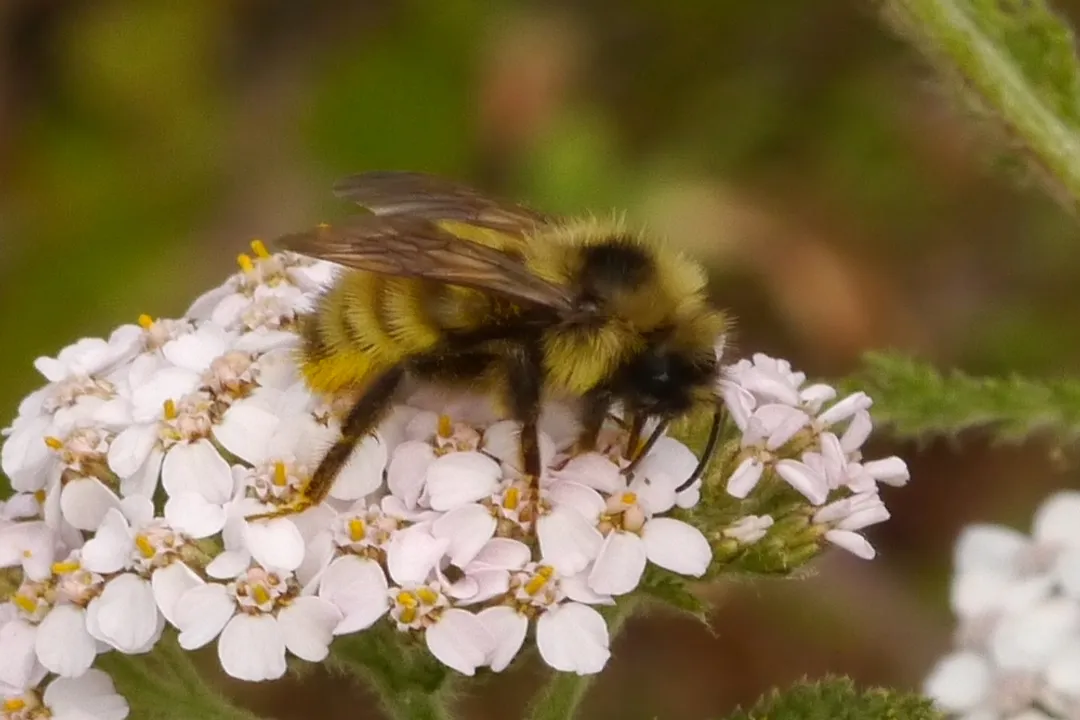
What is the key insight for supporting B. flavidus populations through gardening practices?
Ensuring a reliable, staggered succession of nectar-rich blooms.
When gardening to support the rare Yellowish Cuckoo Bumblebee, the key conservation insight derived from its diet is to prioritize the creation of a dense, continuous source of nectar throughout the warm months, rather than emphasizing pollen providers. Since *B. flavidus* produces no workers, the queens and males only require nectar for immediate, self-sustaining energy reserves to fly and execute their parasitic role. Therefore, the landscape management strategy should focus not on large monocultures, but on ensuring a reliable, staggered succession of nectar-rich blooms is available from early spring (queen emergence) through late summer/early autumn (male activity), guaranteeing the queen has the necessary fuel to survive and dominate during her active period.