How do you identify a lemon cuckoo bumblebee?
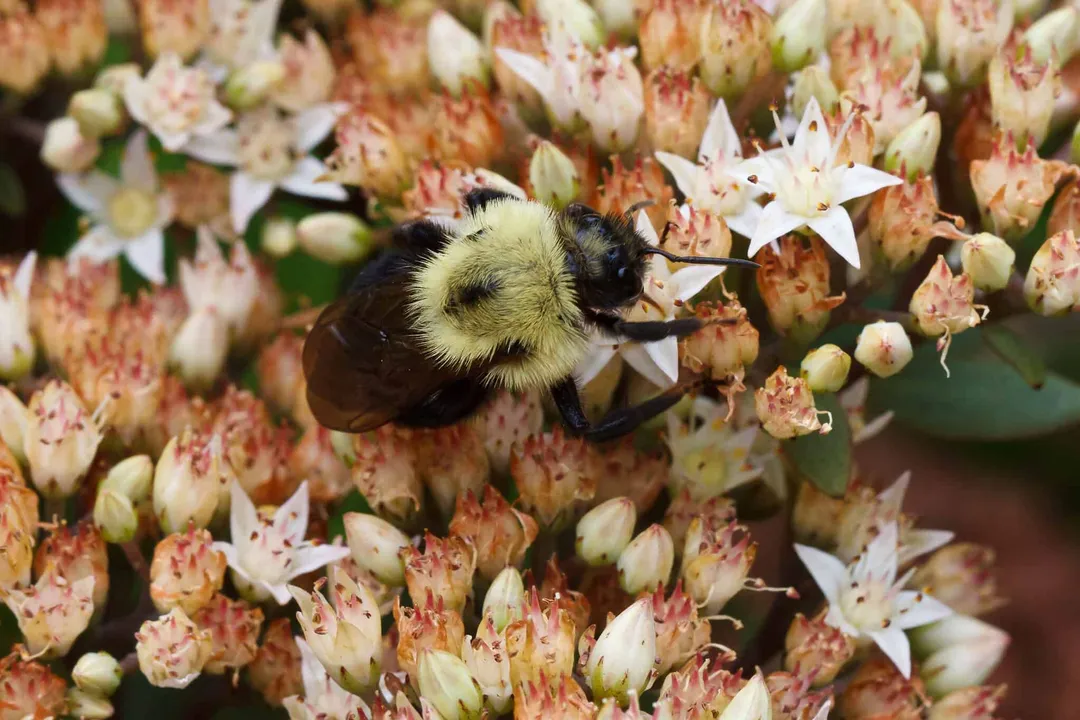
Figuring out if the fuzzy insect buzzing around your flowers is a common bumblebee or the less frequently seen Lemon Cuckoo Bumblebee (Bombus citrinus) requires a close look at a few subtle but important physical details. This species belongs to a group of bees that adopt a unique, parasitic lifestyle, meaning they don't build their own colonies but rather sneak into the nests of other, social bumblebees. [1][5][7] Because of this relationship, key identification features often relate to what the bee lacks compared to its social counterparts. Generally, female Lemon Cuckoo Bumblebees are recognized for their vibrant yellow and black coloration, making them easily confused with the very common Eastern Common Bumblebee (Bombus impatiens). [1][5][7]
# Color Patterns
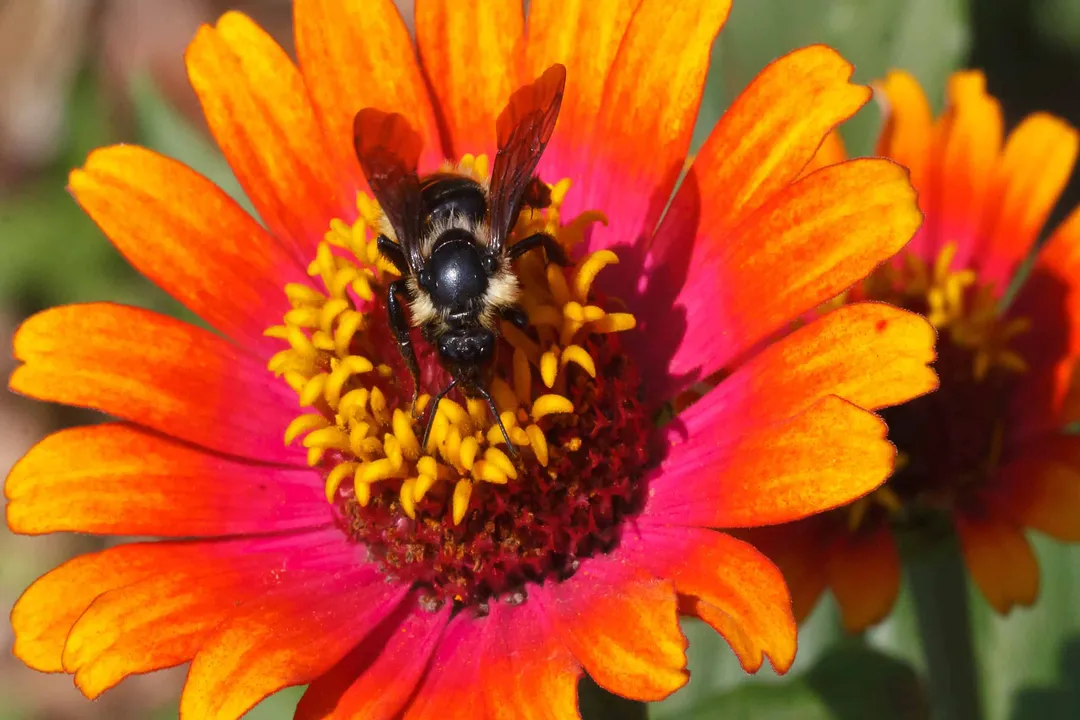
The most striking feature of the female B. citrinus is her bright, often vivid yellow markings. [5][7] In an ideal viewing situation, the queen is typically described as being bright yellow with black markings. [1][5][7] This immediately sets the stage for potential mix-ups, as many common bumblebees share this basic palette.
When examining the thorax—the middle section of the body—the Lemon Cuckoo Bumblebee usually displays a solid, unstriped yellow segment. [4][7] This contrasts with many social bumblebees whose thoraxes might feature black central stripes or areas covered in mixed black and yellow hairs.
The abdomen, the rearmost section, is where the pattern starts to offer clearer clues, though variation exists. The standard description points to an abdomen that is either entirely yellow or features a distinct, narrow black band situated near the base, right behind the thorax connection. [1][4][5] If you spot a large, fuzzy bee with a predominantly bright yellow abdomen, this species should move to the top of your suspect list. However, it is important to remember that not all individuals conform perfectly; some sources note that the yellow coloring can sometimes appear dusky or even slightly orange in tone rather than pure, bright yellow. [7]
# Appearance Details
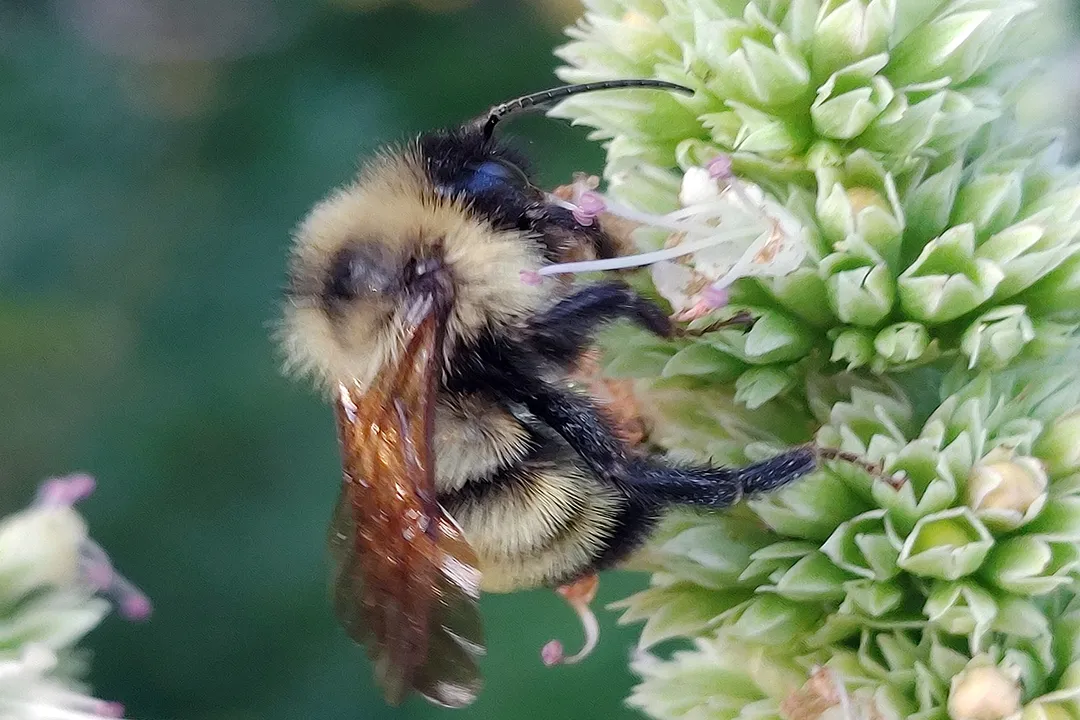
Beyond the primary yellow and black distribution, the overall physical structure of the Lemon Cuckoo Bumblebee is a critical identification point, particularly when differentiating the females (queens) from other species. Queens are relatively large, measuring in the range of 17 to 20 millimeters in length. [1][7] Males are noticeably smaller, usually clocking in around 13 to 14 millimeters. [7]
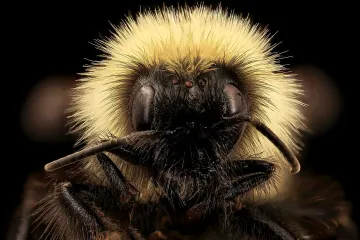
One subtle characteristic often cited by entomologists involves the hair density on the face. Lemon Cuckoo queens are reported to have less hair on their face compared to the very similar B. impatiens. [7] Furthermore, the hair covering the body tends to be relatively short. [7] While this requires a good, clear view, a bee that appears slightly less "fluffy" than expected for its size might be a cuckoo.
# Parasitic Traits

Understanding the bee's life cycle directly impacts its physical identification, as this parasitic nature has caused evolutionary changes in the female. Unlike their social cousins, which spend significant time foraging for nectar and pollen to provision their nests, the female cuckoo bee's primary task after emergence is to infiltrate a host colony. [1][6] Because she never needs to provision her own brood, she does not collect pollen. This leads to one of the most reliable, albeit sometimes difficult to see, identifiers: the absence of a corbicula. [1][5][7][8] The corbicula, or pollen basket, is the shiny, concave area on the hind legs of female social bees used to carry large loads of pollen back to the nest. If the female bee you observe is not carrying a visible clump of pollen on her legs, she cannot be a worker or queen of a social bumblebee species, which strongly suggests she is a cuckoo female or perhaps a solitary bee species. [8]
Another physical difference tied to this parasitic behavior is tongue length. Lemon Cuckoo Bumblebees possess shorter tongues compared to their social relatives. [7] This shorter tongue limits the types of flowers they can effectively feed from, often restricting them to shorter-tubed blossoms, which is an interesting behavioral note for observers tracking foraging patterns. [7] A helpful tip for observers in the field is to note that because cuckoo females are looking for a host nest early in the season, they are often the first bumblebee queens you might encounter, sometimes emerging before the native social queens have established their colonies fully. [6] This early activity window can sometimes help separate them, provided you know when the local social queens typically appear.
# Host Comparison
The similarity between B. citrinus and Bombus impatiens is the source of most identification confusion. [1][5][7] For those unfamiliar with the subtle differences, these two can be nearly impossible to separate in the field without a clear view of the leg structure or specific abdominal markings.
Here is a brief comparison emphasizing the differences:
| Feature | Lemon Cuckoo (B. citrinus) Queen | Eastern Common (B. impatiens) Queen |
|---|---|---|
| Behavior | Social parasite (no pollen collection) [1][5] | Social (collects pollen via corbicula) [1][8] |
| Hind Legs | No pollen basket (corbicula) [1][8] | Possesses a large, shiny corbicula [1][8] |
| Face Hair | Comparatively less hairy face [7] | Denser facial hair [7] |
| Abdomen Pattern | Typically all yellow or narrow black basal band [1][4] | Usually has a distinct black band near the base [7] |
| Tongue Length | Shorter tongue [7] | Longer tongue |
If you are tracking bees in an area where B. bimaculatus (Two-spotted Bumblebee) is also present, confusion can arise there too, as the Lemon Cuckoo may parasitize them as well. [1][7] However, B. bimaculatus typically has two distinct black spots on its yellow thorax, a feature B. citrinus generally lacks. [4] Paying attention to the combination of short tongue, lack of pollen load, and the specific yellow-dominant abdomen pattern will narrow the identification down significantly away from the standard social bees.
# Range Habitat
The geographic distribution of the Lemon Cuckoo Bumblebee is concentrated in eastern North America. [1][7] Its range extends across the eastern United States and into Southern Canada. [1][7] States and provinces where it is documented include areas like Minnesota, where records exist though the species is considered of special concern. [8][9] Observers in the Northeast, for example in Vermont, have noted that this species is considered Near Threatened, highlighting that while it is present, its population health warrants attention. [5][7]
While they use the nests of social bumblebees, which can be found in various locations from underground cavities to dense grass clumps, the cuckoo itself can be found visiting a wide array of flowering plants while searching for hosts or food. [1][7] Their habitat generally overlaps with their common hosts, meaning if you see B. impatiens in a given landscape—such as meadows, gardens, or open woodlands—the Lemon Cuckoo Bumblebee could potentially be present as well. [1][5]
# Observation Tips
Observing these bees effectively means knowing when and how to look. Because the female queen must locate and invade a host nest early in the spring, she is often active slightly before or concurrently with the first appearances of the social queens of her host species. [6] This timing can be an indicator, particularly if you are monitoring your garden from the very start of the blooming season.
A practical approach for citizen scientists or keen gardeners looking to confirm an ID involves focusing on foraging behavior rather than just color. If a large, yellow-and-black female is seen visiting flowers but consistently flies away without entering a potential nest site (like a hole in the ground or a dense shrub) and shows no visible pollen loads after extended flower visits, it warrants a second, closer look to check the hind legs for that critical corbicula. [8] If you can observe multiple bees of the same species visiting flowers, notice if one is consistently pollen-free while others carry visible loads; the pollen-free one is a strong candidate for B. citrinus. These subtle behavioral cues, combined with morphology, build a much stronger identification case than color alone. [7] While absolute certainty often requires trapping and microscopic examination, a combination of bright yellow, shorter face hair, and the clear absence of pollen-carrying apparatuses in an eastern habitat provides high confidence in identifying the Lemon Cuckoo Bumblebee.
Related Questions
#Citations
Lemon Cuckoo Bumble Bee (Bombus citrinus) | U.S. Fish & Wildlife ...
Lemon cuckoo bumble bee (Bombus citrinus)
Lemon cuckoo bumble bees: signs of healthy habitat - Facebook
Wi BBB: Bombus citrinus
Lemon Cuckoo Bumble Bee (Bombus citrinus) - Vermont Atlas of Life
Lemon cuckoo bumble bees make sour house guests
Bombus citrinus - Wikipedia
Lemon Cuckoo Bumblebee - Bombus citrinus - A-Z Animals
Lemon Cuckoo Bumble Bee - Minnesota Seasons