What is the consequence for the air bubble when in highly oxygenated, fast-flowing water?
Answer
The beetle may need to surface more frequently.
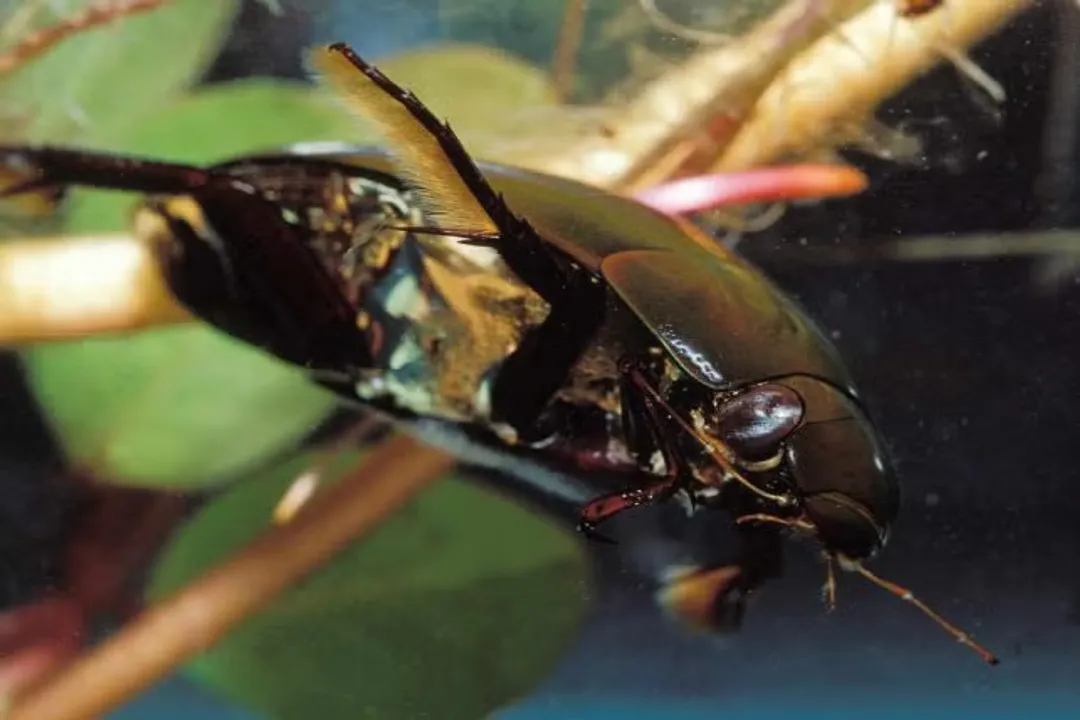
The movement and oxygenation of the surrounding water directly influence how often a beetle must renew its vital air supply trapped under its elytra. In environments characterized by high levels of dissolved oxygen and fast-flowing water, the process by which oxygen diffuses from the water into the physical air bubble is described as replenishing the bubble more slowly. Consequently, because the diffusion replenishment rate does not keep pace with the beetle's oxygen consumption, the beetle is compelled to return to the surface more often than a beetle resting in stagnant water, where the bubble might deplete faster overall due to lower ambient oxygen concentrations.
Related Questions
To which order do water beetles belong, alongside ladybugs?What fierce larval form of the Dytiscidae is known for its appetite?What hardened forewings trap the silvery air bubble for respiration?What is the primary feeding style of the Water Scavenger Beetles (Hydrophilidae)?Where does the pupation stage of water beetles typically occur?How are Whirligig Beetles (Gyrinidae) recognized by their movement?How are the antennae of Hydrophilids often described for field identification?What specialized mouthparts do Dytiscidae larvae use for predation?What type of metamorphosis do water beetles undergo?What unique adaptation do Gyrinidae eyes possess for surface life?What is the consequence for the air bubble when in highly oxygenated, fast-flowing water?