How are the antennae of Hydrophilids often described for field identification?
Answer
Long, segmented antennae sometimes nearly body length
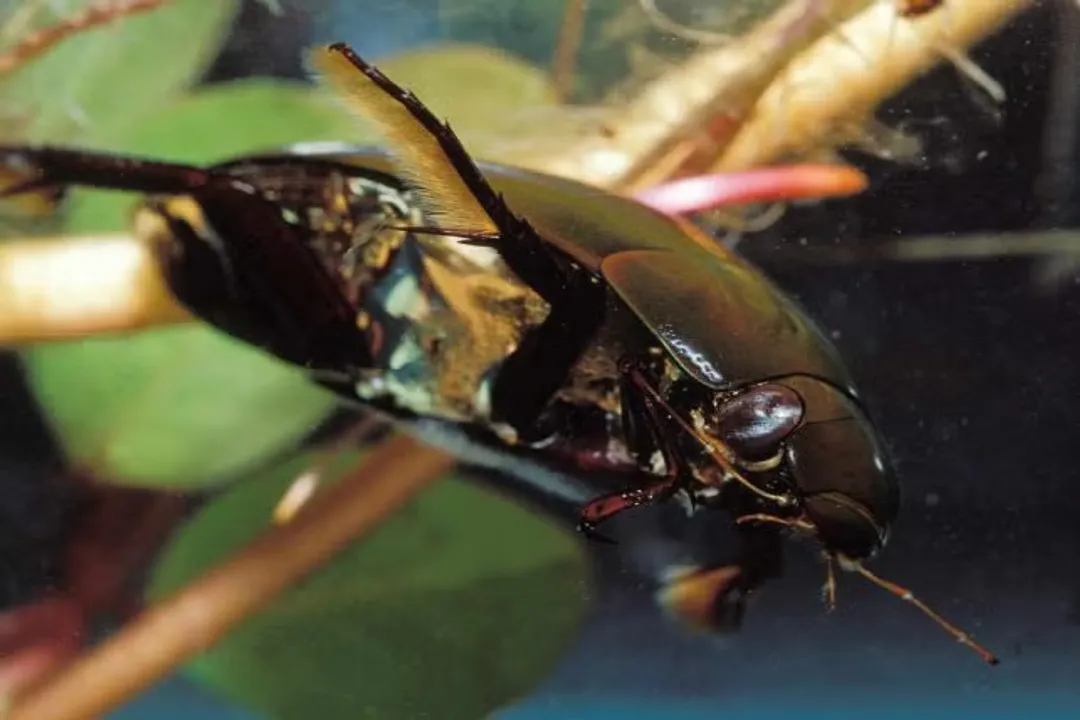
For field observers attempting to distinguish between major aquatic beetle families, antennae structure is a major clue. Hydrophilids, or water scavenger beetles, often possess long, segmented antennae that can sometimes extend to be nearly as long as their entire bodies. This contrasts with Dytiscids (diving beetles), whose antennae are generally described as simple and segmented, providing a key morphological difference used in identification efforts, alongside differences in swimming style and air-carrying techniques.
Related Questions
To which order do water beetles belong, alongside ladybugs?What fierce larval form of the Dytiscidae is known for its appetite?What hardened forewings trap the silvery air bubble for respiration?What is the primary feeding style of the Water Scavenger Beetles (Hydrophilidae)?Where does the pupation stage of water beetles typically occur?How are Whirligig Beetles (Gyrinidae) recognized by their movement?How are the antennae of Hydrophilids often described for field identification?What specialized mouthparts do Dytiscidae larvae use for predation?What type of metamorphosis do water beetles undergo?What unique adaptation do Gyrinidae eyes possess for surface life?What is the consequence for the air bubble when in highly oxygenated, fast-flowing water?