What are some facts about carrion beetles?

The world of insects holds few tasks as vital, yet as often overlooked or reviled, as the duty performed by the carrion beetle family, Silphidae. These creatures, often called "nature's cleanup crew," tackle the unpleasant reality of death in the wild, ensuring that organic material is rapidly recycled back into the ecosystem rather than left to fester. [4][5][7] Found across the globe in Asia, Africa, Europe, North America, and Oceania, they represent a relatively small but incredibly impactful group within the order Coleoptera, which contains over one and a half million discovered insect species. [4][7]
Carrion beetles generally feed on dead organisms, whether they are animal carcasses, decaying plants, or even dung. [4][7] While some species are very specific about their meals, others are more omnivorous, sometimes consuming fly maggots that have already begun feeding on the corpse. [7] Their physical makeup aids this grim profession. Many possess a characteristically flattened body shape, which allows them to easily maneuver beneath or into decaying matter. [4] They belong to the family Silphidae and are sometimes grouped with other terms like silphids or sextons. [5] Their average lifespan, depending on the exact species, generally hovers around 12 months, though some generalist types may only survive for four to six months. [4][7]
# Ecosystem Recycling

The primary ecological function of these beetles is decomposition and nutrient recycling. [4] When an animal dies, the nitrogen stored within its tissues represents a significant potential resource that would otherwise be locked away. Carrion beetles, through consumption and excretion, break down this dead plant and animal matter into simpler forms, effectively enriching the soil and providing nutrients that aid in the growth of new plant life. [4] In forested environments, this action is often observed within the leaf litter layer—a challenging environment where these beetles work daily. [4]
It is worth noting the sheer efficiency these insects bring to the process. A crucial behavior exhibited by many, especially the burying beetles, is to move the carcass entirely out of sight. By swiftly digging soil from beneath a small animal until the body sinks underground, they concentrate the decomposition process away from the surface. [5][7] This burial tactic serves two immediate purposes: it prevents desiccation (drying out) of the food source, and, critically, it blocks access for competitors like flies, thus ensuring a more controlled and reliable food supply for the beetle's own young. [5] This concentration of resources underground, managed by the beetles, means that nutrient transformation happens at a focused rate, often quicker than if the carcass simply decomposed exposed on the forest floor where scavengers and weather could interfere. [5]
# Burying Actions

The term "burying beetle" is often used synonymously with carrion beetle because this behavior is so well-known among certain genera, particularly Nicrophorus. [2][5] These specialized beetles possess an impressive ability to detect a fresh carcass, sometimes sensing it within an hour of death or from distances of up to two miles away. [2] If the deceased creature is small enough—for the American Burying Beetle, this means something weighing between 3.5 to 7 ounces, like a quail or dove—a pair of beetles will claim it.
The process is industrious. The beetles use their long, brush-like claws to scrape away dirt from beneath the body, causing the carcass to settle into a self-made subterranean "nesting chamber". [2] Once buried, which can happen in under 24 hours, the preservation work begins. Both parents participate in stripping the fur, feathers, or skin from the body. [2] They then roll the remains into a tight sphere, sometimes referred to as a brood ball, and coat it with specialized fluids secreted from their mouthparts and anus. This secretion acts as an embalming fluid, designed to slow the growth of mold and bacteria, extending the usability of the meat for their developing offspring.
# Symbiotic Partners
In an example of ecological cooperation, many carrion beetles engage in a relationship with specific mites, often from the genus Poecilochirus. [2][6] This is a classic case of mutualistic phoresis, where the beetles provide transportation, and the mites provide a service. [6] As soon as the beetles arrive at a carcass, the mites disembark and immediately start consuming the eggs and tiny larvae of competing flies. [2][4][6] By eliminating these competitors, the beetles ensure a larger, uncontested food supply for their own larvae. [4][6] In return, the mites receive a free ride to the next meal site, hitching a ride back onto the adult beetles once their work is done, and sometimes even transferring to the newly emerging beetle larvae. [2][6] While this relationship is largely beneficial, it is interesting to consider that some of these mites might occasionally parasitize the beetle's own eggs, adding a layer of complexity to their partnership. [2]
# Distinctive Markings
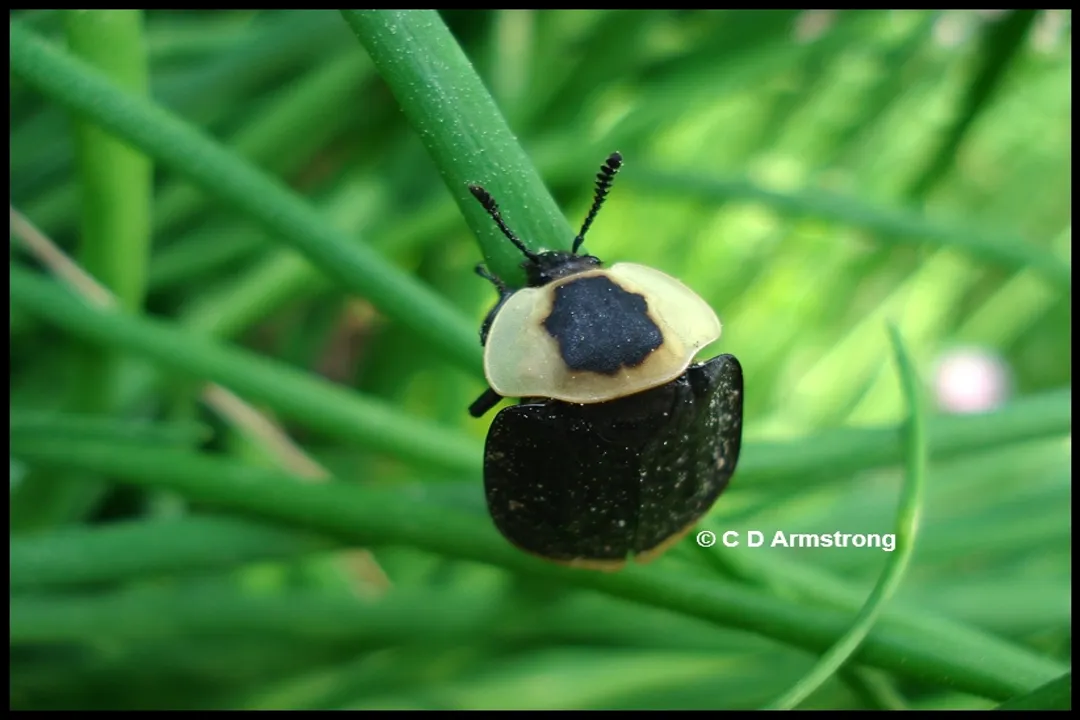
Carrion beetles vary widely in appearance, but the most commonly observed features involve striking color contrasts against a dark background. [4][7] Many species showcase bright markings in shades of red, orange, or yellow. [4][5][7] For example, the Necrophila americana, or American Carrion Beetle, is unique among North American silphids for having a predominantly yellow pronotum (the plate-like structure behind the head). [6] Adults of this species typically measure between 12 and 22 millimeters in length. [6] A common observation across the family is the distinctively club-like antennae. [2][5] Furthermore, a smell often accompanies these insects; they are known to emit a foul odor, which they may also spray defensively if threatened. [4]
The resemblance of some species to stinging insects is another notable adaptation. Many carrion beetles exhibit patterns of black combined with yellow, orange, or red, and possess a heavy, loud buzzing flight, causing them to mimic bumble bees or wasps. [5] This is a form of aposematic coloration, acting as a visual warning to potential predators to stay away. [6] The Tomentose Burying Beetle (Nicrophorus tomentosus), for instance, looks quite like a bumblebee in flight, though it is distinguished by having hair covering its pronotum. [5]
# American Species Separation
When discussing carrion beetles in North America, it is vital to distinguish between two key species that often share similar names but have vastly different conservation statuses: the American Carrion Beetle (Necrophila americana) and the American Burying Beetle (Nicrophorus americanus). [6]
The American Carrion Beetle (N. americana) is distinctive due to its mostly yellow pronotum, the only one of its genus (Necrophila) in North America; other Necrophila species reside in Asia. [6] This species prefers humid, overgrown, wooded areas or marshy habitats, and is rarely found in open meadows. [6][8] Its reproductive activity tends to be temporally separated from related species—a form of resource partitioning—meaning it is active at different periods of the year than its neighbors, such as Oiceoptoma noveboracense (early spring) or Thanatophilus lapponicus (late summer). [6]
In contrast, the American Burying Beetle (N. americanus) is the largest carrion beetle in North America, reaching almost two inches long, and is listed as federally threatened. This species is strongly associated with grasslands and requires larger, intact habitat cores for survival.
# Forensic Applications
The predictable life cycle and clear attraction to decaying flesh make carrion beetles, particularly the larger species, valuable assets in forensic entomology. [5][6] By analyzing the species present on a corpse and determining which stage of their development they are in—egg, larva (instar), or pupa—scientists can establish an approximate time of death, known as the minimum postmortem interval (PMI). [5][7]
The American Carrion Beetle, N. americana, is studied because of its tendency to thrive on large carcasses. [6] However, when forensic scientists examine a sealed container holding a corpse, they might find N. americana accumulating around the outside rather than inside. [6] This is because they cannot access the sealed resources, but they are drawn by the volatiles produced by the decomposition. This difference in habitat preference—N. americana favoring accessible, humid woods over sealed environments—is an important factor when trying to estimate the PMI of a body concealed from the outside environment. [6]
# Conservation Status
The fate of the American Burying Beetle (N. americanus) serves as a stark case study in habitat impact. Once found across 35 states and three Canadian provinces, its population plummeted due to agricultural expansion, the plowing of native grasslands, and woodland encroachment. By the time it was listed under the Endangered Species Act in 1989, the only known wild population was in Rhode Island.
Modern conservation efforts offer a glimmer of hope, demonstrating that focused ecosystem management can yield results. In the Loess Canyons of Nebraska, private landowners have actively protected core grassland areas, mimicking natural processes like prescribed fire to reverse tree encroachment. This has led to a documented increase of 17% in beetle abundance between 2007 and 2019—a rare landscape-level recovery for an insect. The data shows that beetle abundance plummets when tree cover exceeds 10% or when native grassland is converted to crops, illustrating how sensitive the species is to landscape fragmentation.
While N. americanus relies on healthy, wide-open grasslands, it is instructive to contrast this with the habitat preferences of its namesake cousin, N. americana. Research suggests the latter species actually prefers more humid, overgrown, woody areas or marshes over open fields. [6][8] This means that an area designated for the successful recovery of the American Burying Beetle (grassland) might be suboptimal for the American Carrion Beetle, highlighting the diverse habitat needs within the broader family. [6][8] Furthermore, the success in Nebraska is aiding reintroduction programs in states like Ohio, where the species had been locally extinct for decades, showcasing how effective, large-scale conservation—even for something as small as a beetle—can benefit the entire biome, including birds like prairie chickens and pronghorn.
Related Questions
#Citations
Carrion Beetle | 50 Facts You May Not Know - South Carolina ETV
Carrion Beetles (Burying Beetles) | Missouri Department of ...
Burying (Carrion) Beetles: Identification, Facts & Control Tips
American carrion beetle - Wikipedia
Carrion Beetle - A-Z Animals
American Carrion Beetle - Home and Garden IPM from Cooperative ...
Carrion Beetle - The Australian Museum
Meet the American Burying Beetle - Working Lands for Wildlife