What feature was evidenced on the forelimbs of *Xiaotingia* found at the Tiaojishan site?
Answer
Well-developed pennaceous feathers
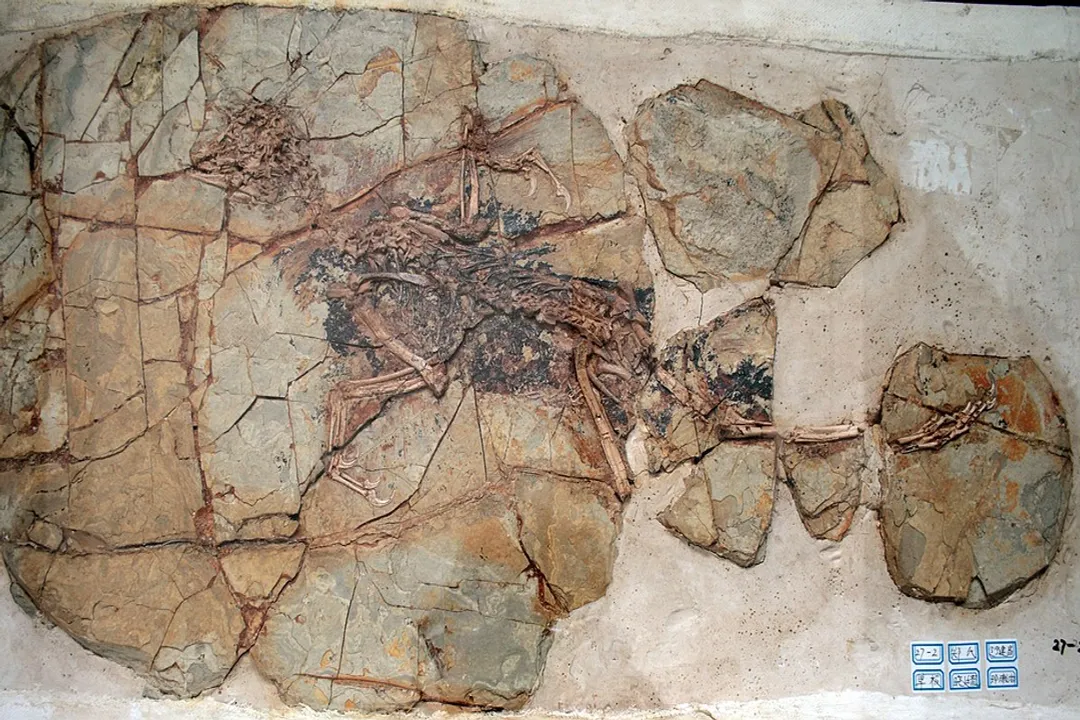
Detailed study of the *Xiaotingia* anatomy, made possible by the exceptional preservation quality at the Tiaojishan site, revealed evidence of well-developed pennaceous feathers on its forelimbs. Pennaceous feathers are characterized by their stiff, interlocking structure, which is typically associated with modern flight feathers. However, in the context of *Xiaotingia*, these feathers are inferred to have served functions such as display or ground maneuvering rather than engaging in powered flight. The presence and structure of these feathers are central to the debates surrounding its placement within the early bird lineage.
Related Questions
In which geological formation were the remains of *Xiaotingia zhengi* recovered?To what epoch do the sedimentary rocks containing *Xiaotingia zhengi* date?What feature was evidenced on the forelimbs of *Xiaotingia* found at the Tiaojishan site?What specific term describes the extraordinary fossil preservation quality of the Tiaojishan Formation site?What structures are compared between *Xiaotingia* and *Archaeopteryx* to aid in resolving taxonomic placement?How does the age of *Xiaotingia* compare temporally to the *Archaeopteryx* fossils found in Solnhofen, Germany?What was the initial taxonomic classification assigned to *Xiaotingia* by researchers?Which specific location within the Tiaojishan Formation yielded fossils vital for understanding avian relatives in the Jurassic?What potential function, other than powered flight, is suggested for the pennaceous feathers of *Xiaotingia*?What environmental condition likely resulted in the exceptional preservation of soft tissues in the Tiaojishan Formation?