Xiaotingia Locations
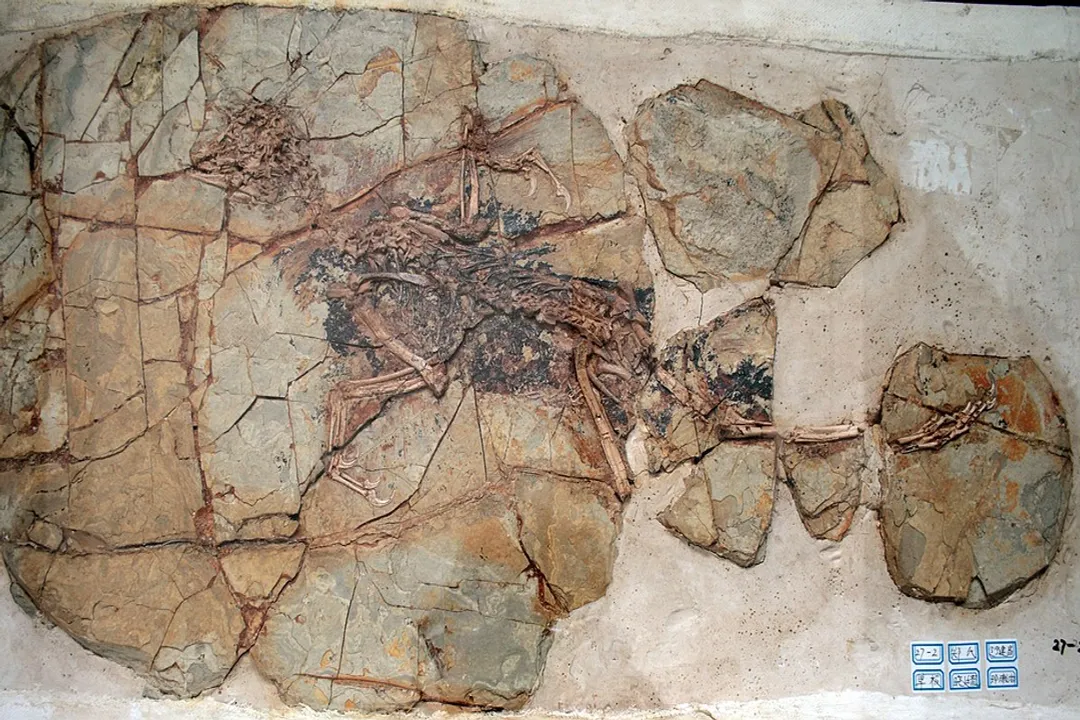
The subject of Xiaotingia immediately directs our attention to a very specific corner of ancient China, pinpointing the geological setting where this fascinating creature was unearthed. The primary significance of Xiaotingia isn't just its existence, but the precise slice of the Late Jurassic period from which its fossil remains originate. Understanding Xiaotingia requires looking closely at the rock layers that entombed it, as these layers offer a window into the earliest branches of the bird lineage. [2][4][5]
# Discovery Site
The physical whereabouts of Xiaotingia fossils are well-documented, pointing directly to the rich paleontological grounds of Liaoning Province in China. [2][4][5] Specifically, the remains of Xiaotingia zhengi, the type species, were recovered from the famous Tiaojishan Formation. [2][4][5] This formation is renowned globally for preserving feathered dinosaurs and early birds in exquisite detail, often suggesting a remarkably quiet depositional environment that allowed for near-perfect fossilization of soft tissues. [2]
Within the Tiaojishan Formation, the material often points to the Daohugou Beds. [2] The Daohugou Beds represent a critical assemblage of fossils dating back to the Jurassic, making them vital for understanding the diversification of avian relatives during that era. [2] The location is not just a quarry; it is a geological marker that places Xiaotingia squarely among a unique collection of fauna that existed just before the transition into the Cretaceous period. [5]
# Geological Age
The "when" of Xiaotingia's existence is as crucial as the "where." The sedimentary rocks that contain Xiaotingia zhengi date to the Late Jurassic epoch. [2][4][5] This temporal placement is incredibly important because it situates Xiaotingia alongside other early avialans like Archaeopteryx and Aurornis. [2] By examining fossils from this time, scientists can map out the evolutionary steps taken between non-avian dinosaurs and true birds. [2]
This Late Jurassic environment, preserved in the Liaoning location, contrasts in time with the specimens of Archaeopteryx found in the slightly younger Tithonian stage rocks of Solnhofen, Germany. [2] This temporal difference, even if relatively small in the grand scheme of the Mesozoic Era, means that Xiaotingia occupied a slightly different ecological niche or represented a parallel evolutionary path contemporaneous with, but geographically separate from, the most famous feathered fossil. [2]
# Evolutionary Placement
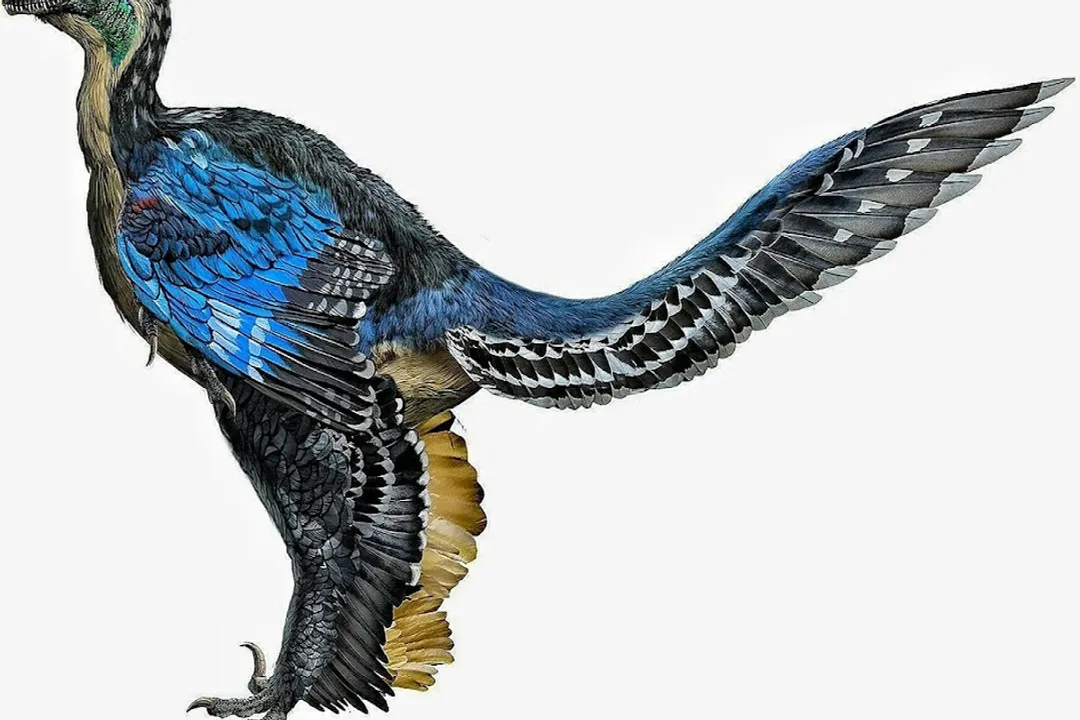
While the physical location of its discovery is fixed in Liaoning, the taxonomic "location" of Xiaotingia on the dinosaur family tree has been subject to some debate among researchers. [2] The initial classification placed Xiaotingia within the family Archaeopterygidae, suggesting a close kinship with Archaeopteryx. [2][4] This placement suggests Xiaotingia was a basal member of Avialae, the group containing modern birds and their closest extinct relatives. [2]
However, some analyses have suggested that Xiaotingia might sit outside the Archaeopterygidae family. [2] Instead, these interpretations often position it closer to the direct lineage leading to birds, possibly showing a closer relationship with other early avialans found in the same region, such as Aurornis. [2] The fact that a single location—the Daohugou Beds—yielded specimens leading to such taxonomic discussions underscores the importance of this specific fossil assemblage in refining our understanding of early bird evolution. [2] The precise characteristics of the preserved bones and feathers determined its shifting location within these cladograms. [2][5]
# Preserved Anatomy
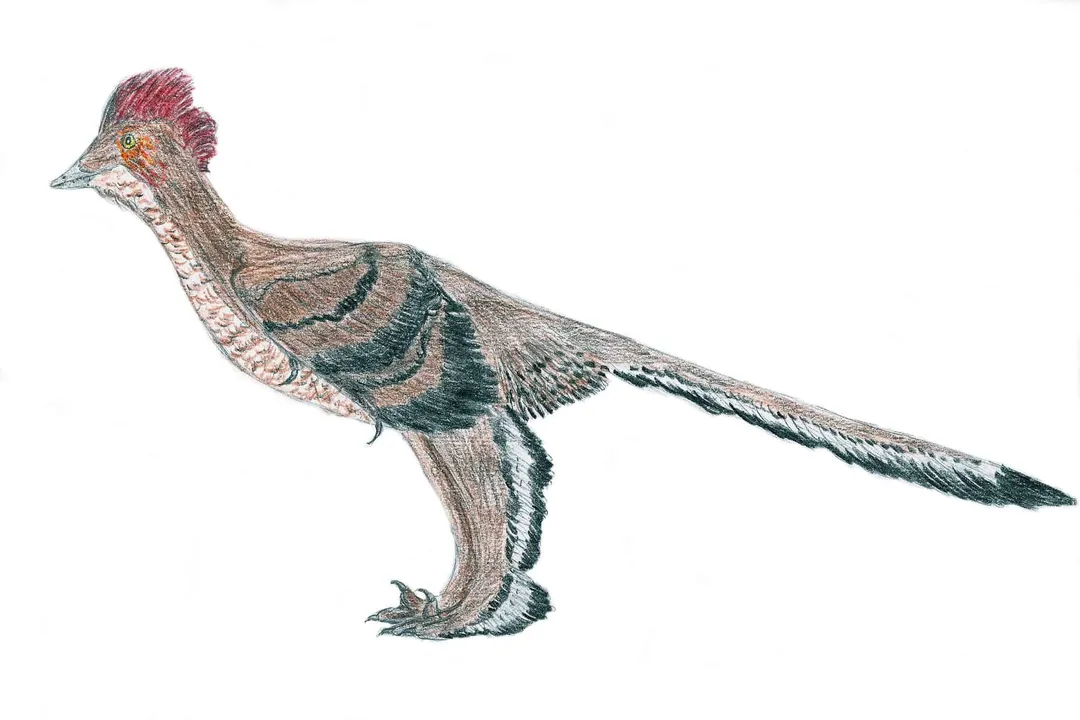
The quality of preservation at the Tiaojishan site allows for detailed study of Xiaotingia's anatomy, which is what drives the debate over its evolutionary location. [2] Key features recovered from the locale include evidence of well-developed pennaceous feathers on its forelimbs. [4][5] Pennaceous feathers are the stiff, interlocking type associated with modern flight feathers, though in Xiaotingia, they were likely used for display or ground maneuvering rather than powered flight. [5]
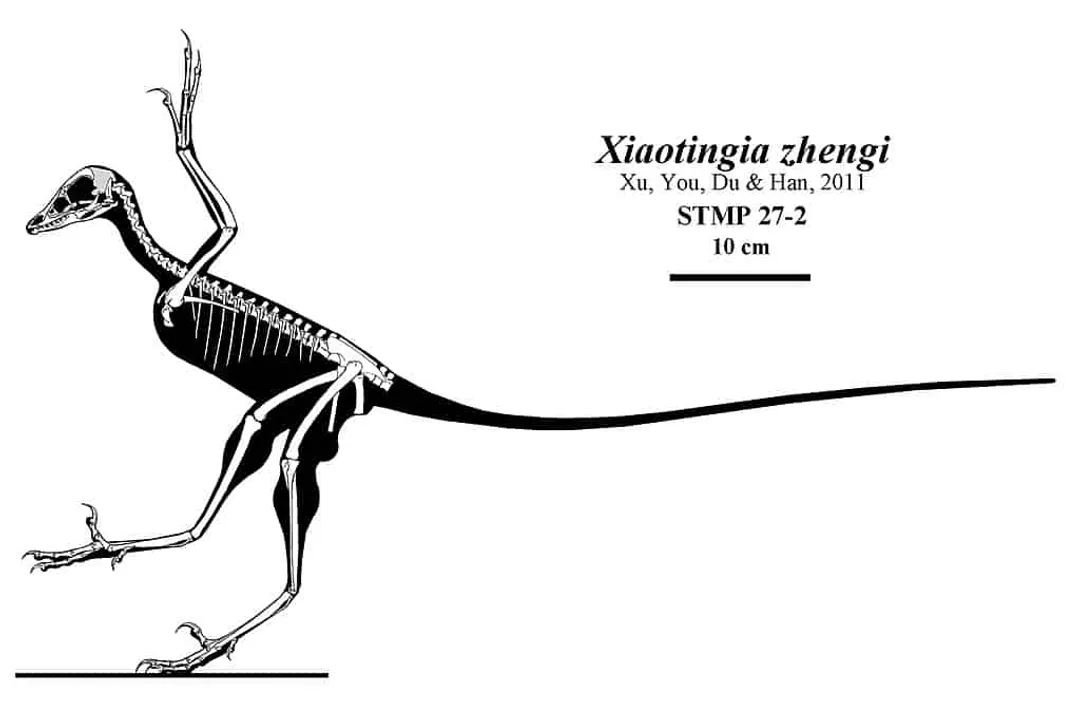
The comparison often centers on the relative proportions of the arm bones and the structure of the wrist bones (carpals) when measured against Archaeopteryx. [2] If the fossil evidence from Liaoning showed arm proportions closer to those of true birds, its location would lean toward the avian stem; if they more closely resembled Archaeopteryx, it would solidify its placement within that group. [2] This level of detail, gleaned from fossils found at this one primary location, is what fuels advanced phylogenetic research.
When comparing Xiaotingia to other feathered fossils from the same geological context, such as Aurornis, researchers look for specific reductions in non-avian dinosaur traits. The relative lengths of the tail vertebrae and the structure of the pelvis, when preserved, act as subtle geographic markers in the evolutionary map, showing which regional populations were evolving features faster than others during the Late Jurassic. [2]
The significance of the fossil's location—the Daohugou Beds—is that it provided both Xiaotingia and Aurornis, allowing scientists to compare two distinct, contemporaneous lineages occupying the same paleoenvironment, offering a unique snapshot of evolutionary experimentation occurring in real-time across a localized ancient ecosystem. [2]
# Importance of Site Preservation
The reason we know so much about Xiaotingia's anatomy stems directly from the exceptional preservation qualities of its burial site in Liaoning. [4] The Tiaojishan Formation acts as a Lagerstätte, a site with extraordinary fossil preservation. [4] Imagine a shallow lake environment in the Late Jurassic: periodic volcanic ash falls or fine sediment deposition created layers so fine they captured the delicate impressions of feathers, skin, and even filamentous structures. [4]
This is a rare global event. Most dinosaur fossils are found as skeletal remains embedded in coarser sediments where soft tissues rarely survive. The fact that the Xiaotingia remains from this specific location exhibit clear feather impressions speaks volumes about the local conditions during its death, allowing us to move past mere bone structure and discuss things like plumage. [4][5] A researcher studying this specimen is not just studying an animal; they are studying an animal whose final moments were recorded in near-perfect detail due to a unique interplay of local geology and climate over 150 million years ago. If the fossil had been deposited in a river delta nearby, we might only have bones, and the discussion about its plumage—central to its bird status—would be purely speculative.
# Navigating Taxonomic Locations
For a general reader trying to map out the family tree of birds, the shifting taxonomic "location" of Xiaotingia can be confusing, yet it directly relates to what was found at its physical location. Think of the evolutionary tree as a branching river delta, and the Tiaojishan fossils are critical markers on two or three of those branches simultaneously. [2]
| Comparison Point | Xiaotingia (Liaoning Specimen) | Archaeopteryx (Solnhofen Specimen) | Significance |
|---|---|---|---|
| Feather Structure | Well-developed pennaceous feathers on forelimbs [4][5] | Well-developed pennaceous feathers [2] | Shared advanced avian trait. |
| Taxonomic Placement | Debated: Either Archaeopterygidae or basal Avialae stem [2] | Defines the Archaeopterygidae family [2] | Slight anatomical variations dictate its placement relative to Archaeopteryx. |
| Geological Age | Late Jurassic [2][4][5] | Slightly younger (Tithonian Stage) [2] | Indicates Xiaotingia represents an evolutionarily contemporary but possibly distinct group. |
The key insight here is that while Xiaotingia and Archaeopteryx share the fundamental characteristic of advanced feathers, the precise measurements of their limb structure—the details visible because of their exceptional burial locations—are what keep scientists debating which branch of the "proto-bird" tree they belong to. [2] For instance, if the ratio of the forearm length to the hand length in Xiaotingia is significantly different from the classical Archaeopteryx standard, it suggests that the evolutionary path toward the bird wing took slightly different forms concurrently in different populations separated by geography and time.
This focus on anatomical minutiae, made possible only by the fidelity of the Liaoning burial location, is what allows paleontologists to construct hypotheses about the earliest stages of flight evolution. The "location" of Xiaotingia in the literature reflects the continuous refinement of the evidence pulled from that single spot in western Liaoning. [2]
# Further Research Contexts
While the primary location for Xiaotingia zhengi is firmly established in the Late Jurassic deposits of Liaoning, the broader study of the genus often involves comparing it to other feathered dinosaurs found elsewhere to solidify its classification. [2][4] For example, understanding Xiaotingia's position among Avialae involves mapping its characteristics against those of Anchiornis or even more basal paravians. [2] This comparative work expands the "location" of Xiaotingia from a single spot on a map to a key node on the entire evolutionary chart of bird origins. [2]
The existence of Xiaotingia alongside other feathered taxa in the Daohugou Beds provides crucial context for understanding ecological pressures. Being found in a site known for its delicate preservation suggests a community existing near stable, low-energy water bodies. [4] This environment might have favored specialized ground-dwelling or perching behaviors rather than active, long-distance flight, influencing which anatomical features became dominant in that localized population. [5] The fossil record from this one location suggests an evolutionary radiation where many different experiments in feather development and bipedal locomotion were occurring simultaneously before the definitive rise of powered flight seen later in the Cretaceous.
Related Questions
#Citations
Xiaotingia Pictures & Facts - The Dinosaur Database
Xiaotingia - Wikipedia
Xiaotingia zhengi - A-Z Animals
Xiaotingia zhengi | fossil animal - Britannica
Xiaotingia - a mesozoic field guide
Xiaotingia - Prehistoric Wildlife
Infinite Machine — Dinosaur of the Day: Xiaotingia zhengi by...
A simplified cladogram showing the systematic position of Xiaotingia...