What environmental condition likely resulted in the exceptional preservation of soft tissues in the Tiaojishan Formation?
Answer
Periodic volcanic ash falls or fine sediment deposition in a shallow lake
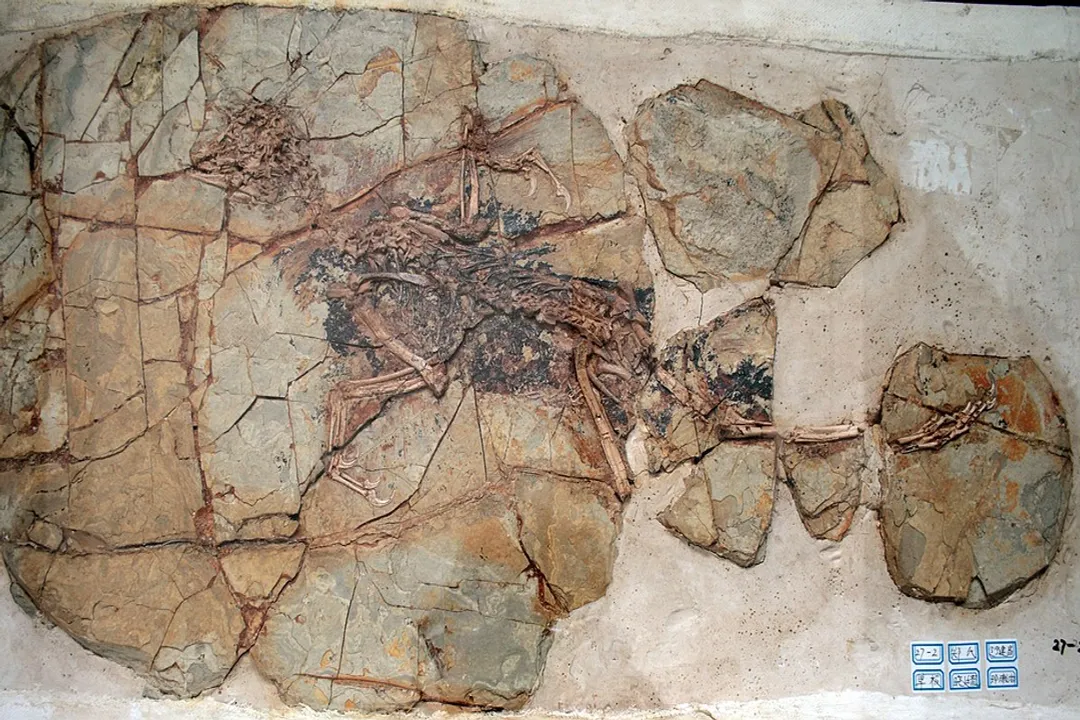
The exceptional preservation of soft tissues, including feather impressions, found in the Tiaojishan Formation stems directly from specific depositional conditions in a shallow lake environment during the Late Jurassic. Periodic events involving volcanic ash falls or continuous, very fine sediment deposition created layers that were fine enough to capture the delicate impressions of feathers, skin, and even filamentous structures. Had the remains been deposited in coarser sediments, such as a nearby river delta, only skeletal structures would typically survive, making detailed study of plumage impossible.
Related Questions
In which geological formation were the remains of *Xiaotingia zhengi* recovered?To what epoch do the sedimentary rocks containing *Xiaotingia zhengi* date?What feature was evidenced on the forelimbs of *Xiaotingia* found at the Tiaojishan site?What specific term describes the extraordinary fossil preservation quality of the Tiaojishan Formation site?What structures are compared between *Xiaotingia* and *Archaeopteryx* to aid in resolving taxonomic placement?How does the age of *Xiaotingia* compare temporally to the *Archaeopteryx* fossils found in Solnhofen, Germany?What was the initial taxonomic classification assigned to *Xiaotingia* by researchers?Which specific location within the Tiaojishan Formation yielded fossils vital for understanding avian relatives in the Jurassic?What potential function, other than powered flight, is suggested for the pennaceous feathers of *Xiaotingia*?What environmental condition likely resulted in the exceptional preservation of soft tissues in the Tiaojishan Formation?