Vervet Monkey Physical Characteristics
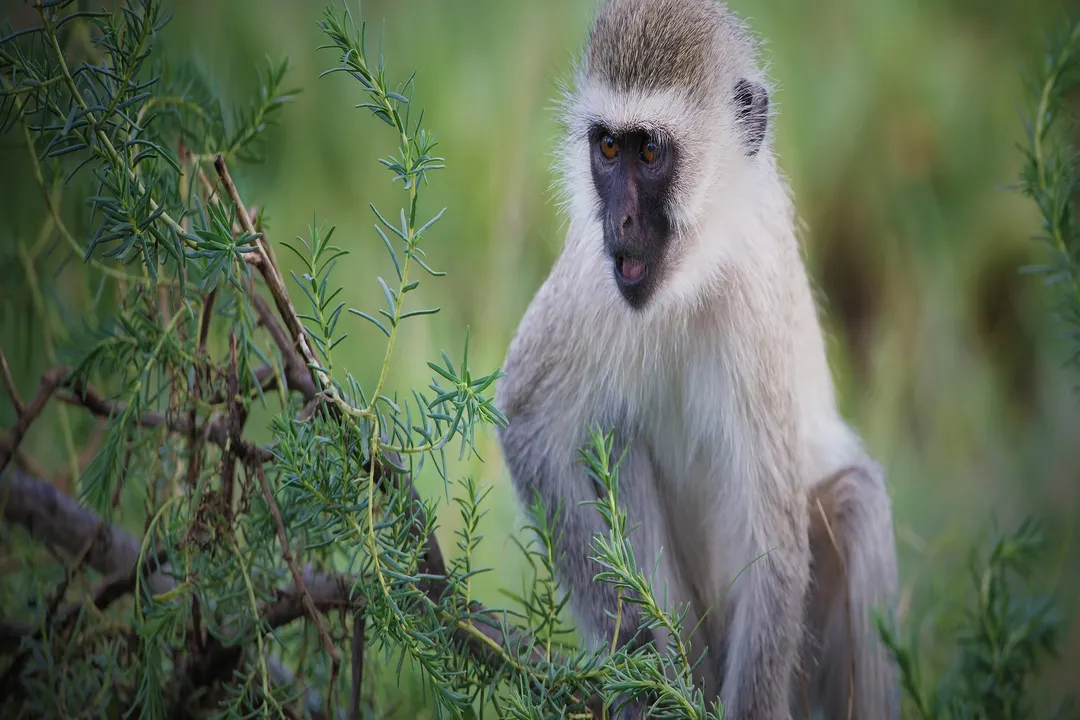
The vervet monkey presents a striking visual profile, instantly recognizable within its East African habitat, blending characteristics typical of Old World monkeys with its own distinct markings. These primates are generally medium-sized, though a noticeable size difference exists between the sexes, with males being substantially larger than females. To give a clearer picture of their build, an adult male might reach a body length of up to (about $2$ feet) and weigh as much as . Females are considerably smaller, which is a common pattern in many primate groups.
# Fur Pattern
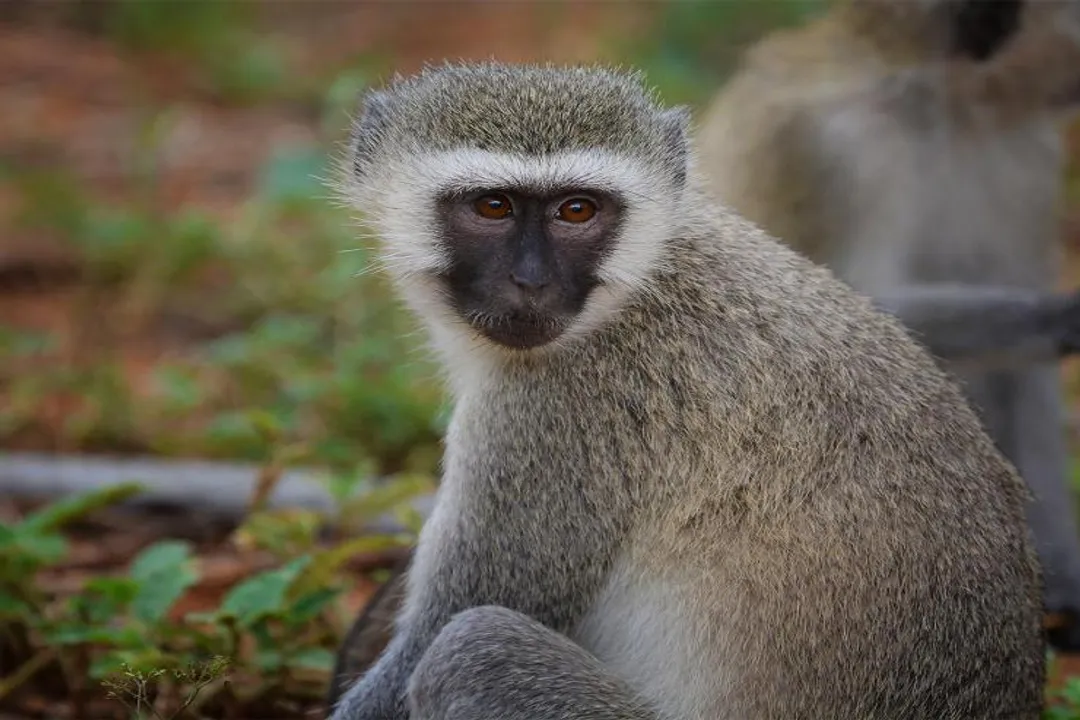
The animal's coat is a defining feature, offering a camouflage pattern well-suited to the mixed woodland and savanna environments where they are often found. The main body fur covering the back and limbs is typically described as a grizzled or olive-gray color. This coloration is not uniform; it often appears somewhat mottled due to the agouti banding of individual hairs. Contrasting sharply with the dorsal side, the underside—the chest and belly—is much paler, often appearing whitish or creamy.
An interesting observation for anyone tracking these monkeys across different terrains is how this coloration interacts with light. In the dappled shade of the Acacia woodlands, the olive-gray back helps them blend against bark and dry grasses, but when they move onto open ground, the pale underside can sometimes break up their silhouette against the bright sky when viewed from below, though this camouflage is most effective when they are moving within the shrub layer. If you observe a troop moving across open plains, note that their movements are often swift and ground-based, making their overall profile key to avoiding detection. The hands and feet of the vervet monkey are distinctly dark, often appearing black, contrasting with the lighter fur of their limbs.
# Distinct Markings
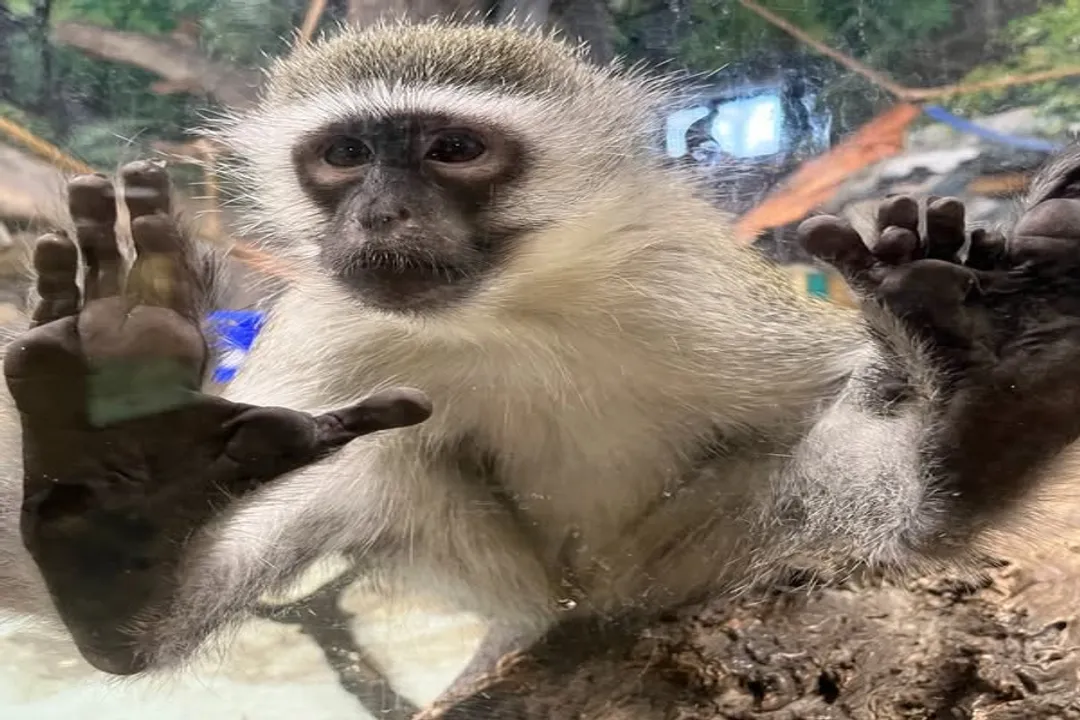
The head and face are where the vervet monkey truly sets itself apart from its relatives. The face itself is typically black, which provides a dark canvas for other notable features. Perhaps the most consistent and striking feature across all individuals is the prominent band of white fur that arches over the eyes, framing the face like a distinct eyebrow. This white brow band is a key identification marker. Additionally, there is often a noticeable area of white or light fur surrounding the mouth and chin, further highlighting the dark facial skin.
The species name, Chlorocebus aethiops, hints at the greenish tint sometimes seen in their fur, particularly in association with the olive tones on their backs. While the general coloration is consistent, minor variations in the intensity of the gray or olive hue can occur based on geography and individual age, though the dark face and white brow remain reliable identifiers.

# Body Structure
When considering the overall physique, the vervet monkey is built for agility both in the trees and on the ground. They possess relatively long limbs, which contributes to their capability as proficient runners and leapers. They are diurnal, spending significant time foraging on the ground, but they rely heavily on trees for sleeping, safety, and access to certain food sources.
The tail is another major physical characteristic, essential for their mobility but functionally different from those of many New World monkeys. The vervet's tail is long, often measuring about twice the length of its body. However, it is non-prehensile. This means they cannot use it to grasp branches or hold objects. Instead, it functions purely as a counterbalance while leaping between branches or when running quickly along the ground. This reliance on the tail for balance, rather than for an extra grip point, dictates a slightly different style of arboreal movement compared to monkeys that possess prehensile tails.
# Ischial Callosities
A specific, though less frequently discussed, physical trait relates to their posterior anatomy. Vervet monkeys, like many other Old World monkeys, possess thick, calloused patches of skin on their buttocks known as ischial callosities. In vervets, these patches are characteristically black. While not directly related to locomotion or feeding, these structures provide cushioning when sitting on hard surfaces, like tree branches or the ground, which is important given their semi-terrestrial lifestyle.
# Gender Differences
The variation in size between the sexes is a clear example of sexual dimorphism, where males are significantly more robust than females. Beyond sheer size and weight differences, the adult male possesses a highly visible secondary sexual characteristic that is absent or less pronounced in females.
# Male Coloration
Adult male vervet monkeys exhibit a bright patch of coloration on their scrotum and perineal area. This area is often described as having a vivid, bright blue hue. This striking blue coloration is a hallmark of mature males and likely plays a role in social signaling within the troop structure. Given that vervets live in complex social groups, often called troops, such visual signals can be important for dominance displays or attracting mates. The female's genital area lacks this intense blue pigmentation.

# Physical Metrics Summary
To better illustrate the physical variation, the key measurements can be summarized. Keep in mind that these are general figures, and individual variation exists within the wild population.
| Characteristic | Male (Approximate) | Female (Approximate) | Notes |
|---|---|---|---|
| Body Length (Head/Body) | Up to | Smaller than male | Not including tail length |
| Weight | Up to | Less than | Significant sexual dimorphism |
| Tail Length | Body Length | Body Length | Non-prehensile, used for balance |
| Pelage (Back) | Olive/Grizzled Gray | Olive/Grizzled Gray | Camouflage coloring |
| Genitalia Color | Bright Blue | Pale/Uncolored | Distinctive feature of adult males |
The consistent difference in size suggests that males must exert more energy or resources to maintain their larger mass, possibly leading to different foraging strategies compared to the smaller females, though the sources focus more on the morphology itself rather than resulting behavior.
If one were trying to differentiate a vervet from a closely related species in the field based purely on appearance, the combination of the black face, the white superciliary stripe, the long, non-grasping tail, and the sheer olive-gray/white contrast provides the best immediate physical markers. The bright blue scrotum in males offers a definitive confirmation for that sex. It is fascinating how such a small animal utilizes specific, high-contrast markings—the white brow against the black face—which must be important for visual communication over the short distances they typically interact within their dense social units. Unlike many nocturnal primates whose visual features are adapted for low light, the vervet's sharp, contrasting colors point toward a diurnal reliance on clear visual signaling, both for intra-species communication and predator detection.
# Dentition and Diet Connection
While strictly physical, the teeth are a direct morphological feature linked to their feeding habits. Vervets are considered omnivores. Their dental structure reflects this varied diet, which includes fruits, seeds, flowers, insects, and occasionally small vertebrates. They possess the generalized dentition characteristic of Old World monkeys, suitable for tearing vegetation and crushing harder food items like seeds and insects. Their strong jaws and robust cheek teeth allow them to process a wide range of dietary components found across the varied ecosystems they inhabit. This adaptability in diet is closely supported by a versatile physical structure that allows them to exploit resources both on the ground and in the lower to middle canopy layers.
# Vision and Eyes
The eyes themselves are positioned forward on the face, providing the binocular vision necessary for depth perception, crucial for judging distances when leaping in the trees or accurately snatching moving insect prey. The eyes are set within the dark facial mask, accented by the white brow band. While the sources do not detail the specific color of the iris, the structure confirms their reliance on sight as their primary sensory input during the day. This strong visual orientation aligns with the complex social interactions observed in their troops, where visual cues are paramount for maintaining hierarchy and group cohesion.
# Locomotion Adaptations
The overall limb structure points toward a creature equally comfortable descending a trunk as it is scampering across a flat plain. Their arms and legs are nearly equal in length, which is characteristic of monkeys that engage in both arboreal and terrestrial locomotion—a pattern known as quadrupedalism. The long hind limbs provide the power for their characteristic bounding leaps when fleeing danger or moving between foraging spots. This physical ability to switch rapidly between ground movement and vertical escape is a significant survival advantage against terrestrial predators like large cats. The length of the tail, as noted before, stabilizes this rapid, uneven movement, ensuring that as the body pitches forward during a jump, the tail counteracts the momentum, preventing an uncontrolled fall. This physical balance mechanism is a testament to evolutionary specialization for their mixed habitat niche.
# Summary of Key Features
To summarize the most observable physical characteristics that define the vervet monkey:
- Coloration: Grizzled olive-gray dorsally, pale/white ventrally.
- Face: Black skin contrasted by a stark white band above the eyes.
- Tail: Very long, used for balance only, not grasping.
- Dimorphism: Males are larger and possess a bright blue scrotum.
- Limbs: Long, adapted for both running and climbing.
These physical traits collectively equip the vervet monkey to thrive across a wide spectrum of African environments, from dry scrubland to gallery forest edges, ensuring their presence remains widespread across their range. Their appearance is a direct reflection of their ecological strategy: quick, alert, and able to utilize multiple environmental layers for safety and sustenance.
Related Questions
#Citations
Vervet monkey - Wikipedia
Vervet Monkey (Chlorocebus pygerythrus) Fact Sheet - LibGuides
Vervet Monkey | San Diego Zoo Animals & Plants
Vervet Monkey | African Wildlife Foundation
Vervet Monkey Facts | East Africa Wildlife Guide
Vervet monkey - Wisconsin National Primate Research Center
Chlorocebus aethiops (vervet monkey) - Animal Diversity Web
Zoo Boise - Facebook
Vervet | Primate Behavior & Adaptations - Britannica