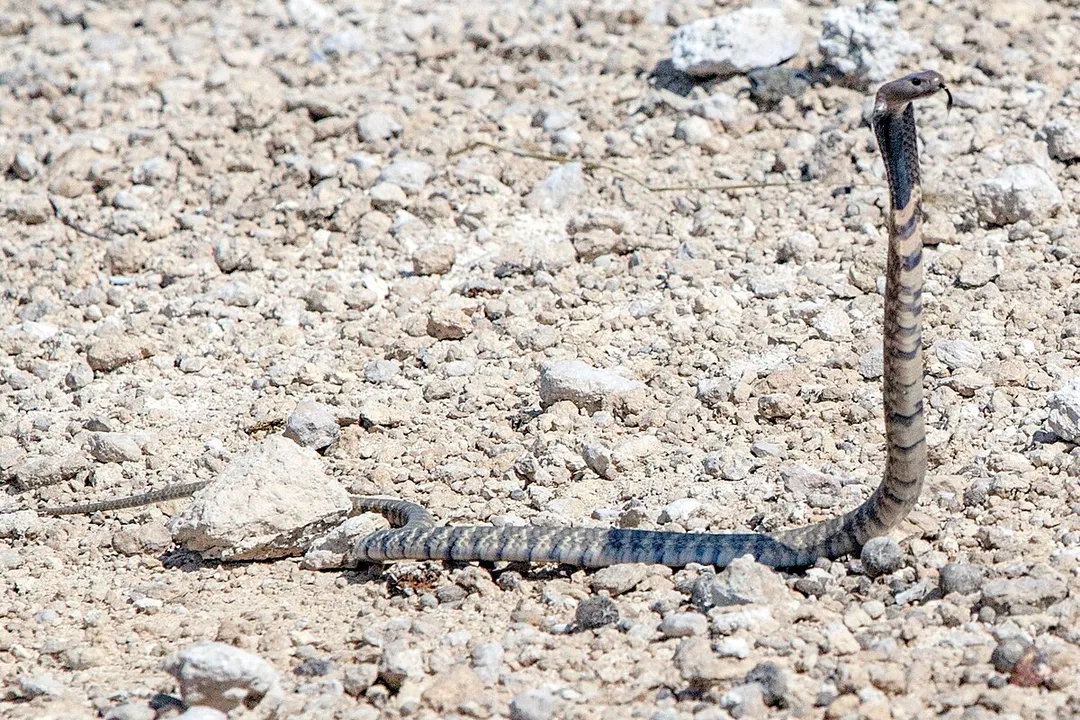
What ecological factor might favor the solid black coloration of *N. n. woodi* over striping?
Superior camouflage in darker volcanic soils or dense shadows
The divergence in coloration between the two subspecies reflects adaptation to distinct microhabitats within the broader arid region. The uniform, solid matte black of *N. n. woodi* suggests an evolutionary advantage related to crypsis (camouflage) against a darker substrate, possibly darker volcanic soils common to its restricted desert areas, or superior concealment within dense shadows. Furthermore, this dark pigmentation might confer thermoregulatory benefits in extremely arid zones by maximizing heat absorption early in the day compared to the lighter, barred subspecies. This contrasts with the striped *N. n. nigricincta*, whose pattern likely functions to break up its outline against varied shrubland.