What disc width can mature specimens of *Potamotrygon leopoldi* typically attain?
Answer
Up to 50 centimeters or more
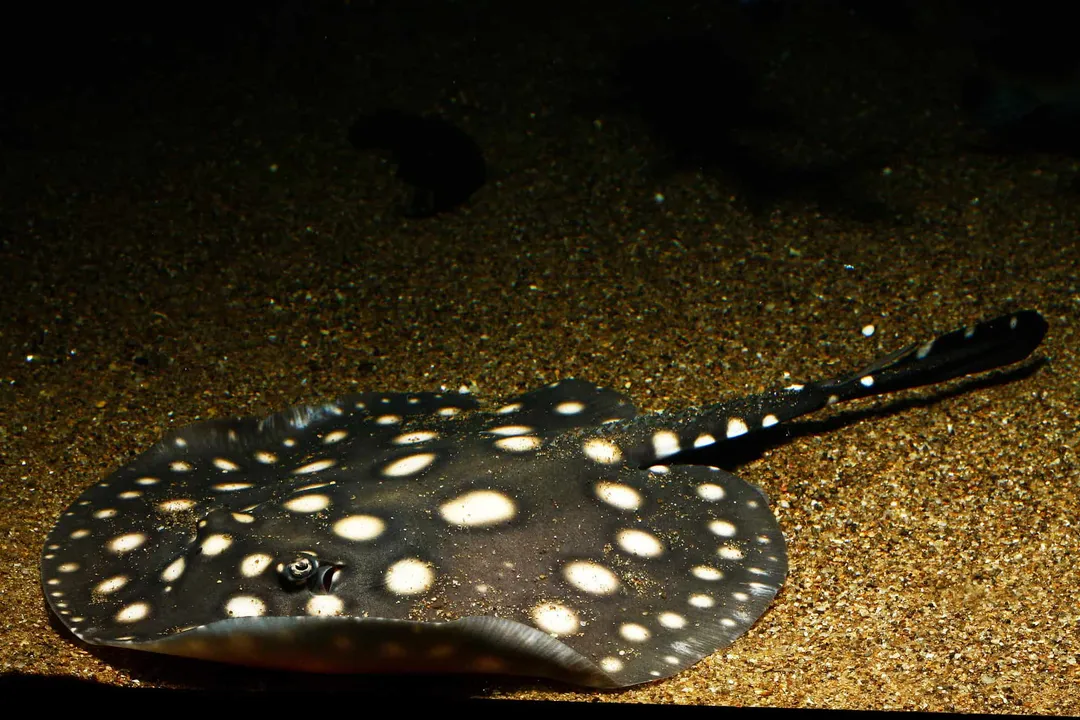
While size can vary depending on environmental factors and maturity, the text specifies a typical range for mature specimens of *Potamotrygon leopoldi*. Taxonomists consider the overall size, along with pattern and morphology, when defining species boundaries. Mature specimens of this species are generally noted to possess a disc width that can reach or exceed 50 centimeters. This measurement serves as one of the physical criteria used in conjunction with genetic data to confirm its specific placement within the *Potamotrygon* genus and differentiate it from other riverine stingrays.
Related Questions
What distinguishes the Family Potamotrygonidae of the Xingu River Ray?What do the Greek roots *potamos* and *trygon* summarize in the Genus name *Potamotrygon*?Which Class groups the Xingu River Ray with sharks based on skeletal composition?What profound ecological implication arises from *Potamotrygon leopoldi*'s endemism to the Xingu River?What historically used name served as an abbreviation for *Potamotrygon leopoldi* before formal species description?What morphological characteristic defines the Order Myliobatiformes to which *P. leopoldi* belongs?What specific visual trait defines the dorsal surface of *Potamotrygon leopoldi*?What key feature characterizes the Phylum Chordata that the Xingu River Ray belongs to?What disc width can mature specimens of *Potamotrygon leopoldi* typically attain?How does the species designation *P. leopoldi* typically differ morphologically from other Amazonian *Potamotrygon* species?