What defines *Aphonopelma seemanni* in terms of its primary lifestyle orientation regarding ground versus trees?
Answer
Terrestrial species
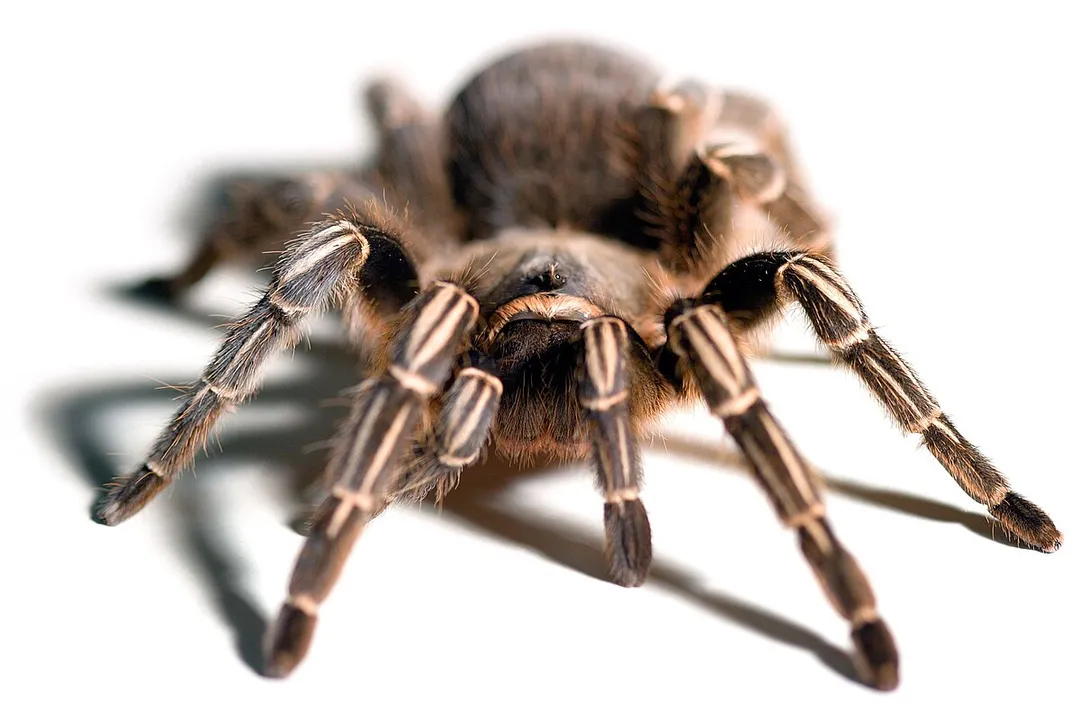
The term used to classify the primary mode of life for *Aphonopelma seemanni* is terrestrial, indicating that it spends the vast majority of its existence on or beneath the ground surface rather than inhabiting elevated positions within trees or vegetation. This classification directly informs their need for deep substrate in captive environments, as they are adapted to constructing and residing within burrows in the earth. This terrestrial nature is intrinsically linked to their reliance on ground-level structures like rocks and logs for shelter construction.
Related Questions
What is the binomial classification for the Zebra Tarantula commonly known as the Costa Rican Striped Knee?What preferred environment characterizes the habitat of *Aphonopelma seemanni* in Central America?Which country is cited as the epicenter for the distribution of *A. seemanni*?What structural features do *A. seemanni* frequently utilize when situating their silk-lined retreats?Which distant species shares the common name "Zebra Tarantula" but is native to Southeast Asia?What defines *Aphonopelma seemanni* in terms of its primary lifestyle orientation regarding ground versus trees?How is surface activity of *A. seemanni* behaviorally influenced by seasonal precipitation cycles?What ecological niche differentiator is key to understanding the known range of *A. seemanni*?What setup principle must keepers follow that mirrors the *A. seemanni* environment in Guanacaste region of Costa Rica?Which Central American nations are mentioned as part of the territorial extension for *A. seemanni* besides the epicenter country?