What characteristic confirms the Whooping Crane's placement in Phylum Chordata?
Answer
Presence of a dorsal hollow nerve cord during development
The Phylum Chordata encompasses animals that share a fundamental body plan established early in evolutionary history. Although adult birds like the Whooping Crane may have highly modified structures, their embryonic development confirms their placement within this phylum. Key chordate characteristics that must be present at some developmental stage include a notochord, pharyngeal slits, a post-anal tail, and critically, a dorsal hollow nerve cord. This placement links the crane to fish, reptiles, amphibians, and mammals based on this shared ancestral blueprint.
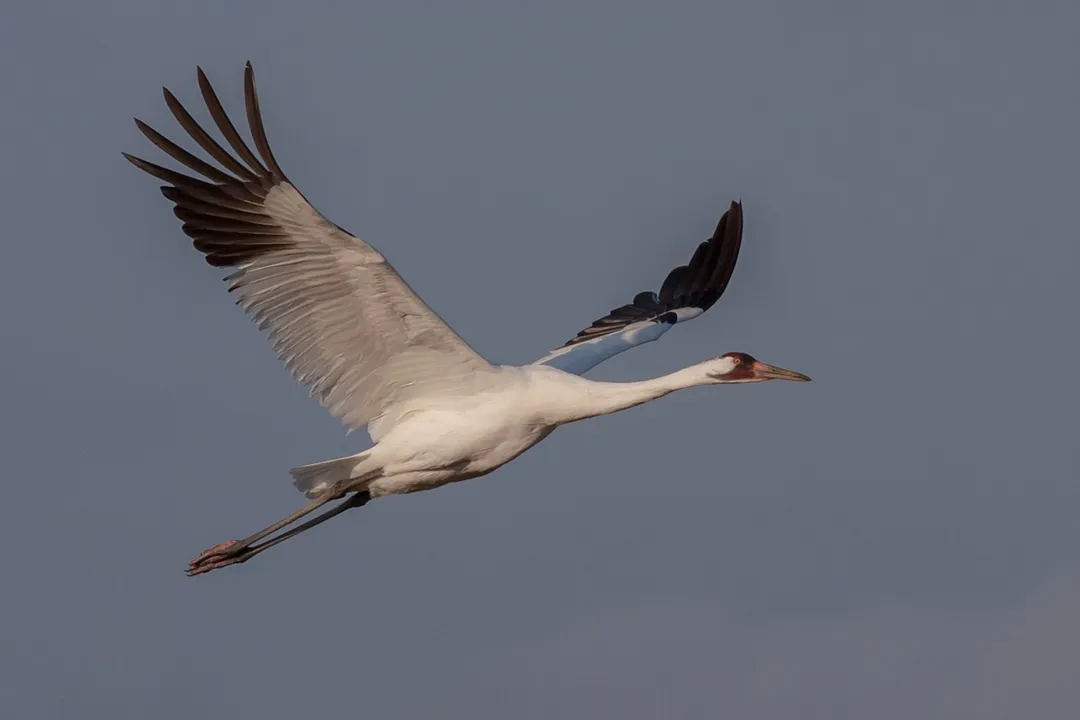
Related Questions
What specialized feature produces the Whooping Crane's trumpeting calls within Family Gruidae?Which combination of traits characterizes the Whooping Crane's placement in Class Aves?What characteristic confirms the Whooping Crane's placement in Phylum Chordata?How is the genus *Grus* generally distinguished from other crane genera based on physical structure?How does the species status of *Grus americana* affect regulatory review for development in states like Idaho or North Dakota?What distinct plumage feature characterizes immature *Grus americana* compared to the striking appearance of the adults?What common physical characteristic defines members typically placed in the Order Gruiformes?What key difference in flight posture separates Family Gruidae from Herons (Ardeidae)?What specific conservation status rank does NatureServe assign to *Grus americana* globally?Which genera, besides *Grus*, were historically suggested for the placement of the Whooping Crane based on older classifications?