How does the species status of *Grus americana* affect regulatory review for development in states like Idaho or North Dakota?
Answer
Triggers regulatory review for development projects impacting habitat
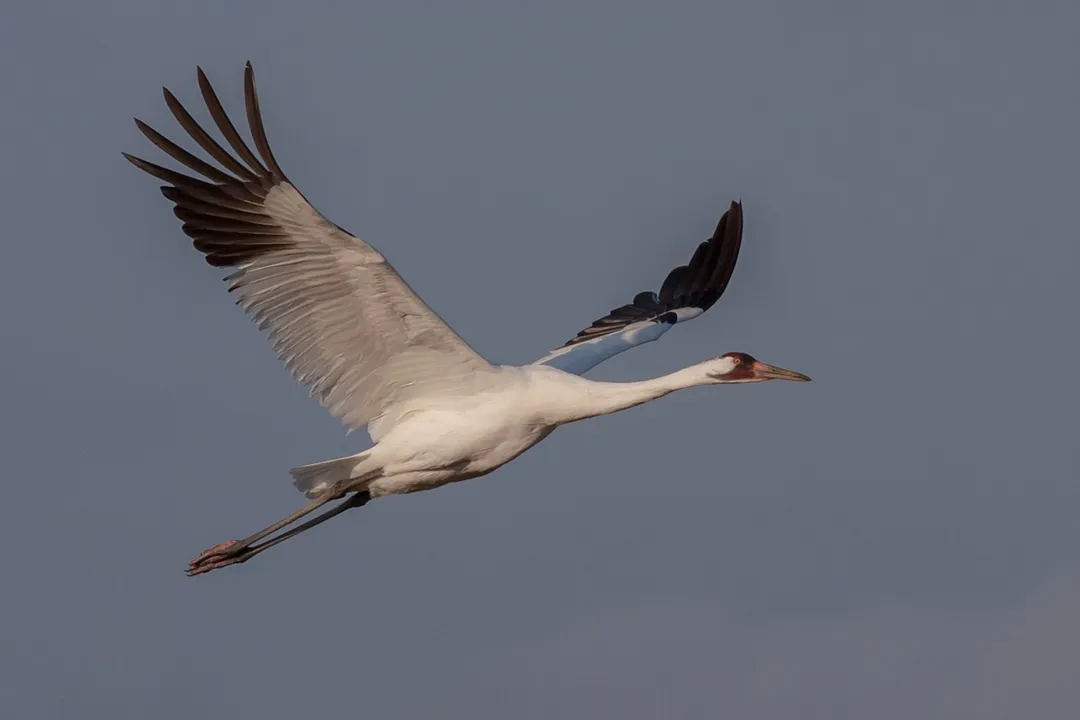
The precise taxonomic definition of *Grus americana* as a distinct species is the direct legal mechanism triggering federal oversight concerning its habitat. Because it is recognized globally and under frameworks like the U.S. Endangered Species Act, any proposed development or pipeline project that might impact its necessary habitat—whether breeding grounds, migration stops like those in North Dakota, or wintering grounds—must undergo specific regulatory review processes. If the bird were classified differently (e.g., as a subspecies), the legal depth and mandated protection levels derived from federal statutes could potentially be altered or weakened.
Related Questions
What specialized feature produces the Whooping Crane's trumpeting calls within Family Gruidae?Which combination of traits characterizes the Whooping Crane's placement in Class Aves?What characteristic confirms the Whooping Crane's placement in Phylum Chordata?How is the genus *Grus* generally distinguished from other crane genera based on physical structure?How does the species status of *Grus americana* affect regulatory review for development in states like Idaho or North Dakota?What distinct plumage feature characterizes immature *Grus americana* compared to the striking appearance of the adults?What common physical characteristic defines members typically placed in the Order Gruiformes?What key difference in flight posture separates Family Gruidae from Herons (Ardeidae)?What specific conservation status rank does NatureServe assign to *Grus americana* globally?Which genera, besides *Grus*, were historically suggested for the placement of the Whooping Crane based on older classifications?