In dryer, more arid locales within its distribution, how might the typically defined banding pattern of *Naja nigricincta* change?
Answer
The snake may develop a predominantly brown or uniform appearance
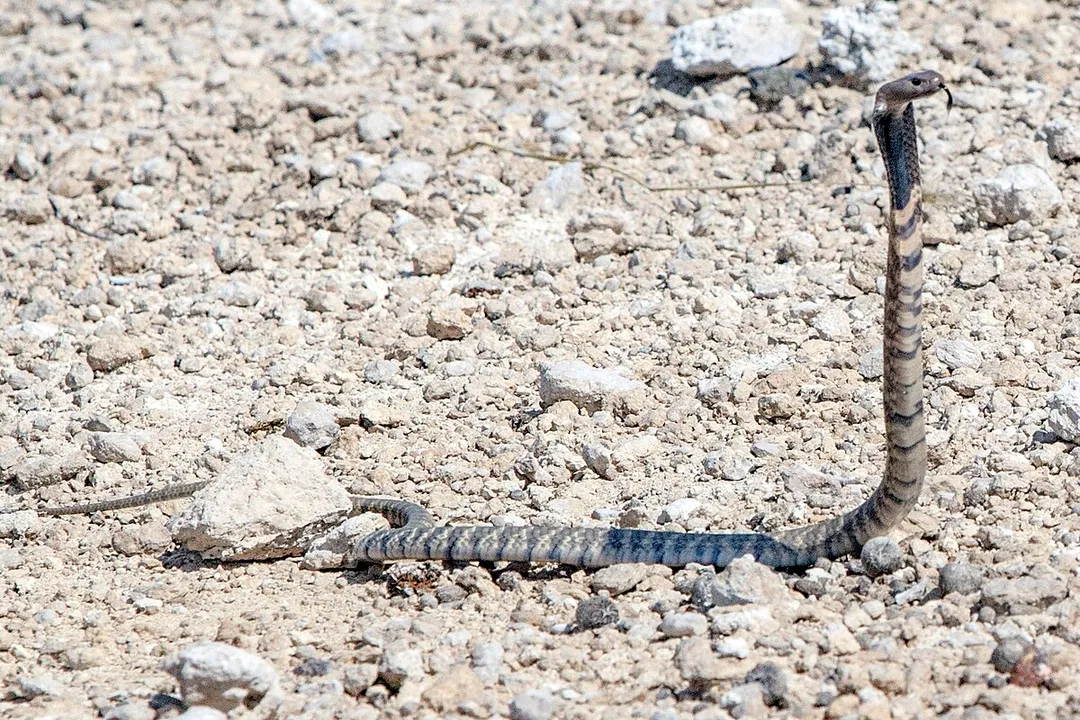
A significant aspect of this species is its phenotypic plasticity, meaning its physical appearance, particularly the striking zebra striping, is adaptable based on environmental factors. In regions characterized by drier conditions or more arid substrates, the contrasting black and light bands can become heavily muted or even entirely absent. This results in the snake presenting as almost entirely black in some areas, or predominantly brown or uniform in others, demonstrating camouflage finely tuned to the local environment.
#Videos
Zebra Cobra (Naja nigricincta nigricincta) - Namibia - YouTube
Related Questions
What does the scientific name *Naja nigricincta* roughly translate to, describing the species?How does the hood spread of *Naja nigricincta* compare to the crowns displayed by some other large *Naja* species?What textural characteristic defines the body scales across the *Naja nigricincta*?What standardized physical metrics do herpetologists utilize to assess population health and differentiate cobra morphs?What is the typical adult length range documented for the medium-sized Zebra Spitting Cobra?What mechanical action is responsible for ejecting the toxic liquid from the fangs of *Naja nigricincta*?In dryer, more arid locales within its distribution, how might the typically defined banding pattern of *Naja nigricincta* change?Which geographical region defines the distribution span of the Zebra Spitting Cobra (*Naja nigricincta*)?Compared to many other African cobras, what feature distinguishes the head structure of *Naja nigricincta*?What environment is mentioned as one of the preferred habitats where the Zebra Spitting Cobra's disruptive camouflage is effective?