Zebra Snake Physical Characteristics
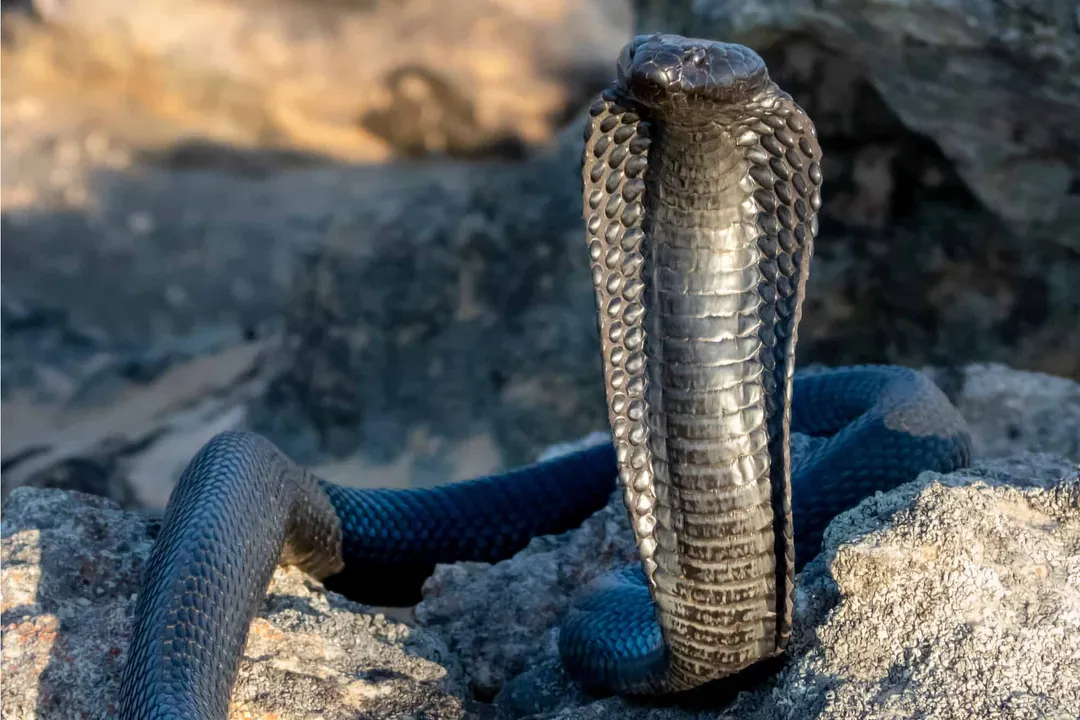
The creature often referred to as the Zebra Snake is more formally recognized in herpetological circles as the Zebra Cobra (Naja nigricincta), sometimes also called the Zebra Spitting Cobra. Its physical presentation in the wild offers a fascinating study in reptilian variation, where the expectation of strict "zebra" striping is often unmet.
# Coloration Pattern
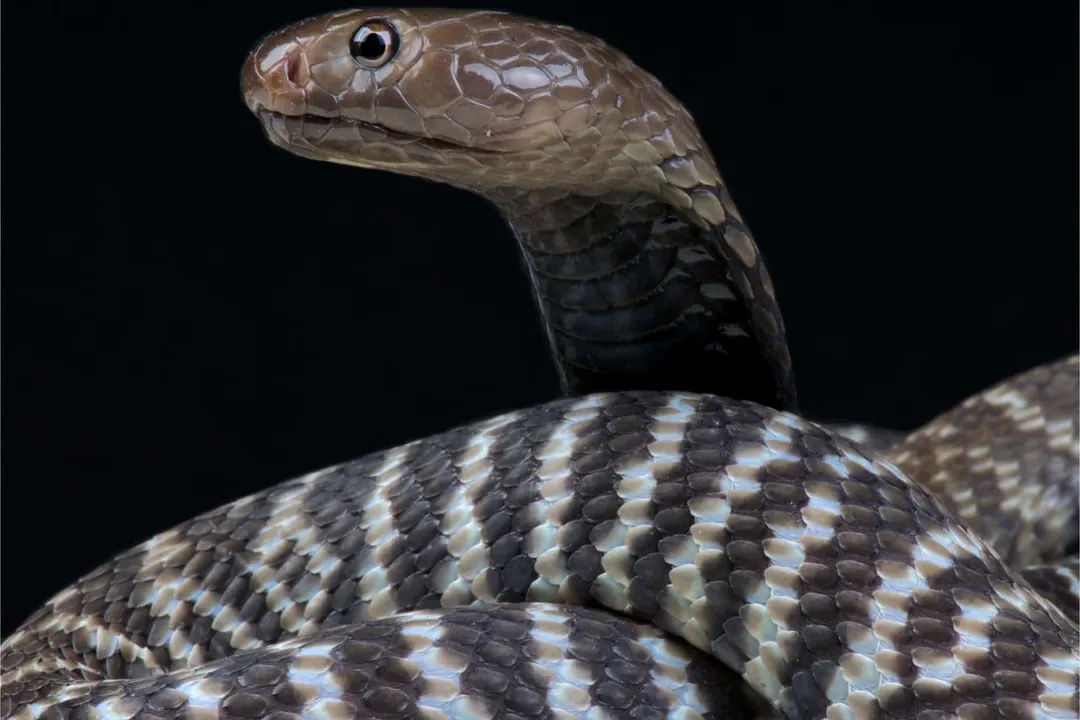
Perhaps the most discussed physical characteristic is the snake's pattern, or lack thereof. The Zebra Cobra can exhibit considerable variability across its range, sometimes making identification based on color alone tricky. In some instances, individuals display a distinct pattern of dark (often black) and lighter bands, which can appear white or yellowish. These bands typically circle the body, giving rise to the common name.
However, a significant portion of the population, particularly adults in certain regions, may be a uniform, shiny black or dark brown color. This divergence from the expected striping is an important physical identifier in itself; one should not assume every Zebra Cobra encountered will have clear banding. When observing these snakes, noting the sheen of the scales is key, as they are described as having a glossy or shiny appearance. This contrast between banded and melanistic (uniform dark) forms means that while the name suggests one specific look, the reality encompasses a spectrum of dark base colors overlaid with striping or solid pigmentation.
It is insightful to consider how this variability aids survival. A uniformly dark specimen would be superbly camouflaged amongst dark soil, leaf litter, or deep shadows in a dense bushveld environment, allowing it to melt into the background while hunting or resting. Conversely, the distinct, high-contrast banding seen in other individuals might provide disruptive camouflage, breaking up the snake’s outline when viewed against a background of patchy light and shadow, such as in more open, rocky areas. This flexibility in appearance suggests an evolutionary advantage in adapting to diverse substrates across its distribution.
# Size and Build
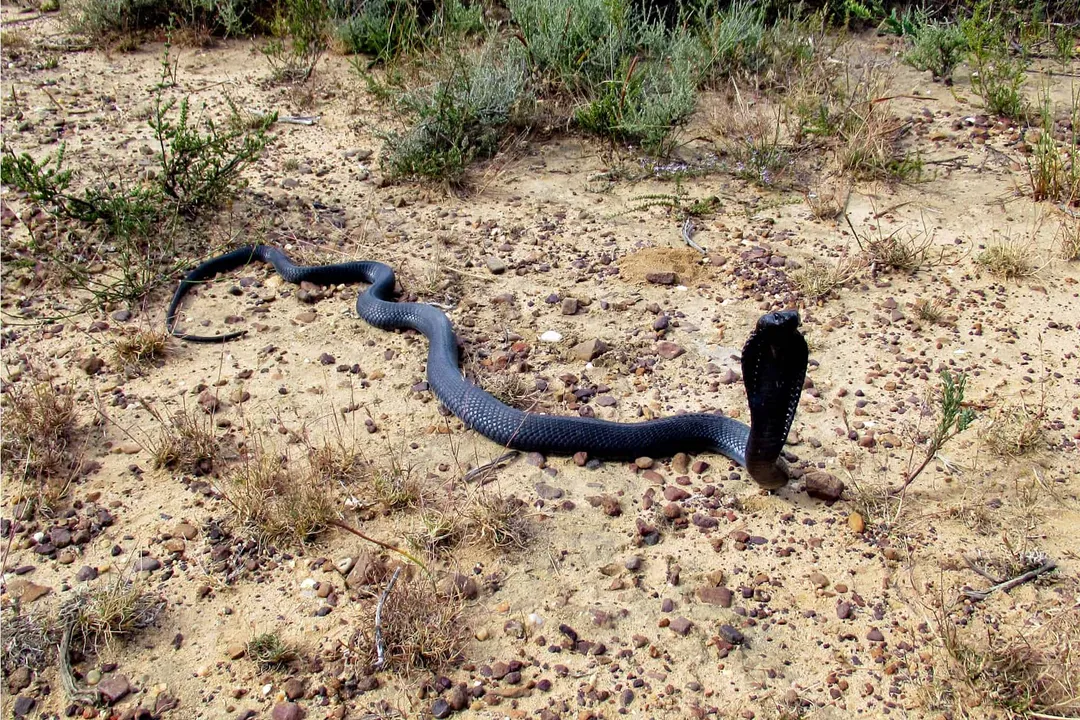
When assessing the body structure of the Zebra Cobra, it presents as a moderately sized, yet substantial, elapid. Adults generally reach lengths of up to about 1.4 meters. While this length places them firmly among the larger venomous snakes in their environment, they are not giants of the snake world.
The build is typically slender to medium-bodied, rather than overly thick or heavy-set, which contributes to their agility. This build is characteristic of many active hunting snakes that rely on speed and striking accuracy. The tail is generally slender towards the tip.
# Head Features and Display
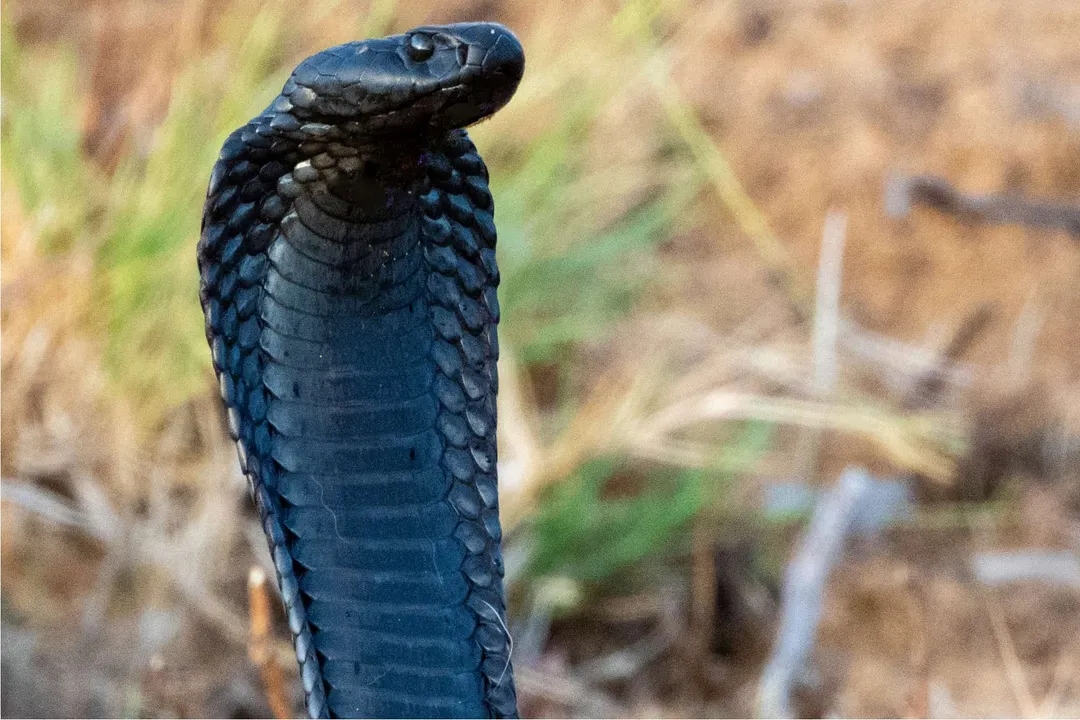
Like other members of the Naja genus, the Zebra Cobra possesses the characteristic ability to flatten and expand the ribs in its neck region to form a hood when feeling threatened or preparing to strike. This display is a visual warning signal, intended to make the snake appear much larger and more intimidating to a potential predator or aggressor.
The head itself is relatively broad and distinct from the neck, a common feature in cobras. A specific physical characteristic noted when comparing the Zebra Cobra to the Rinkhals (Hemachatus haemachatus) relates to the hood structure and the tail. While the Rinkhals hood tends to be narrower and more elongated, the Zebra Cobra's hood is the classic, broad cobras display. Furthermore, the Rinkhals often has keeled scales on the posterior part of its body, whereas the Zebra Cobra generally possesses smooth scales throughout. Being able to recognize these subtle differences in head shape and scale texture, especially when the snake is not displaying its hood, is critical for accurate identification in the field.
# Venom Apparatus
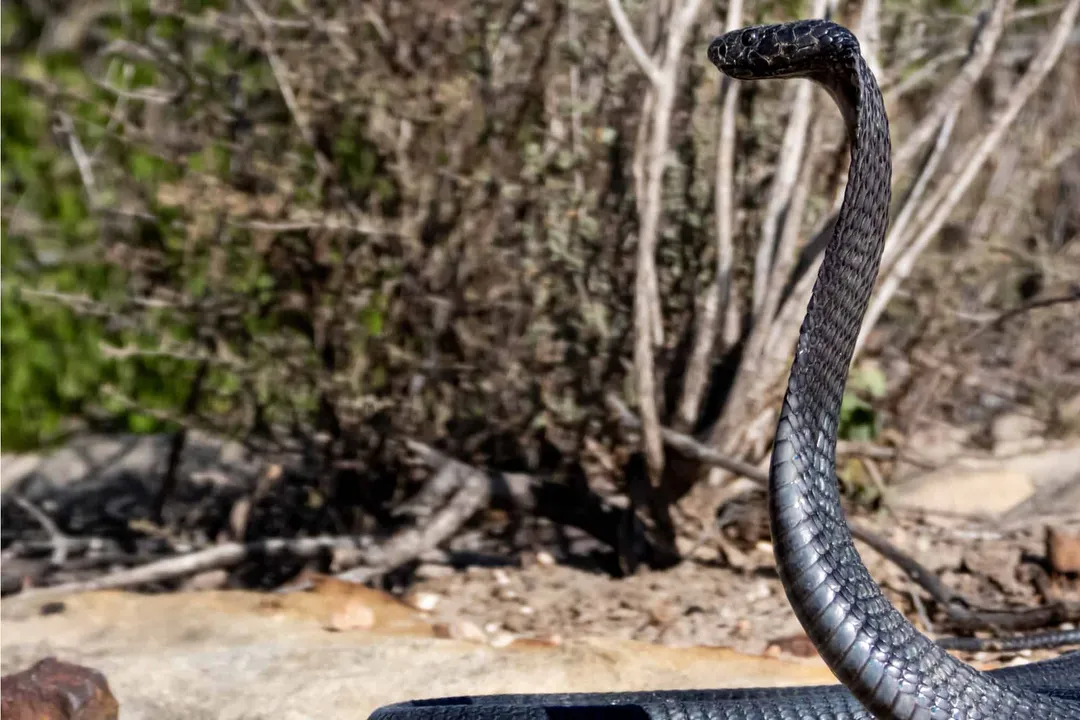
A defining physical trait, though not immediately visible, is the presence of fixed front fangs connected to venom glands. This places the Zebra Cobra in the category of spitting snakes, meaning that in addition to a potentially fatal bite, it can project venom accurately from its fangs towards the face or eyes of a perceived threat. The physical mechanism behind this action involves muscular constriction around the venom glands, directing the potent fluid through specialized openings in the fangs. The projection of this venom is a defensive characteristic directly tied to the anatomy of its oral structure.
# Key Distinctions from the Rinkhals
To fully appreciate the physical characteristics of the Zebra Cobra, it is helpful to directly contrast it with the Rinkhals, as these two snakes often share habitats and both are capable of spitting.
| Feature | Zebra Cobra (Naja nigricincta) | Rinkhals (Hemachatus haemachatus) |
|---|---|---|
| Genus | Naja (True Cobra) | Hemachatus (Not a True Cobra) |
| Color/Pattern | Shiny black to brown; variable banding, often uniform dark in adults | Generally dark brown to black; often has faint crossbands |
| Scale Texture | Smooth scales throughout | Keeled scales on the rear half of the body |
| Hood Shape | Broad, classic cobra hood | Narrower, more elongated hood |
| Spitting | Yes, venom projected from front fangs | Yes, venom projected from front fangs |
Understanding that the Zebra Cobra is a true cobra (genus Naja) while the Rinkhals is not, despite superficial similarities like dark coloration and spitting capability, rests on understanding skeletal and scale morphology. For the lay observer, the difference in how the hood is presented—the Zebra Cobra's wider display versus the Rinkhals' narrower one—offers a functional physical distinction in a confrontation scenario.
# Regional Morphotypes
The term "Zebra Snake" often aggregates snakes across different geographical areas that share some physical traits but might be classified as different subspecies or populations. The physical description, particularly the intensity and clarity of the striping, often correlates with where the snake lives. For instance, some populations are consistently more strongly banded than others. When dealing with this species, recognizing that physical descriptions can shift based on geographic locality is paramount; a snake identified as a Zebra Cobra in one region might look drastically different from one identified in another, yet both share the core Naja nigricincta characteristics like the spitting habit and general size range.
For anyone interested in snake identification, a critical piece of advice derived from observing these variations is to always prioritize observing the head and neck structure over relying solely on pattern when a snake is coiled or moving quickly. While patterns are eye-catching, the presence or absence of keeled scales on the hind body, and the inherent difference in hood shape between the Naja and Hemachatus genera, are the consistent physical hallmarks that separate this species from its look-alike counterparts.
# Summary of Key Physical Attributes
To consolidate the defining physical aspects of the Zebra Cobra:
- Length: Average adult near 1.4 meters.
- Color: Highly variable, ranging from uniform shiny black/dark brown to prominently banded black/yellowish-white.
- Scales: Smooth overall.
- Defense: Possesses a distinct, broad hood when threatened.
- Fangs: Fixed front fangs capable of projecting venom.
This combination of size, variable yet glossy dark coloration, hood morphology, and venom projection anatomy defines the physical presence of the Zebra Snake in its natural habitat.
#Videos
How to identify the infamous Zebra snake! - YouTube
Related Questions
#Citations
Zebra Snake Animal Facts - Naja nigricincta
Zebra Spitting Cobra Characteristics and First Aid in Windhoek ...
Zebra Cobra - African Snakebite Institute
Zebra Snake Facts & Photos | Wowzerful
Naja nigricincta - Facts, Diet, Habitat & Pictures on Animalia.bio
How to identify the infamous Zebra snake! - YouTube
Zebra Spitting Cobra | Made in the Wild