Yellow Cobra Physical Characteristics
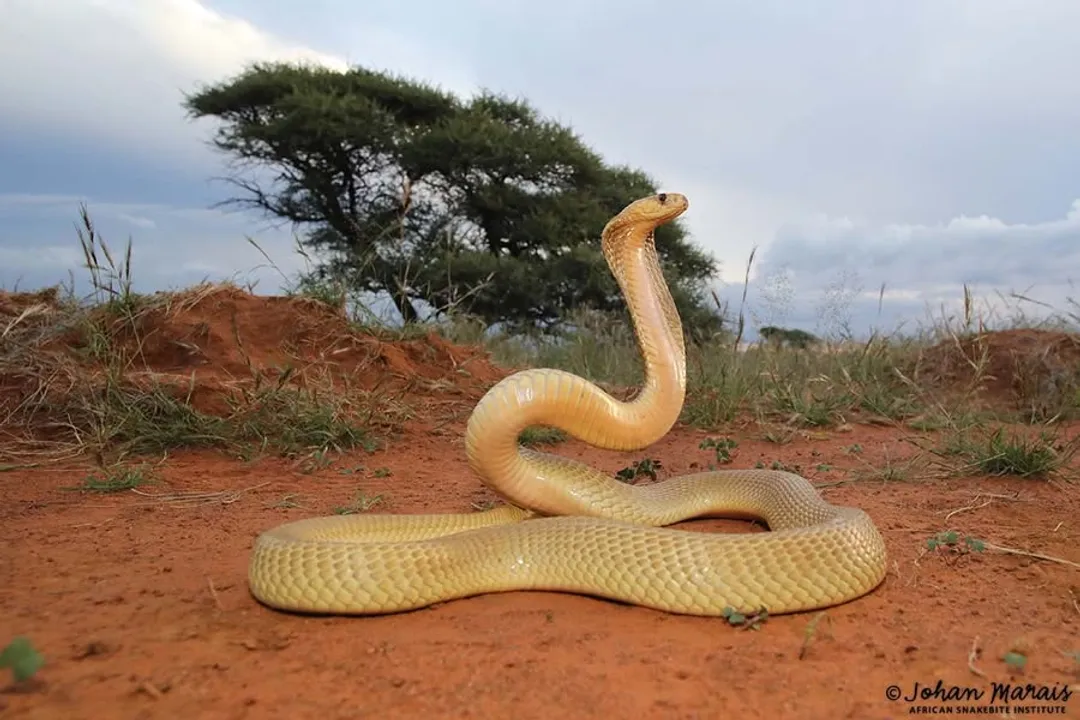
The snake most frequently referred to as the Yellow Cobra is, in fact, the Cape Cobra (Naja nivea), a creature renowned for its striking, yet variable, appearance across its range in Southern Africa. [1][2][5] While the golden-yellow phase is perhaps the most iconic and certainly the source of its common nickname, the physical characteristics of this elapid are far more diverse than a single color suggests, making identification an exercise in observing more than just the general hue. [1][6] This species holds the distinction of being one of Africa's most venomous snakes, and its physical traits are finely tuned for both concealment and defense. [5]
# Color Variance
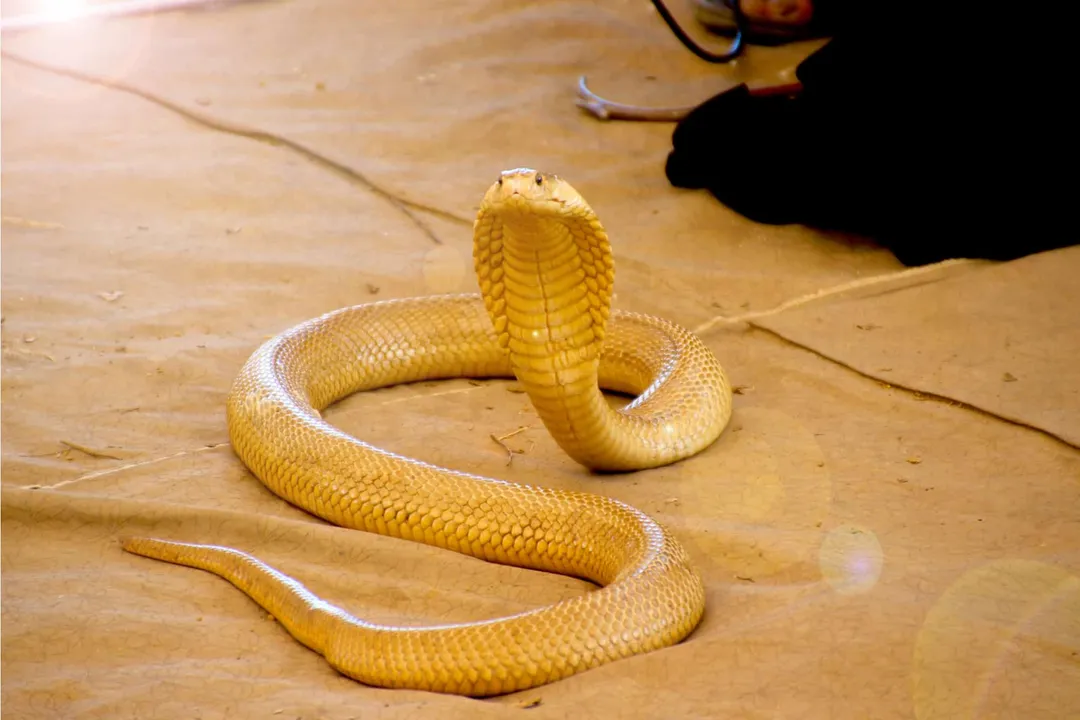
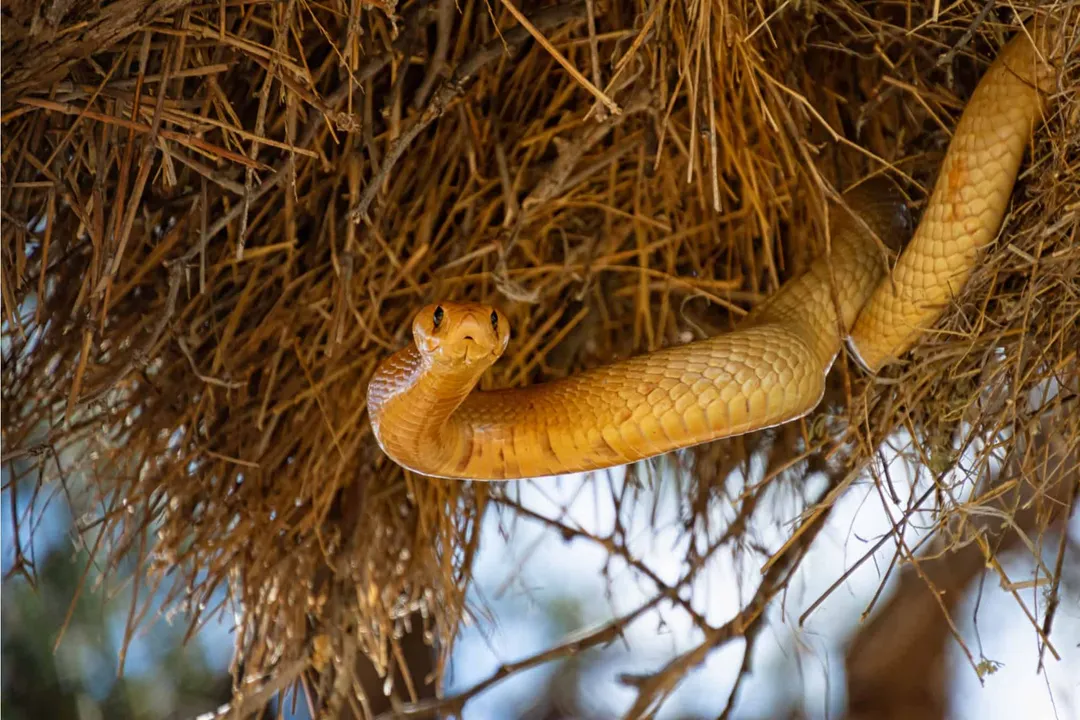
The term "Yellow Cobra" immediately brings to mind a snake shimmering in brilliant shades of gold or lemon, and indeed, this coloration is common, particularly in the drier regions of the Karoo and Namaqualand. [1][5] However, the spectrum of colors exhibited by Naja nivea is remarkably broad. Individuals can range from a pale, creamy white or light yellow to deep, rich golds and even dark browns or solid blacks. [1][8] This natural variation, known as polymorphism, means that encountering a Cape Cobra matching the "yellow" description is a matter of luck rather than a universal rule for the species. [5]
A significant physical characteristic that often shifts with age is the presence of banding. Juvenile Cape Cobras frequently display prominent, dark, transverse cross-bands or speckles against a lighter background, regardless of whether their base color is yellow or brown. [1][5] As these snakes mature, these bands often fade away, resulting in a uniformly colored adult, whether that adult is a pale yellow specimen or a deep, unpatterned black one. [1] This age-related change in pattern can be a source of confusion for casual observers attempting field identification. [5] Furthermore, some individuals, even when predominantly yellow or brown, may retain faint or broken dark markings, particularly toward the tail or along the sides. [1]
Beyond the primary body color, specific markings around the throat and neck offer subtle clues. Many Cape Cobras possess a pale patch on the throat area, which, when the hood is raised, may be visibly outlined by a few dark cross-bands just below the jawline. [5] These markings are crucial physical details, as they can sometimes be present even when the rest of the body coloring is misleadingly uniform. [5] It is important to recognize that while yellow is common, descriptions noting a snake as a "Yellow Cobra" should be mentally cross-referenced with the possibility of brown or black individuals in the immediate vicinity, as habitat and specific locale can strongly influence the dominant color morph present. [1][6] For instance, in areas dominated by dark soil or vegetation, melanistic (black) individuals might be more prevalent as a form of camouflage, illustrating the direct relationship between physical trait expression and local environment. [1]
# Size and Stature
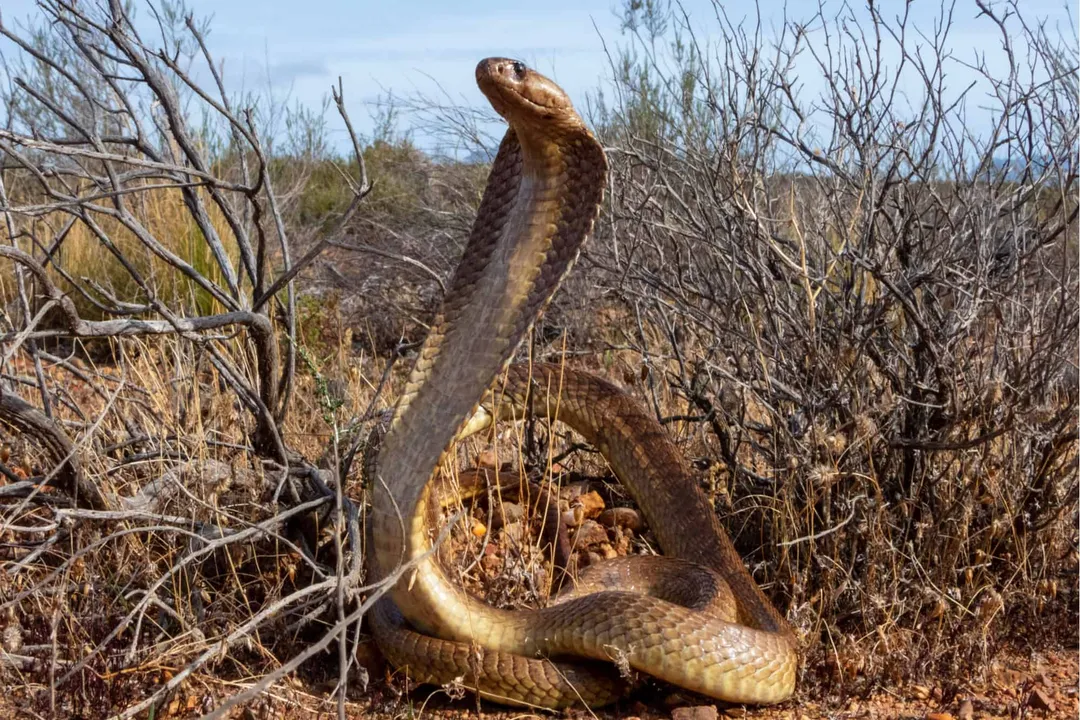
The physical presence of the Cape Cobra is defined by a moderately robust, yet relatively slender, build. [5] They are not the heaviest-bodied cobras, often presenting a more graceful, elongated silhouette compared to some of their bulkier cousins. [5] Adult individuals typically measure between $1.2$ and $1.6$ meters ($4$ to $5.2$ feet26.6). [1][7] This size range places them firmly among the larger venomous snakes encountered in their native Southern African habitats. [5]
When moving, they are known to be quite fast, but their posture when at rest or actively hunting is usually low to the ground, utilizing their length for effective locomotion. [5] Their body shape in repose is streamlined, which contrasts sharply with the dramatic, upright posture they adopt when threatened. [6] Observing the proportions—the length relative to the girth—can help distinguish mature Cape Cobras from younger individuals or similarly sized but differently proportioned snakes. [5]
# Defensive Display
The most recognizable physical demonstration of the Cape Cobra is its defensive hood display. [5] This is not a constant feature but a deliberate action triggered by perceived danger, which is a critical aspect of its physical repertoire when confronting threats. [6] When feeling cornered or directly threatened, the snake will flatten the ribs behind its head, creating a distinctive, broad, and rounded hood. [1][5]
The size and shape of this hood are important diagnostic features. It spreads quite wide, making the snake appear significantly larger and more intimidating than it is when its neck is relaxed. [1] The ability to deploy this hood rapidly is an evolutionary adaptation for deterrence. The visual effect of the sudden expansion, often combined with a low hiss, is often sufficient to ward off smaller predators or wary humans who might otherwise step too close. [5][6] The way the hood is held—straight up, often angled slightly forward—is a key piece of body language that signifies the snake is prepared to defend itself, though the physical display itself is purely visual until a strike is initiated. [1]
# Head Features
The head of the Cape Cobra offers several subtle, yet defining, physical characteristics that persist regardless of the snake’s body coloration or whether the hood is raised. [1] The head itself is somewhat flattened and distinctly demarcated from the neck region. [1][5] This separation is more apparent when the hood is down; the head appears almost separate, sitting atop the neck before the body widens into the hood structure. [5]
The eyes are another notable feature. They are relatively large in proportion to the head size, which aids in their diurnal hunting habits. [5] The pupils are typically round, a common trait among cobras and many other diurnal snakes. [5] While pupils can dilate or constrict based on light levels, a permanently round pupil shape is a key characteristic distinguishing them from snakes with elliptical or vertical pupils. [5] The scales covering the head, while generally smooth, contribute to the overall sleek appearance that allows for efficient movement through grass and scrub. [1]
# Scale Detail
For those with an expert eye, the precise arrangement of the scales provides definitive identification, though this level of scrutiny is rarely possible or safe in the field. [1] The Cape Cobra possesses smooth scales along its body, which contribute to its sleek look. [1] As a member of the Elapidae family, its appearance is generally clean, lacking the keeled scales found on many vipers. [1][5]
Specifically, the scales around the ocular region and those on the top of the head follow consistent patterns that herpetologists use for classification. [1] For instance, the arrangement of supralabial scales (scales above the mouth) and sublabial scales (scales below the jaw) are fixed species traits. [1] While exact scale counts are often technical and not easily observable without close inspection, the smoothness of the overall integument is a general physical trait worth noting. [5] A common feature noted across many individuals, regardless of yellow, brown, or black coloration, is the presence of a pair of large occipital scales located at the back of the head. [1]
To truly appreciate the subtle physical variations that lead to the "Yellow Cobra" moniker versus other morphs, one might consider how difficult it is for the average observer to rely solely on color. A snake seen partially concealed in dry grass might show only a patch of dull brown, leading to an incorrect identification, whereas a fully exposed specimen in sunlight could blaze yellow. [5][6] This variability suggests that a reliable identification in a non-emergency situation requires noting the entire profile—the size, the shape of the head when un-hooded, and the context of the environment—rather than just the dominant hue. This inherent unreliability of color as a sole identifier is perhaps the most important physical characteristic for an observer to internalize: the potential for dramatic color shifts is always present in Naja nivea. [1]
# Insights into Structure and Habitat Correlation
Considering the physical structure and its environment offers an interesting analytical point. The Cape Cobra's relatively slender build and smooth scales are perfectly adapted for speed across open, often arid or semi-arid landscapes typical of the Karoo region where the bright yellow phase is prevalent. [5] Snakes that spend more time in dense, dark vegetation or rocky crevices might benefit more from the darker brown or black morphs for crypsis, suggesting a localized selective pressure favoring darker pigmentation in those micro-habitats. [1] One interesting observation when comparing field photographs across various South African regions is that while yellow is common in open, sandy plains, the darker morphs often appear to dominate areas with denser scrub cover, lending credence to the idea that local camouflage requirements drive the expression of this polymorphism. [4]
Another structural consideration relates to the venom delivery system, which, while internal, dictates the physical necessity of the hood. As a front-fanged colubroid, the Cape Cobra relies on delivering a potent neurotoxic and cytotoxic venom dose via its short, fixed fangs. [5][6] The effectiveness of this defense mechanism is amplified by the dramatic visual warning offered by the hood. [1] It’s a dual-layered defense: first, the visual threat of the spread hood, and second, the rapid injection capability facilitated by the musculature controlling the cobra's head and neck posture. [5] The flattened head structure, distinct from the neck, sets the stage for this rapid deployment of the threat display. [1]
# Comparing Related Features
To solidify the physical profile, it is helpful to contrast the yellow phase with the non-yellow phases directly based on the available structural data.
| Feature | Predominantly Yellow/Gold Phase | Brown/Black Phase (Melanistic/Dark) | Banded Phase (Often Juvenile) |
|---|---|---|---|
| Primary Color | Bright yellow, deep gold, pale cream [1][5] | Dark brown to solid black [1][8] | Distinct dark cross-bands on a lighter base [1][5] |
| Scale Texture | Smooth [1] | Smooth [1] | Smooth [1] |
| Hood Markings | May show faint dark bands below the throat [5] | Similar potential for throat markings [5] | Markings often more visible against the lighter bands [5] |
| Typical Size | Averages 1.2–1.6 m, max 2.0 m [1][7] | Averages 1.2–1.6 m, max 2.0 m [1][7] | Often smaller, as this pattern frequently denotes youth [1] |
| Pupil Shape | Round [5] | Round [5] | Round [5] |
This table highlights that despite the massive difference in skin pigmentation, the underlying physical structure—scale type, pupil shape, and maximum size potential—remains remarkably consistent across the Naja nivea spectrum. [1][5] The "Yellow Cobra" is defined by its color, but its identity rests on these fixed anatomical traits. [1]
Understanding the physical description goes beyond mere identification; it relates to behavior. The speed and agility afforded by its relatively slender body allow it to be an effective daytime hunter, tracking prey across open ground. [5] When this hunting posture is interrupted, the sudden transition to the static, upright hood display creates a sharp visual stop-sign effect that researchers believe is a critical component of its survival strategy, leveraging its physical structure to avoid confrontation altogether. [6]
The physical characteristics of the Yellow Cobra, or Cape Cobra, reveal a highly adaptable snake whose most striking feature—its color—is also its most variable one. [1][5] From the creamy pale specimens basking in the sun to the deep, light-absorbing black variants hiding in shadows, the snake embodies physical diversity within a consistent structural blueprint: a medium-to-large, smooth-scaled elapid with the signature ability to flare a broad, rounded hood when its physical threat display is required. [1][6]
#Videos
Cape Cobra (Naja nivea) | Herping South Africa - Montagu - YouTube
Related Questions
#Citations
Cape cobra - Wikipedia
Yellow Cobra Animal Facts - Naja nivea
Cape cobra - Students | Britannica Kids | Homework Help
Cape Cobra Characteristics and Habitat in Southern Africa - Facebook
Cape Cobra - African Snakebite Institute
Cape cobras: Key facts about physical characteristics, venom, diet ...
Cape Cobra - Facts, Diet, Habitat & Pictures on Animalia.bio
Yellow Cobra: Facts, Habitat & Venom
Cape Cobra (Naja nivea) | Herping South Africa - Montagu - YouTube