Zebra Finch Physical Characteristics
The Zebra Finch, scientifically classified as Taeniopygia guttata, presents a fascinating study in avian detail, particularly when comparing the sexes and observing the vast array of color variations developed in captivity against its natural appearance. These small seed-eaters, native to the arid regions of Australia and also found in Indonesia and East Timor, possess distinct physical markers that make identification straightforward for the informed observer. [2][6][7]
# Size Weight
In terms of overall dimensions, the Zebra Finch is quite small, typically measuring around 4 inches (10 cm) from the tip of its beak to the end of its tail. [1][4] The mass of these birds is generally light, recorded at approximately 12 grams in some accounts. [2][7] Other observations suggest the wild-type weight ranges between 10 and 17.5 grams, with captive birds sometimes reaching slightly heavier, around 17 to 19 grams. Their physical structure is characterized by a plump body shape, supported by slender legs, and they possess a characteristically short beak. [4][7] An interesting physiological adaptation for their arid environment is their drinking method, which allows them to imbibe water quickly at water holes, minimizing time spent vulnerable to predators, and even enabling them to draw moisture from sources like dew drops.
# Sexual Dimorphism
A key feature of the Zebra Finch is its distinct sexual dimorphism, meaning the males and females exhibit different colorations and markings. [2] This difference is one of the most immediate ways to sex a bird in a mixed aviary setting, assuming the bird is an adult of the standard or "wild type" plumage.
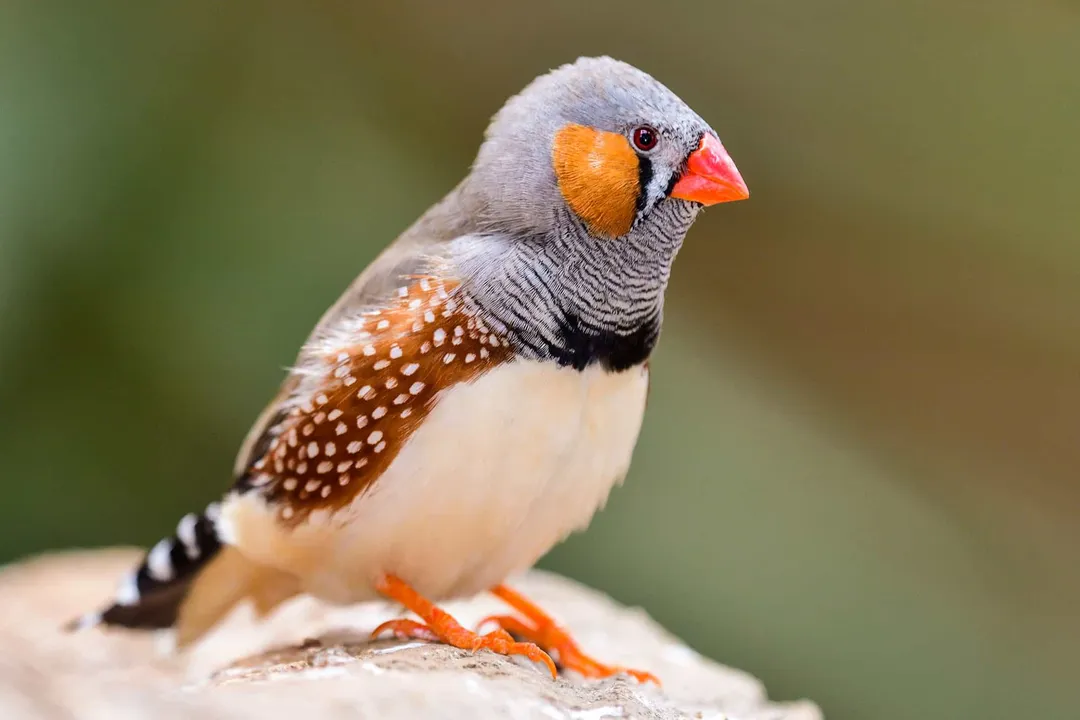
The male is the flashier of the pair. His markings are much more pronounced, featuring a gray head and back, a white belly, and most notably, bright red or rusty-orange patches on the cheeks. [1][2][4] He sports the species' namesake: zebra-like black and white barring extending downward from his chin, covering the throat, and terminating in a distinct, wide black breast bar. [3] His sides, or flanks (the area under the wings), are a rich chestnut color, often dotted with numerous white spots. [2] The tail feathers are black and white barred, and he possesses dark brown eyes accented by a characteristic vertical black "teardrop" stripe below each eye. [1][3] Finally, the mature male is distinguished by a bright red beak. [1][2][4]
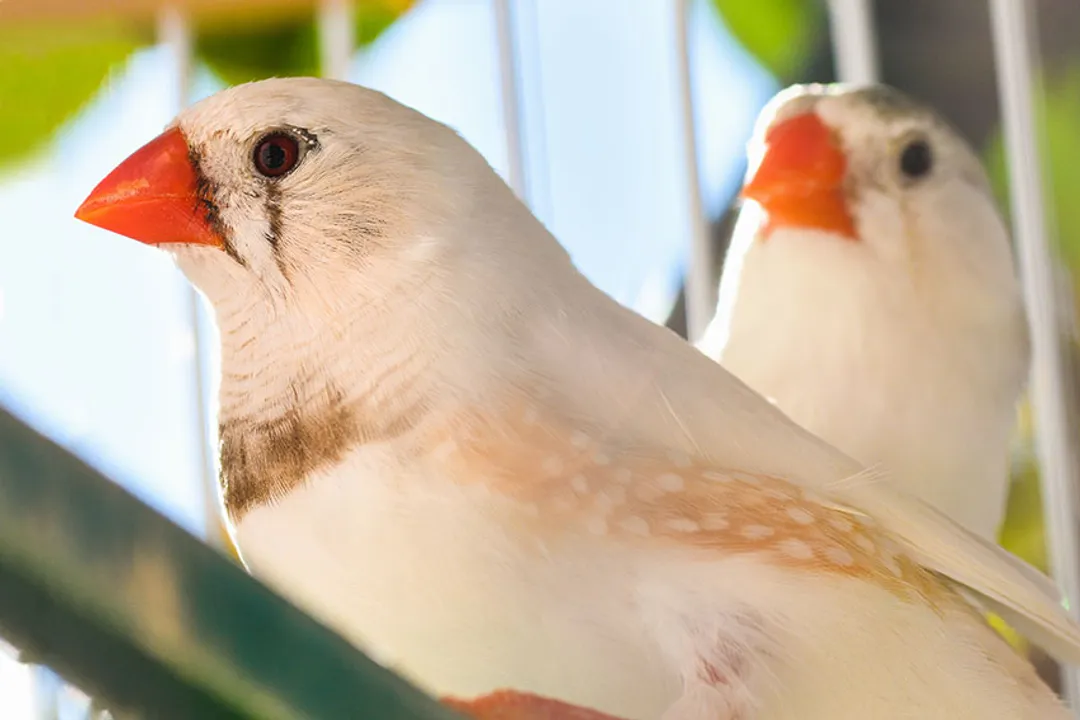
In contrast, the female exhibits a far more muted color scheme. [1] Her body is generally a simple gray or grey/creme coloration with a white belly. [1][2] While she shares the black teardrop marking and the spotted tail coverts with the male, she lacks the bright cheek patches and the bold black barring across the chest and throat. [1][4] Her underparts are often described as buff rather than bright white. Her beak color is noticeably different, typically a paler orange compared to the male's vibrant red. [1][4]
Young Zebra Finches, prior to achieving maturity (which occurs around 90 days), generally resemble the female in plumage, but their beaks are a distinct black. [2][3] The full adult coloration and dimorphism typically manifest by the time they reach about three months of age. [2]
When considering captive birds, especially those bred for exhibition, noting the beak color can be a useful, albeit indirect, measure. While the red beak of the male is a sexual indicator, in a setting where diet quality can be controlled, the intensity of that red, which females often prefer in mates in the wild, can serve as a subtle proxy for overall condition or access to specific carotenoid-rich nutrients.
# Coloration Markings
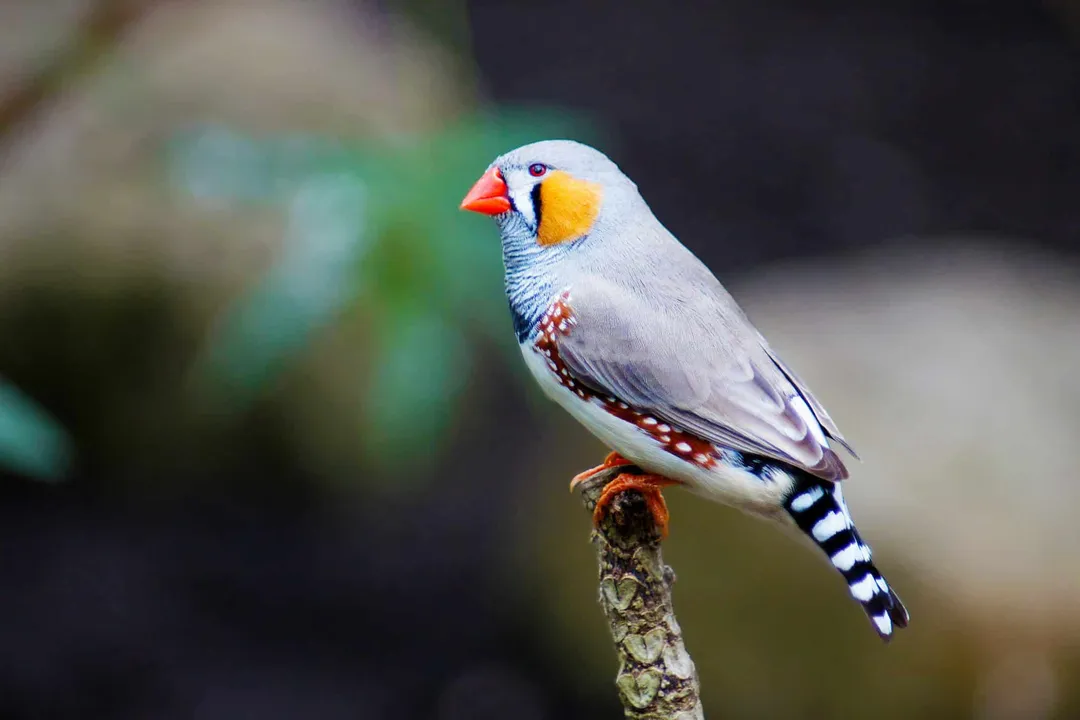
Beyond the essential dimorphism markers, the basic wild-type pattern, particularly on the Australian Zebra Finch (T. castanotis), includes fine black barring on the throat and upper breast area, contrasting with a white space between the beak and the black teardrop stripe. The wings and back are typically gray-brown, and the legs and feet are orange or orange-yellow. [3] It is worth noting that the Sunda Zebra Finch (T. guttata), the Indonesian relative, is generally smaller and males possess greatly reduced barring on the throat and breast, sometimes showing only a thin black breast band. [6]
# Breed Varieties
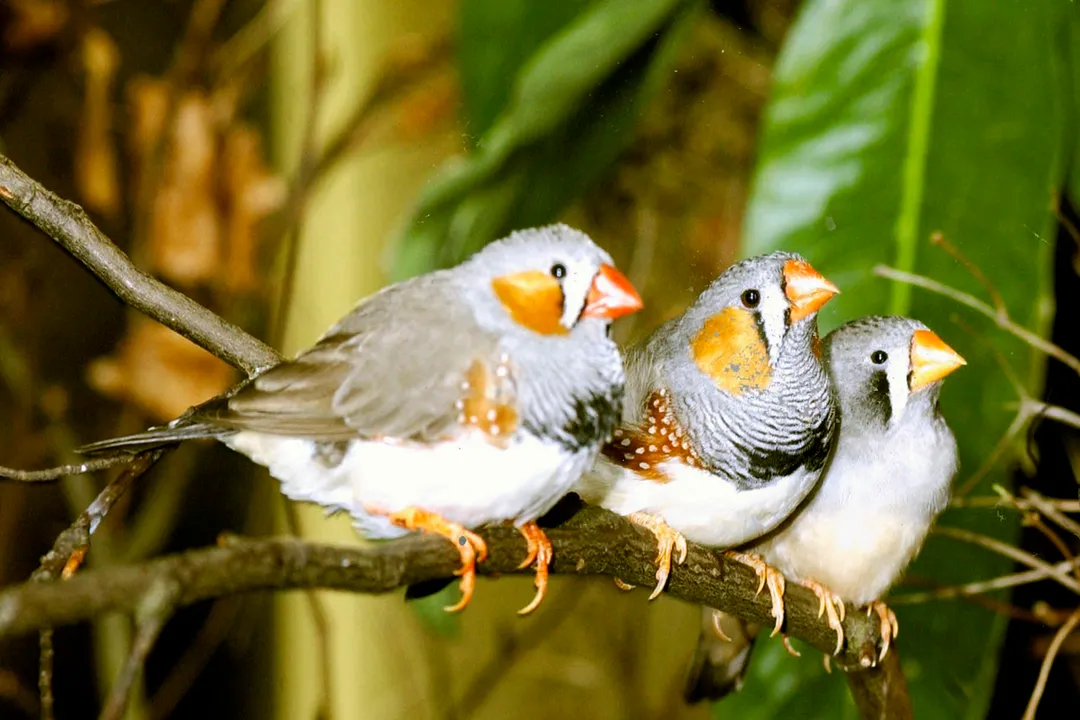
Selective breeding has resulted in a wide spectrum of color mutations that dramatically alter the basic physical blueprint of the Zebra Finch, offering breeders complex patterns that would rarely, if ever, become fixed in the wild due to natural selection pressures. [4][8]
The foundational background colors for these varieties are generally categorized as Standard (Grey), Fawn, or White. [8]
# Fawn and Dilution
The Fawn mutation is sex-linked recessive, causing any plumage that would normally be gray or black to instead appear in shades of light brown or dark brown, while keeping the structural markings intact. [8] This dilution lessens the contrast, sometimes leading to less distinct markings, which can make them less popular with show breeders aiming for sharp definition. [8]
Variations involving dilution also include Silver and Cream types. [8]
- Recessive Silver/Cream: Recessive silver birds have a body color appearing dark silver, lighter than normal, with vibrant markings; cream birds show a pale cream color (diluted fawn). [8]
- Dominant Silver/Cream: These exhibit a bluish-silver body in grey-series birds, and the male's cheek patches and flanks become cream instead of orange. [8] A double-factor dominant silver bird may have a lethal factor, as the egg may not hatch. [8]
# Pigment Loss
Mutations that eliminate or suppress dark pigment (melanin) lead to striking effects:
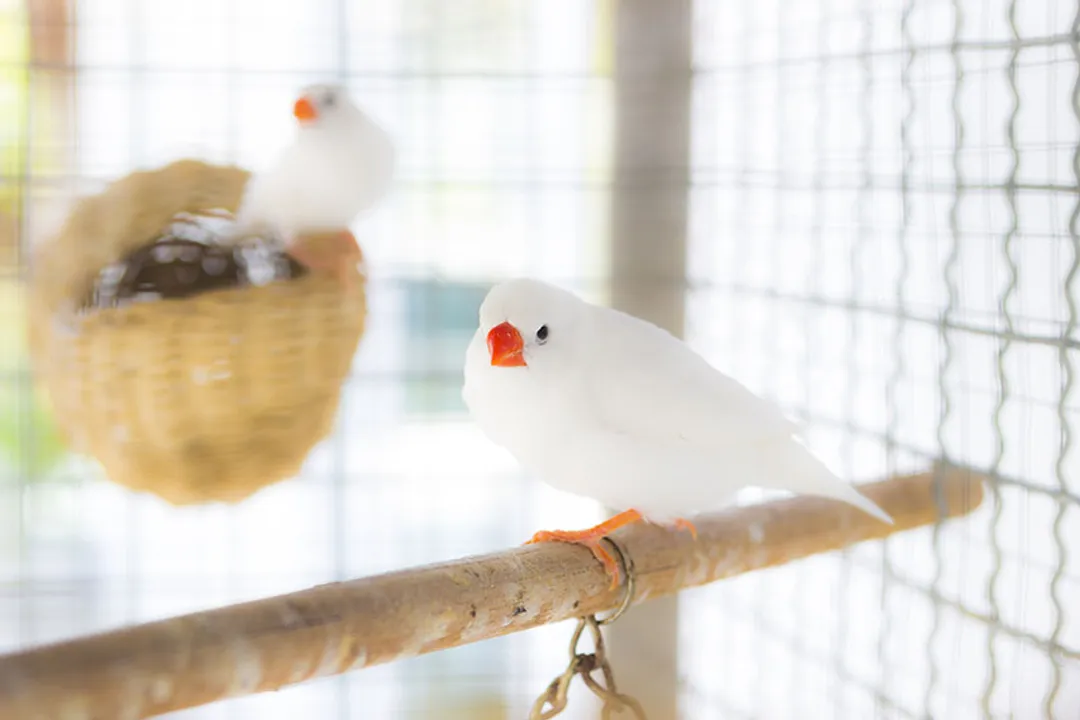
- White: In this variation, all feather pigments are entirely absent, resulting in an all-white bird that contrasts sharply with its orange-red beak and legs. [8] Sexing these requires checking the beak color, as males retain the red beak while females maintain the orange. [8]
- Penguin: This mutation features a normal-colored top (head, back, wings) but the entire underside—sides, breast, and belly—is bright white. [8] The male often loses the breast bar and teardrop, though flank patches remain. [8]
- Florida Fancy (or Isabel): The double-factor Florida Fancy bird lacks black pigment, resulting in a white to off-white body with rich buff underparts. They lack the male's breast bar and teardrops in both sexes. [8] The closely related Isabel mutation is identical in appearance but has a recessive mode of inheritance. [8]
# Pattern Alterations
Several mutations directly affect the placement or appearance of the characteristic dark markings:
- Black-Breasted: These birds feature an enlarged black breast marking, often with larger flank spots that can appear streaked. [8] The cheek patches are also enlarged. [8]
- Black-Cheek: As the name implies, the male's orange cheeks are black, masking the teardrop stripe. This variety also sports black flanks, replacing the wild-type chestnut. [8] This feature is noted as not being genetically robust, making it challenging for breeders to maintain dark distinction. [8]
- Black-Faced: This dominant mutation results in a much darker face and breast, with the black plumage ideally extending down the entire belly in the male. [8]
- Orange-Breasted: A more recent mutation, this variety replaces the black markings (breast bar, teardrop area) with orange. [8] A challenge for breeders is achieving a bird with only orange markings and no black whatsoever. [8]
- Grizzle: This results in white flecks scattered across the entire plumage, creating a "salt and pepper" effect. [8]
# Structural Changes
Some mutations affect feather texture, which has consequences for function:
- Crested: This dominant trait produces a distinctive circular tuft of feathers on the crown that stands upward, though the appearance can vary from a full circle to a scruffy "bed-head" look. [8]
- Eumo and Charcoal: These very dark varieties share a noticeable silky look to the wings because the feather barbs fail to interlock properly. [8] This feather abnormality significantly hinders the bird's natural ability to fly. [8] Breeders working with Eumo birds must account for this functional impairment, often needing smaller enclosures with easily accessible low perches, especially for newly fledged chicks. [8]
The development of such visually extreme characteristics through human selection serves as a powerful reminder of how different aesthetic goals can be from the survival imperatives driving physical traits in the wild. [8]
# Beak Feet
As established in the discussion of dimorphism, beak color is critical: red in mature males, and orange in females. [4] Juveniles have black beaks. [3] In mutations like the White Zebra Finch, the beak remains red in males and orange in females, contrasting sharply with the white plumage. [8] The legs and feet in the wild type are typically orange or orange-yellow. [3] The beak structure itself, being short and stout, is an adaptation perfectly suited for its primary diet of seeds, aiding them in dehusking the kernels effectively. [4][7]
# Species Distinction
It is important to recognize that while commonly referred to simply as the Zebra Finch, the genus Taeniopygia contains two recognized species: the Australian Zebra Finch (T. castanotis) and the Sunda Zebra Finch (T. guttata). [6][7] These were officially split into separate species in 2016. [6] Beyond geographical separation—Australia versus the Lesser Sunda Islands of Indonesia—there are morphological differences, chiefly that the Australian species is larger than its Sunda counterpart. [6] Furthermore, the male Australian type exhibits the fine barring on the throat and breast, which is reduced or absent in the Sunda male. [6] For those interested in the captive world of finches, while hybridization is possible between these two, breeders usually keep them separate to maintain the purity of their distinct characteristics. [8]
Related Questions
#Citations
Zebra Finch - The Australian Museum
Taeniopygia guttata (zebra finch) - Animal Diversity Web
Zebra Finch Personality, Food & Care – Pet Birds by Lafeber Co.
Zebra Finch - A-Z Animals
Zebra finch - Wikipedia
Zebra Finch - The Finches of Serenity
Zebra Finch - Taeniopygia guttata or Poephila guttata - Finch Info
Zebra Finch Varieties | Zebra Finch | Finches and Canaries | Guide