Zebra Physical Characteristics
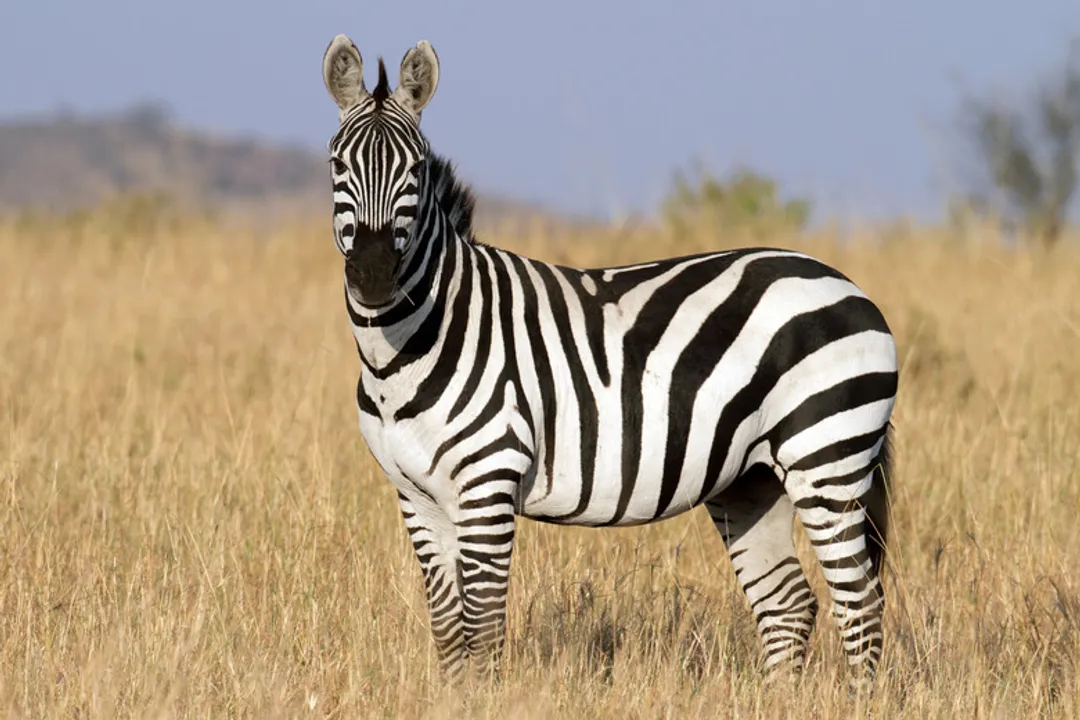
The image of a zebra is instantly recognizable: a horse-like animal draped in stark, contrasting black and white stripes. Yet, this simple visual masks a fascinating variety of physical attributes that distinguish not only the species from one another but also individual animals within their groups. [6][10] While all zebras belong to the genus Equus, they are not a single entity but rather comprise three distinct species: the Plains Zebra (Equus quagga), the Grevy's Zebra (Equus grevyi), and the Mountain Zebra (Equus zebra). [1][4] Each species has evolved a unique physical toolkit suited to its specific ecological niche.
# Species Variation
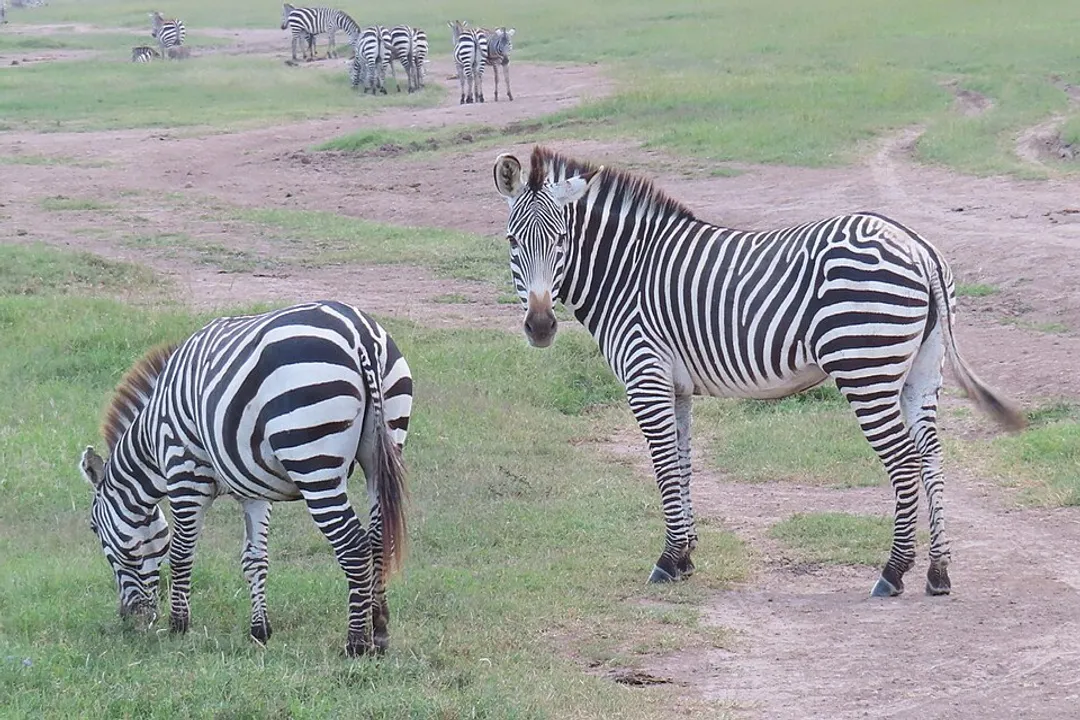
The fundamental difference in physical characteristics often comes down to recognizing these three primary types. Plains Zebras are the most numerous and widespread, inhabiting grasslands and savannas in eastern and southern Africa. [1][8] Grevy's Zebras, found in Kenya and Ethiopia, are notably larger and possess a different stripe configuration. [3] The Mountain Zebra, restricted to the mountainous and arid regions of Namibia and Angola, carries distinct features that relate to navigating rugged terrain. [4] Even within the widespread Plains Zebra, there are subspecies, such as Grant's Zebra, which display slight variations in size and stripe boldness across their range. [9]
To clearly distinguish between these close relatives, understanding their specific dimensional and patterning differences is key. Consider the significant variations in size alone; a Grevy's Zebra stands considerably taller than the others, sometimes reaching up to 15 hands (60 inches) at the shoulder, whereas Plains Zebras typically range between 45 to 55 inches. [3][8]
# Comparative Anatomy Table
A direct comparison helps illustrate the physical divergence that has occurred between these equine cousins:
| Feature | Plains Zebra (E. quagga) | Grevy's Zebra (E. grevyi) | Mountain Zebra (E. zebra) |
|---|---|---|---|
| Size/Weight | Medium; up to 990 lbs [8] | Largest; up to 992 lbs [3] | Medium [4] |
| Stripe Pattern | Broad stripes, often fade or form "shadow stripes" on hindquarters [2][8] | Narrow, close-set stripes that do not extend to the belly or legs [3] | Stripes end at the belly; distinct "gridiron" pattern on the rump [4] |
| Ears | Rounded [2] | Large, rounded, "saucer-like" [3] | Medium-sized [4] |
| Mane | Short, stiff, erect, with stripes continuing onto it [2] | Shorter, stiff, erect [3] | Short, stiff, erect [4] |
This table highlights that while all zebras share the striped motif, the execution of that pattern is a primary identifier. For instance, a casual observer might mistake a large Plains Zebra for a Grevy's, but observing the belly and leg striping—or the ear size—provides immediate confirmation. [3][8]
# The Iconic Stripes
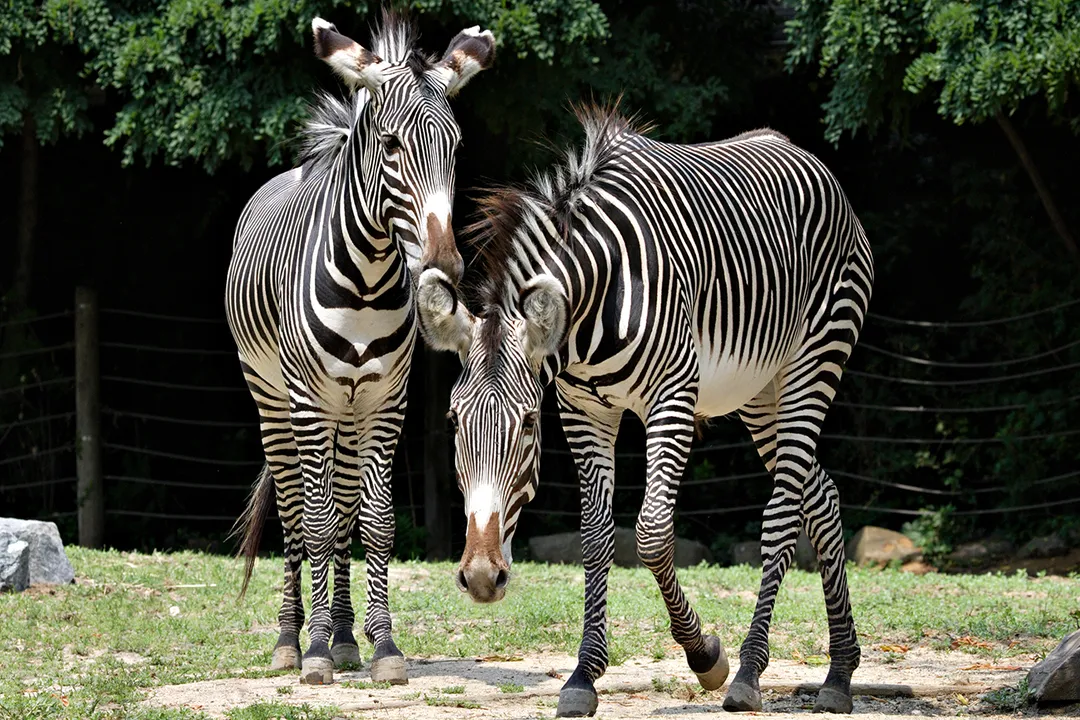
The stripes are arguably the most famous physical trait of the zebra, serving purposes ranging from camouflage to social signaling and even insect deterrence. [5][7] No two zebras have the exact same pattern; the configuration is as unique as a human fingerprint. [1][7]
# Pattern Uniqueness
The stripes cover the entire body, though their density and width vary significantly by species and location on the body. [10] Plains Zebras often exhibit "shadow stripes"—fainter, brownish stripes running between the main black stripes, particularly visible on their flanks and hindquarters. [2][8] In contrast, Grevy's Zebra has very narrow, numerous stripes that remain distinct all the way down to the hooves and do not wrap around the belly or lower legs, which remain white or nearly white. [3] Mountain Zebras also lack stripes on their bellies, but they possess a unique feature: a prominent strip of white fur across their rump that forms a distinct gridiron pattern where the stripes intersect. [4]
It is interesting to consider how the density of this striping correlates with environmental pressures. In open, sun-drenched savannas where the Plains Zebra roams, the disruptive patterning might be optimized for breaking up the outline against the shimmering heat haze, perhaps making it harder for a predator to lock onto a single target within a moving herd. [5] Conversely, the high-contrast, narrow striping of the Grevy's Zebra, often found in more arid, brushier environments, might serve a different visual purpose, perhaps related to confusion effect or temperature regulation. [3]
# Mane and Coat
Zebras possess a short, stiff, erect mane running down the back of the neck. [4][2] Unlike some other equids, the mane does not flop over to one side. [7] On Plains Zebras, the stripes extend right up into the mane, alternating black and white hairs. [2] The tail is tufted, similar to a cow's, with longer hairs at the end, though the base of the tail is typically striped. [6]
# Skeletal Structure and Movement
As members of the Equus family, zebras share the fundamental body plan of horses and donkeys: a strong build suited for running and endurance across open plains. [10] They are ungulates, meaning they walk on the tips of their toes, which are encased in strong hooves. [10] All three species possess a relatively long neck and powerful legs built for speed, a necessity when escaping predators like lions. [5]
Mountain Zebras are particularly adapted for their environment. Their physique is built for agility in rocky, steep areas, enabling them to navigate slopes that might challenge other equids. [4] While specific details on leg musculature across the species are less frequently documented, the habitat strongly dictates the required biomechanics; Grevy's Zebras need the stamina for long treks in semi-arid regions, while Plains Zebras rely on bursts of speed in open grasslands. [3][2]
A less obvious, yet crucial, structural feature is the zebra's muzzle and jaw structure. While similar to horses, differences in feeding habits—Grevy's Zebras are primarily grazers, while Plains Zebras can be mixed feeders—suggest subtle adaptations in tooth wear and jaw strength, though these fine details often require detailed anatomical studies beyond general fact sheets. [3][2]
# Head and Sensory Features
The head structure of a zebra is characteristic of its genus, featuring large eyes set toward the sides of the head, providing a wide field of vision essential for spotting danger. [1]
# Ears and Vision
The ears provide a clear differentiator between species. Grevy's Zebras are distinguished by their remarkably large, rounded, almost saucer-like ears. [3] These large ears can rotate independently, allowing the zebra to monitor its surroundings with exceptional awareness, a vital trait in environments where cover is scarce. [3] Plains Zebras, on the other hand, have more rounded ears typical of the species. [2]
Vision is color-based, though the exact spectrum they perceive is subject to ongoing study, much like other equids. [1] The position of their eyes grants them nearly 360-degree panoramic vision, though they maintain a small blind spot directly behind them. [5]
# Tail and Limbs
The tail structure is fairly consistent across the species, being long and ending in a black tassel or tuft of hair, similar to that of a domestic cow. [6] The striping continues down the length of the tail until it meets the brush of hair. [6]
The legs are proportionate to their body size, designed for running. An interesting comparative observation on the legs relates back to the striping: Grevy's Zebra stripes abruptly stop at the hocks and knees, leaving the lower legs mostly white, whereas the stripes on the legs of Plains Zebras extend further down, though they may become less defined. [3][2]
When you consider that a zebra might run for several miles to escape a predator, the physical design of these limbs—their robust bone structure and powerful musculature—represents the culmination of millions of years of selection for terrestrial survival in Africa's challenging environments. [5] The hoof itself, being essentially a single, hardened toe, is perfectly evolved for supporting weight over long distances on varied terrain, from hard-packed earth to the slopes of the Mountain Zebra's domain. [10][4]
# Size Metrics
While generalizations exist, understanding the actual metrics provides better context. A mature Plains Zebra stallion might weigh around 300 to 450 kilograms (660 to 990 pounds). [8] In comparison, the Grevy's Zebra is the heaviest, with males sometimes exceeding 450 kg. [3] Mountain Zebras fall somewhere in between, their robust build necessary for climbing, though specific adult weight data is less consistently cited than for the other two species. [4]
Height is another defining characteristic. Grevy's Zebras are the tallest at the shoulder, standing around 1.3 to 1.5 meters (about 51 to 59 inches). [3] Plains Zebras are shorter, typically maxing out around 1.4 meters (55 inches). [8]
This range in size suggests different energy requirements and social structures. Larger animals, like the Grevy's Zebra, often require larger territories and may have different group dynamics than the more numerous, slightly smaller Plains Zebra herds. [3][2] The physical commitment to size in the Grevy's species is a significant divergence from the other two, suggesting distinct evolutionary pressures favored bulk and stature in their specific semi-arid habitats. [3]
# Conclusion on Form
The zebra’s physical appearance is a masterclass in specialized evolution wrapped in an iconic pattern. From the immense, radar-dish ears of the Grevy's Zebra to the rump gridiron of the Mountain Zebra and the faint shadow stripes of the Plains Zebra, no two species, or individuals, are truly alike. [3][4][2] Their muscular build, uniquely stiff manes, and specialized vision all combine to create an animal perfectly equipped for life on the move across the African continent. Every feature, from the thickness of a stripe to the angle of a hoof, speaks to an environment and a history. [10][5]
Related Questions
#Citations
Zebra
Physical Characteristics - Plains Zebra (Equus quagga) ...
Grevy's zebra
Equus zebra (mountain zebra) | INFORMATION
Zebra Fact Sheet | Blog | Nature
Zebra | San Diego Zoo Animals & Plants
Zebra facts!
Plains Zebra
Grant's Zebra - San Francisco Zoo & Gardens
Characteristics Of A Zebra