If the white stripes on a zebra are areas where pigment production is suppressed, what is the generally accepted underlying base coat color?
Answer
Black or dark brown
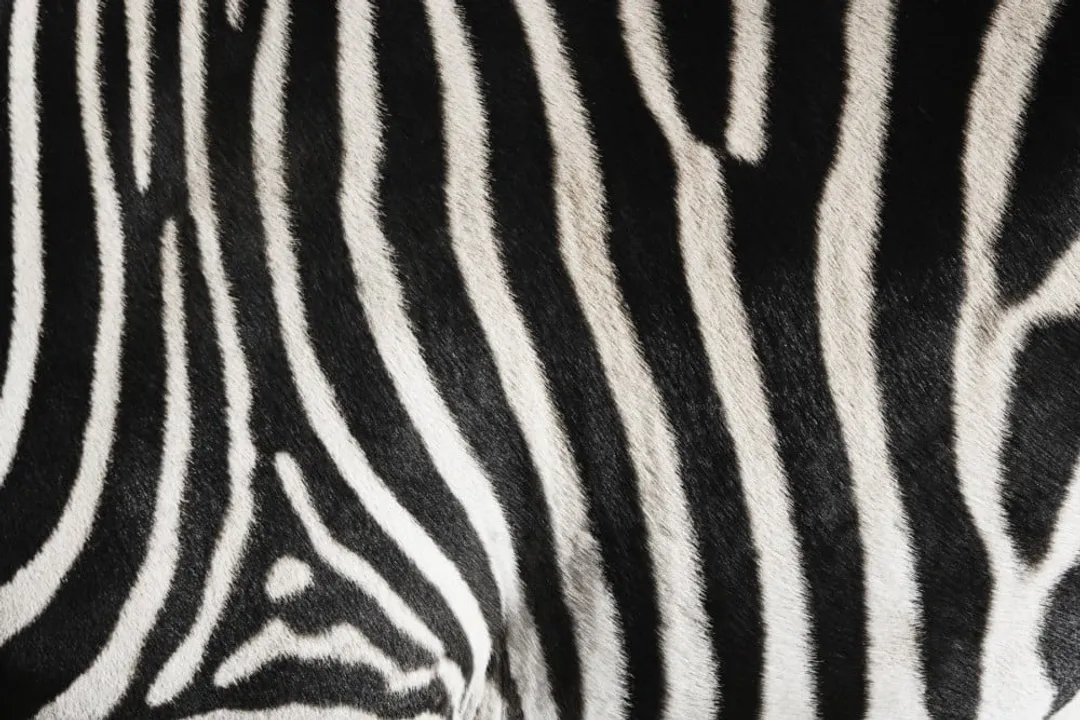
The scientific consensus regarding the zebra's coat indicates that the pattern is not an addition of white stripes onto a dark animal, but rather the opposite. The underlying or base coloration of the zebra is inherently dark, usually approximating black or a very dark brown. The white stripes manifest in those specific regions where the genetic mechanism responsible for producing pigment—melanin—is actively suppressed or turned off during the animal's development. Therefore, the visual effect seen is dark pigmentation dominating, with controlled suppression creating the contrasting white markings.
#Videos
Zebra Facts - YouTube
Related Questions
What visual disruption mechanism do narrow, high-contrast zebra stripes create for blood-seeking insects?What unique physical feature distinguishes the Mountain zebra (Equus zebra) from Plains and Grévy's zebras?How was the stripe pattern of the now-extinct Quagga, a subspecies of Plains zebra, characterized?How does the social structure of the Grévy's zebra contrast with the stable harems of the Plains zebra?If the white stripes on a zebra are areas where pigment production is suppressed, what is the generally accepted underlying base coat color?Why are Plains zebras referred to as pioneer grazers in savanna ecosystems?Besides speed, what powerful physical defense mechanism can a zebra use when cornered by a predator like a lion?Which species holds the title of the largest wild equid in Africa and is found primarily in Northern Kenya and Ethiopia?What biological significance do the unique stripe patterns serve for individual zebras and researchers?Based on conservation listings, which zebra species faces the most urgent threat level, being classified as Endangered?