How is the immediate effect of a D. crocata bite typically compared in terms of human impact?
Answer
Comparable to a bee sting
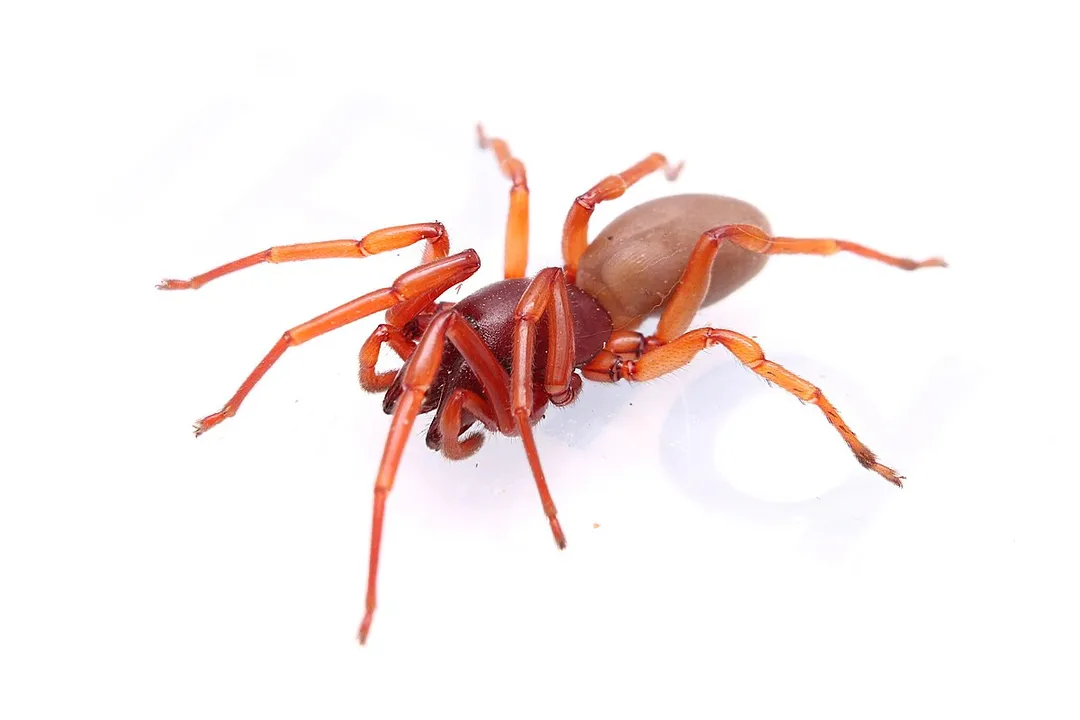
Despite its fearsome appearance and adaptations for subduing armored prey, the venom of the *Dysdera crocata* is not medically significant to humans. When a bite does occur, which is rare and usually only under severe provocation or trapping, the resulting effect is generally mild. This mild reaction is commonly compared to the immediate sensation caused by a bee sting, typically manifesting only as some localized redness or minor swelling. This contrasts sharply with the venom's effectiveness in breaking down the chitinous shell and paralyzing its primary crustacean prey.
Related Questions
What is the primary, dominant prey item forming the diet of Dysdera crocata?What is the scientific name for the Woodlouse Spider mentioned in the text?To what taxonomic order do the preferred prey, woodlice, belong?What color is frequently described for the cephalothorax of the Woodlouse Spider?How is the immediate effect of a D. crocata bite typically compared in terms of human impact?Does the Woodlouse Spider rely on traditional large capture webs for capturing prey?What environmental requirement for woodlice dictates the typical habitat choice of Dysdera crocata?What is the primary function of the prominent, reddish-orange chelicerae of D. crocata?Which category of creature is consumed only opportunistically by Dysdera crocata?Why might a Woodlouse Spider be observed inside a building during dry outdoor conditions?