How does the wood turtle's skin coloration aid in identifying it near the water?
Answer
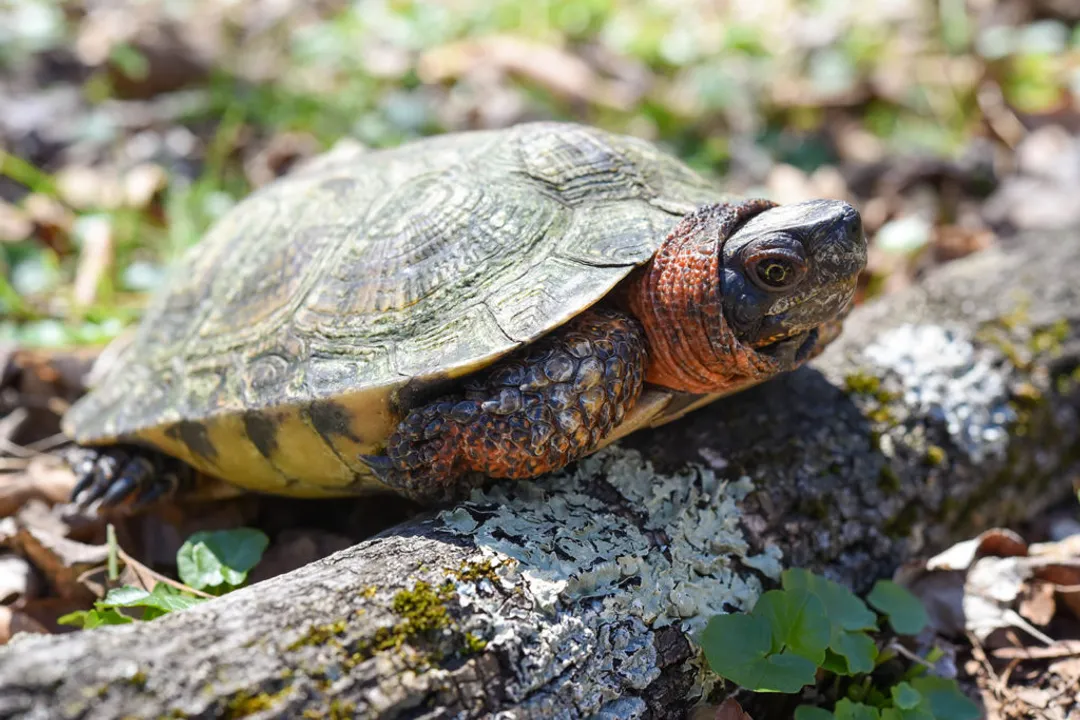
The skin underneath the legs and neck is bright yellow or orange
Beyond the appearance of the shell, the coloration of the soft tissue provides another reliable marker for identification. The skin covering the legs and neck area, visible when the turtle stretches, possesses a striking and bright coloration, typically being yellow or orange. This vibrant hue contrasts sharply with the darker tones of the head and body, making it a telling feature for observers differentiating the wood turtle from its aquatic relatives.
Related Questions
What texture defines the *Glyptemys insculpta* carapace scutes?What coloration is typical for the wood turtle's plastron underside?Which geographical area is included in the wood turtle's North American range?What critical function do cool, clear streams provide for overwintering wood turtles?What characterizes the wood turtle's diet when feeding on land?Why results in sluggish population rebounds for the wood turtle despite condition improvements?What crucial soil characteristics do wood turtle females seek for nesting sites?What phenomenon is responsible for determining the sex of wood turtle hatchlings?How does the wood turtle's skin coloration aid in identifying it near the water?What primary threat causes devastating loss of mature, reproductive wood turtles?