How does the location preference of juvenile B. jararaca differ from the adults in terms of vertical space?
Answer
Juveniles are noted as being more arboreal
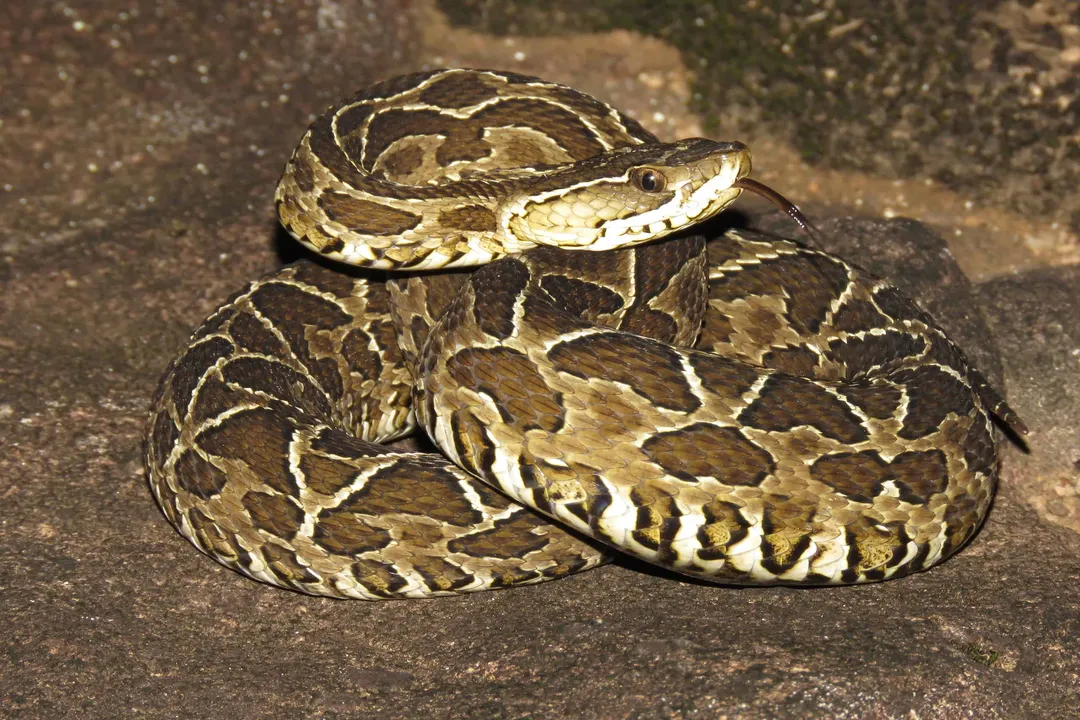
A significant difference in micro-habitat utilization exists between age classes of *Bothrops jararaca*. While adult specimens generally occupy terrestrial locations, hiding amongst foliage or debris during the day, younger individuals exhibit a variation in behavior. Juveniles are specifically mentioned as being more arboreal, frequently being found situated up in trees or dense brush. This difference in vertical stratification within the habitat structure is hypothesized to be a strategy employed by the young snakes, potentially as a defense mechanism to avoid predation from terrestrial predators that pose a greater threat to smaller individuals.
Related Questions
Which Argentine province is cited as a likely overlap zone for both Bothrops jararaca and Bothrops alternatus?What does the Latin term *alternatus* in Bothrops alternatus reference regarding its physical appearance?How does the location preference of juvenile B. jararaca differ from the adults in terms of vertical space?Which Yarara species possesses a wider distribution across the central and northeastern Argentinian provinces?What biomedical application is mentioned regarding the venom derived from Bothrops species?What do the Tupi words *yarará* and *ca* translate to regarding Bothrops jararaca's specific name derivation?What common ecological thread defines the micro-locations favored by Yararas, regardless of precise species?Where geographically is the name "Yarara" used for a small locality unrelated to the venomous vipers?For B. jararaca, what specific national region or province is cited as being particularly endemic to its distribution?How many Argentinian provinces are confirmed to harbor Bothrops alternatus based on the provided provincial list?