How rare are willow warblers?

The Willow Warbler, Phylloscopus trochilus, is a bird many people hear but few truly see, which contributes significantly to the perception that it might be a rare visitor. This small, active warbler is a quintessential summer sound across much of Europe and Asia, yet its subtle coloration and fast-moving habits mean it often blends perfectly into the green canopy. Understanding its true prevalence requires looking past fleeting glimpses and focusing on its distinctive song and its massive migratory undertaking. [3][5]
# Small Weaver

Physically, the Willow Warbler is unassuming. It is a small, slender bird, often described as yellowish-green on the upper parts, fading to pale yellowish-white or off-white underneath. [1][7] This relatively plain plumage helps it vanish among foliage. Key identification features, which often require a close look or comparison, include its pale legs and its supercilium—the stripe above the eye—which is usually pale and conspicuous. [1][7]
It is easy to confuse the Willow Warbler with its near-identical cousin, the Chiffchaff (Phylloscopus collybita). While plumage differences exist—Willow Warblers generally have longer wings and a slightly longer projection of the primary feathers compared to the Chiffchaff—these distinctions are often too subtle for casual field observation. [2][7]
# Distinct Call
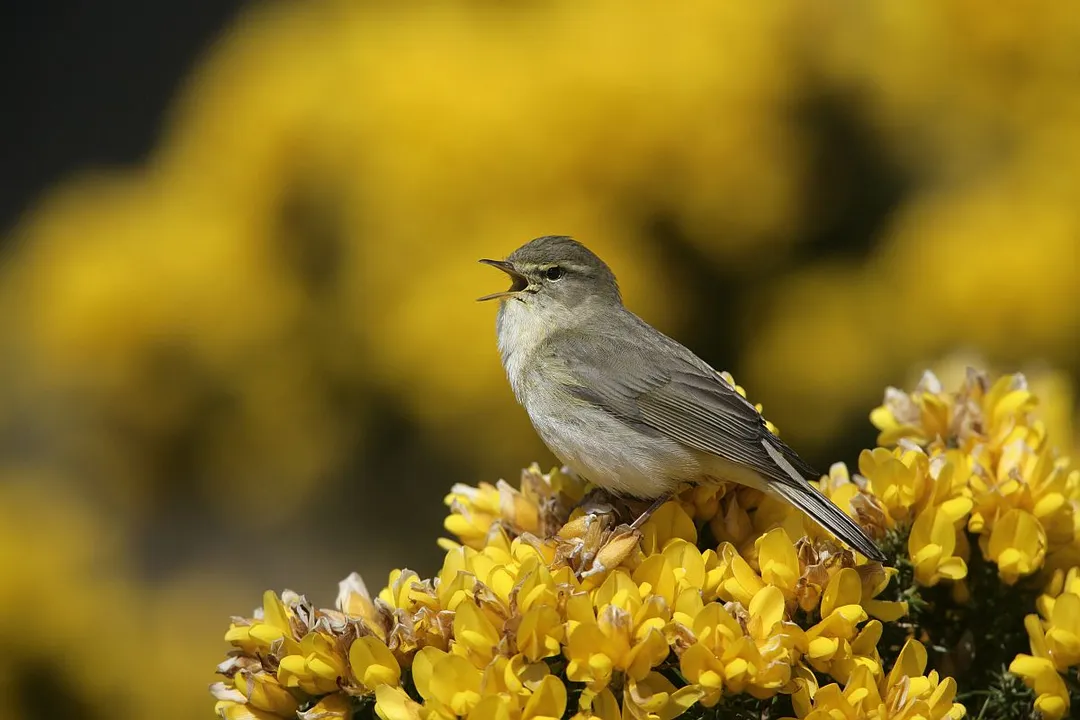
The most reliable way to confirm the presence of a Willow Warbler, particularly when assessing its local abundance, is through sound. Unlike the Chiffchaff, which repeats its name with a simple, two-note refrain like chiff-chaff, chiff-chaff, the Willow Warbler possesses a much more melodious and complex song. [2][4][7]
The Willow Warbler’s song is a flowing, bright, and variable cascade of notes, typically ending in a descending, almost wistful flourish, often transcribed as hoo-ee, hoo-ee, hoo-ee or a more elaborate descending trill. [2][4] Hearing this sweet, falling melody is often the first confirmation an observer has of the bird’s presence, especially as they are notoriously skulking in dense vegetation. [5] This vocal separation is crucial because bird surveys often rely on song identification; if observers mistake one for the other, the perceived rarity or commonness of each species becomes skewed in the data.
# Long Haul
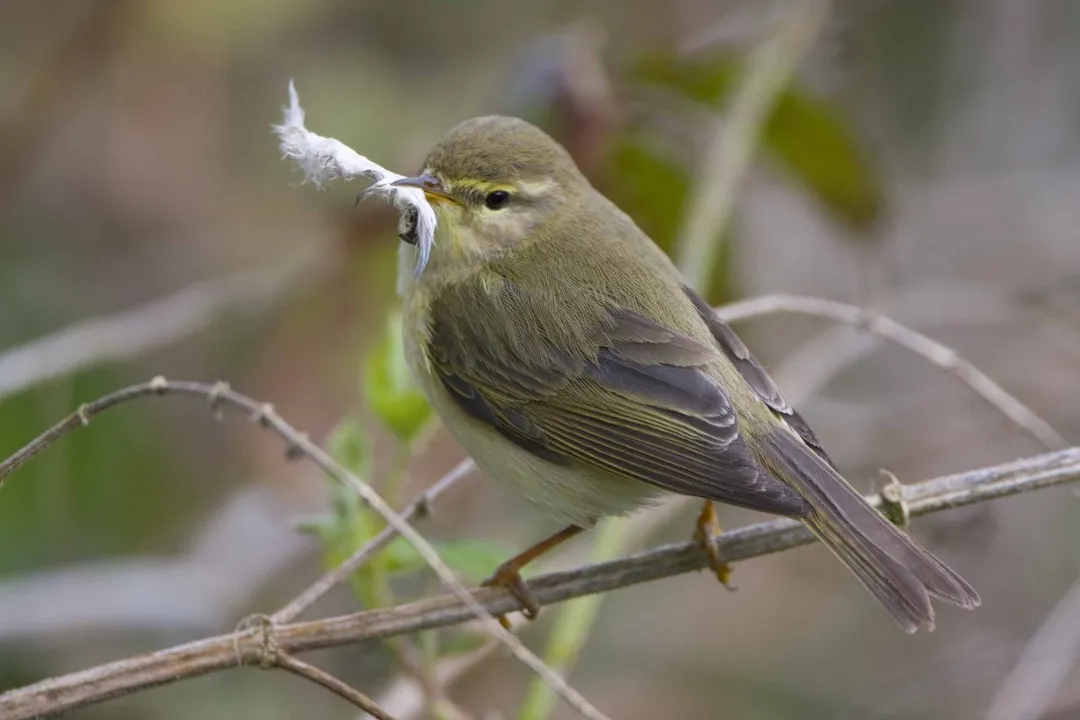
The Willow Warbler is a dedicated long-distance migrant. Its breeding range spans across northern Eurasia, extending from Western Europe well into Siberia. [2][3] This impressive distribution suggests a large overall population, even if density varies locally.
What truly underscores its commitment to seasonal travel is its wintering ground. After breeding, these birds undertake incredible journeys to spend the non-breeding season in sub-Saharan Africa or occasionally in India. [2][3] Considering the scale of this movement—covering thousands of miles across continents—it highlights the bird's resilience, even if the species faces challenges along the route. A rough estimate suggests that a bird breeding in the UK might travel upwards of 3,000 miles one way to reach central Africa, a feat that puts the small bird’s migratory effort into sharp perspective, even without precise population counts. [1] This immense annual commute means that for many observers, the bird is only present for a brief window between early spring arrival and late summer departure. [5]
# Population Trends
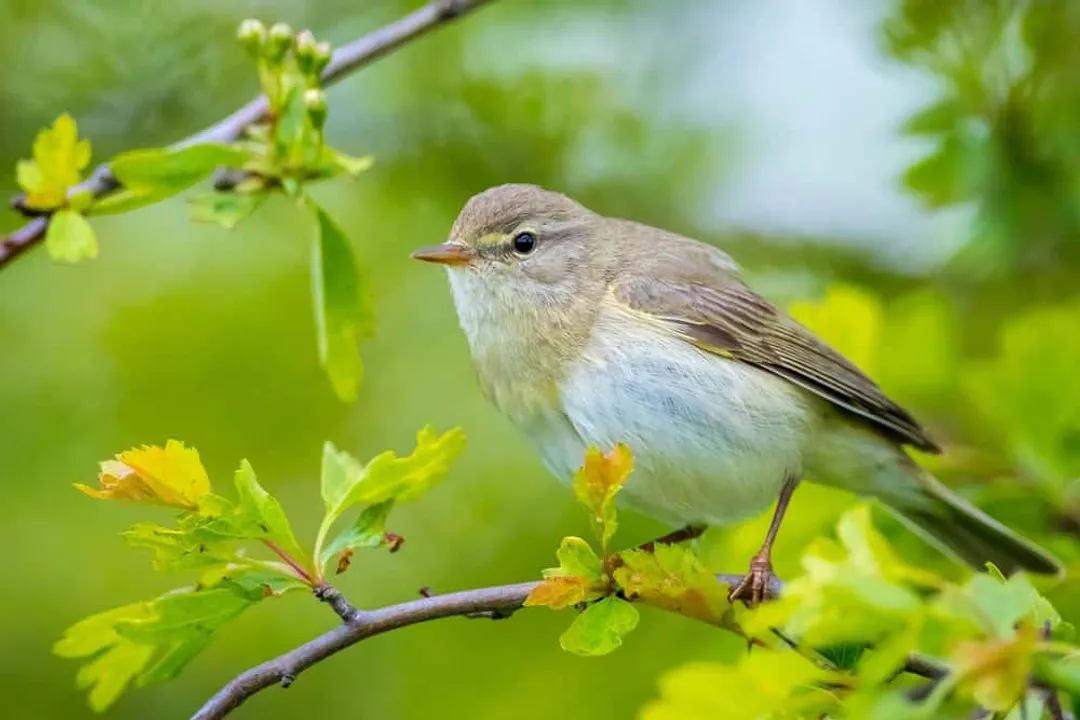
When asking how rare they are, the answer depends heavily on where and when you are looking. In the UK, for instance, the Willow Warbler is considered a common summer migrant, arriving from March onwards. [5][6] However, like many migratory songbirds, its numbers have been subject to fluctuation. Some sources indicate that while the species remains widespread, there have been long-term declines in breeding populations across parts of its European range, including the UK, though the exact reasons are complex and linked to habitat loss both on the breeding grounds and along migration corridors. [4][5]
In contrast, in areas where they favour scrubby habitats or the edges of deciduous woodland, they can appear quite numerous during the peak of the breeding season. [3][9] The bird is not considered globally threatened, but monitoring its changing local abundance is an ongoing concern for ornithologists. [4] If you are in a region where they are less common, such as parts of the far west or north, they will naturally seem much rarer than they do in prime Central European or Scandinavian breeding sites. [2]

# Green Cover
The habitat preference of the Willow Warbler dictates where you are most likely—or unlikely—to find one. They favour areas with dense scrub, young trees, and the bushy fringes of woodland, often near water sources like marshes or damp meadows. [1][9] They tend to avoid dense, dark forest interiors. [3]
A helpful observation for field identification is their foraging style. They move quickly among the lower branches and undergrowth, gleaning insects from the leaves. [1] If you spot a small, pale-legged warbler moving actively in the sunlit edges of a willow thicket, constantly flitting between leaves while singing its descending tune, you have a strong candidate for a Willow Warbler. Conversely, if the bird is staying higher up in the canopy of mature trees, or if you only hear a repetitive, harsh chiff-chaff from the same perch, you are likely observing the other species. [2] Knowing this ecological niche allows an observer to focus their search efforts efficiently, turning what seems like a rare bird encounter into a regular spring event. For instance, in established, mature ancient woodlands, the relative lack of dense, regenerating scrub means you might expect fewer Willow Warblers than in a recently coppiced area or a scrubby clearing. [9]
# Identification Pitfalls
The persistent confusion between the Willow Warbler and the Chiffchaff is arguably the biggest reason the former is perceived as rarer than it truly is. Many observers, even experienced ones, might incorrectly assign an ambiguous call or a quick visual glimpse to the more common Chiffchaff, thus undercounting the Willow Warbler in local surveys. [2] Furthermore, identification skills often peak during the breeding season when songs are loudest. Outside this period, during migration or passage, visual identification becomes the only option, which, due to their cryptic nature, leads to many individuals being overlooked entirely or simply listed as unidentified warbler. [7] This gap in positive identification inflates the apparent rarity for general birdwatchers.
To overcome this identification hurdle, newcomers are often advised to focus on the bird's movement as much as its look. While both birds flit, the Willow Warbler often gives a slightly more buoyant, less jerky impression in flight and movement than the Chiffchaff, which appears more jerky and restless in its foraging. [1][4] This subtle behavioural difference, combined with learning the falling song pattern, turns the challenge of separation into a rewarding lesson in warbler identification.
Related Questions
#Citations
Willow warbler | The Wildlife Trusts
Willow Warbler | BTO
Willow Warbler Bird Facts - Phylloscopus trochilus - A-Z Animals
Willow warbler guide: song, appearance, distribution and migration
Willow warbler: our commonest, and most inconspicuous, summer ...
Willow Warbler Facts For Kids | AstroSafe Search - DIY.ORG
Willow Warbler Bird Facts | Phylloscopus Trochilus - RSPB
WILLOW WARBLER (Phylloscopus trochilus) - SongBird Survival
Willow Warbler (Phylloscopus trochilus) - Woodland Trust