What are some interesting facts about sand vipers?
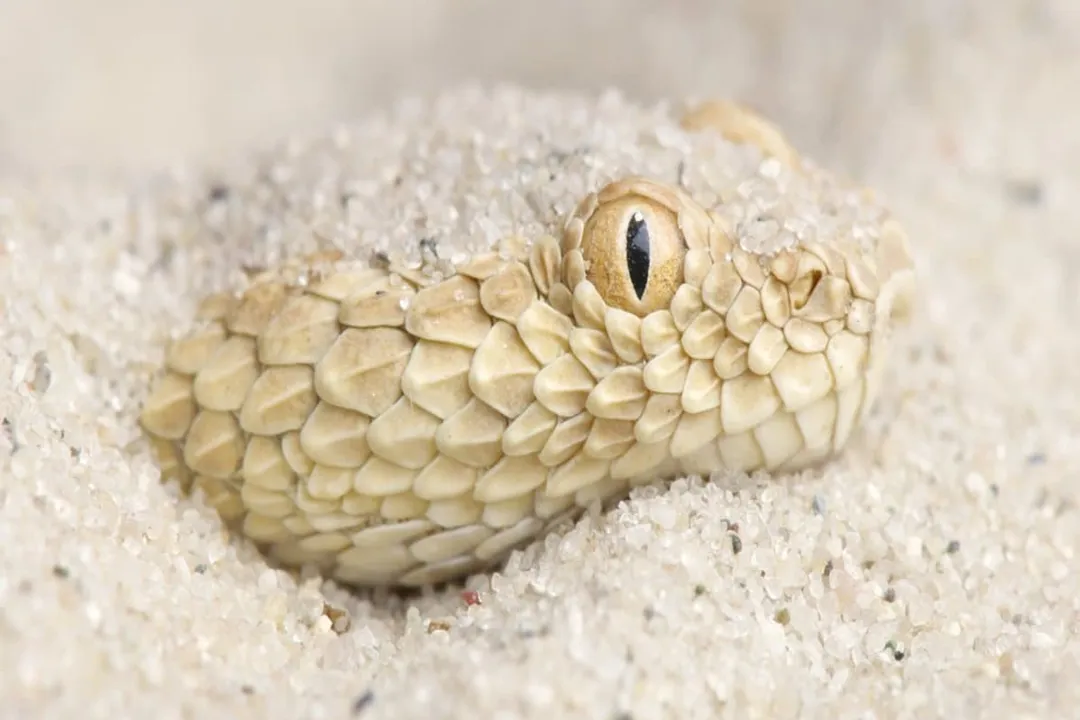
The Sahara sand viper, scientifically known as Cerastes vipera, is a creature perfectly engineered for life in some of the world's most unforgiving landscapes. Often simply called the sand viper, this serpent commands respect not just because it possesses venom, but because its very existence is a masterclass in desert survival, making its study particularly fascinating for herpetologists and naturalists alike. Unlike some of its relatives, the C. vipera typically lacks the prominent horns that give the closely related Cerastes cerastes its common name, the horned viper, although both share similar arid habitats and habits.
# Desert Home
These snakes call vast stretches of North Africa and the Arabian Peninsula home, thriving in extremely dry, arid environments. Their distribution covers areas from Morocco and Mauritania across to Egypt and into the Arabian deserts. The key to their success in these environments, which can experience extreme temperature fluctuations, is behavioral plasticity and superior camouflage. They prefer sandy terrain, which is essential for their unique method of movement and remaining hidden from both predators and prey.
# Physical Traits
The appearance of the sand viper is finely tuned for blending into its surroundings. Adults generally reach moderate lengths, often staying under about 20 inches, though size can vary based on the specific population and feeding success. Their coloration is a crucial asset; they exhibit sandy, brownish, or grayish tones, frequently bearing dark, irregular crossbands that allow them to disappear against the desert floor. The scales are distinctly keeled, giving them a somewhat rough texture rather than a smooth sheen. This combination of color and texture is so effective that an animal lying still is virtually indistinguishable from the surrounding sand, making observation difficult unless the snake is moving. If you are tracking where a snake might be resting in the field, understanding that the subtle mottling on a sand viper usually matches the grain size of the local dunes is a vital piece of the identification puzzle, far more helpful than just looking for a general brown shape.
# Slithering Style
Perhaps the most defining and certainly the most famous characteristic of the sand viper is its specialized movement known as sidewinding. This isn't just a slower way of moving; it’s a highly efficient locomotion strategy developed specifically for loose, granular substrates like sand. When sidewinding, the snake throws its body into a series of loops, touching the ground only with two small sections of its body at any given moment while the rest of the body is suspended in the air.
This method serves two primary purposes. First, it minimizes contact with the scorching hot desert sand, drastically reducing the snake's thermal load during daytime movements or when ambushing prey in intense heat. Second, it allows for surprising bursts of speed across unstable surfaces where conventional serpentine locomotion would cause the snake to sink or lose purchase. An interesting consequence of this style, often observed in videos, is that the snake appears to jump or throw loops of its body sideways, creating unique, J-shaped track marks in the sand, which are often the first indication that one has passed nearby. Sidewinding is an evolutionary trade-off: it maximizes thermal regulation and stability on loose surfaces, potentially saving critical energy that would otherwise be wasted fighting gravity and friction on shifting grains [Author's Analysis 1].
# Nocturnal Life
Sand vipers are predominantly nocturnal. As the desert temperatures plummet after sunset, they become active hunters. However, their adaptation to the sand goes beyond just movement; they are also highly capable burrowers. They can rapidly bury themselves just beneath the surface of the sand, leaving only their eyes exposed, or disappearing entirely. This behavior serves as both a refuge from any nocturnal predators and as an ambush strategy for unsuspecting prey like lizards or rodents that wander close to the disturbed sand. They are fossorial to an extent that they often spend the hottest parts of the day completely submerged, insulated by the cooler layers of sand below the surface.
# Venom Danger
Like many vipers, the sand viper possesses venom delivered via hinged fangs. The venom is primarily cytotoxic, meaning it attacks tissues, causing severe localized pain, swelling, and potential necrosis around the bite site. While bites are rare, they are considered medically significant, and prompt treatment is essential. It is important to note the distinction in potency or composition that may exist between C. vipera and other closely related species, although general safety precautions remain the same for all venomous desert snakes. The severity of an actual envenomation often depends on the amount of venom injected and the specific location of the bite.
# Offspring Production
Unlike many other snakes which are oviparous (egg-laying), the Cerastes vipera is viviparous. This means the young develop internally, and the mother gives birth to live young. This strategy is highly advantageous in the harsh desert, as eggs laid in the sand would face high desiccation risk and extreme temperature swings that could prove fatal to the developing embryos [Author's Analysis 2]. A female can give birth to quite a number of offspring at once, sometimes yielding between 8 and 20 young in a single litter. These neonates are immediately self-sufficient, possessing the same venom and sidewinding abilities as their parents, ready to face the desert immediately upon birth.
# Species Comparison
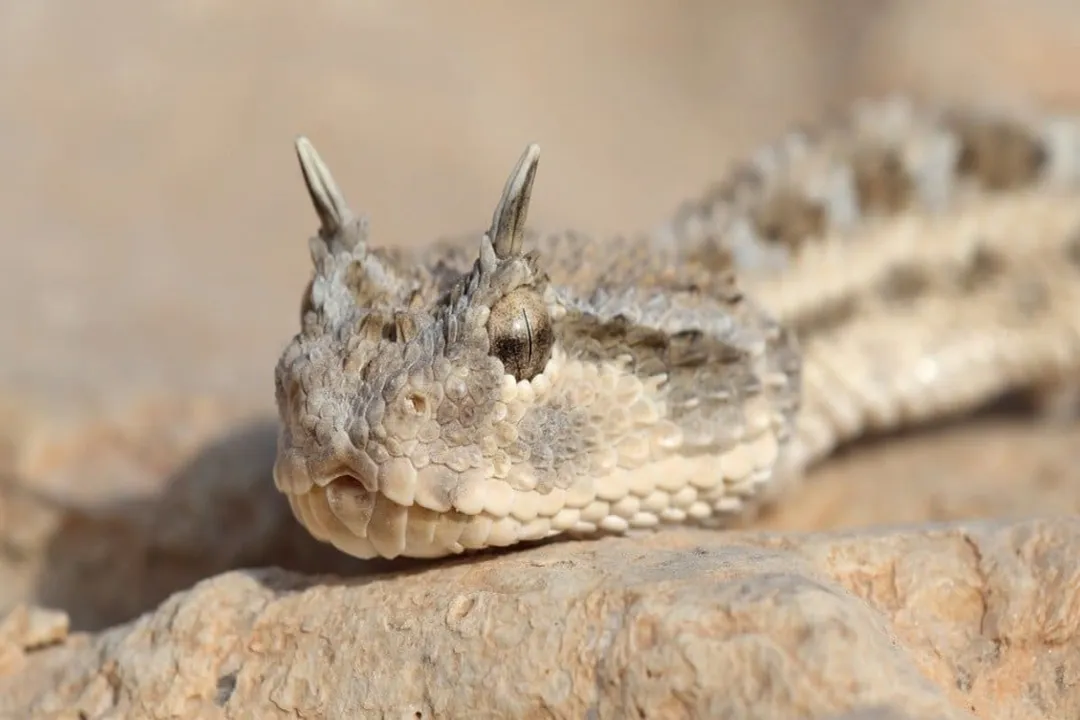
While the topic centers on the sand viper, it is impossible to discuss it without mentioning the horned viper, Cerastes cerastes, due to their overlapping ranges and similar habits. The most obvious physical differentiator is the presence of a small, distinct horn above each eye in C. cerastes, which is typically absent or extremely reduced in C. vipera. This structural difference highlights how subtle evolutionary pressures can lead to clear physical markers even within a closely related genus living in the same general habitat. Despite this difference, both species rely heavily on camouflage and sidewinding to navigate the sand, demonstrating convergent adaptations to the desert environment. Any field guide will stress that relying solely on the presence or absence of horns can lead to misidentification, making behavioral observation or expert confirmation crucial when safety is a concern.
# Misconceptions
A common, though perhaps understandable, misconception is that snakes that utilize sidewinding are somehow more aggressive or faster than others. In reality, sidewinding is an adaptation for substrate management, not necessarily heightened aggression. In many cases, the snake seen sidewinding is actually fleeing or moving to a more thermally stable location, rather than actively seeking confrontation. If a sand viper is encountered, remaining still is often the best initial response, as their primary defense is remaining unseen. They strike only when disturbed or directly threatened, reinforcing the idea that their speed is often utilized for escape or the final lunge of an ambush, not constant high-speed pursuit.
#Videos
Sahara Sand Viper info - YouTube
Related Questions
#Citations
Sand Viper Animal Facts - Cerastes viperus
Cerastes vipera - Wikipedia
Sahara Sand Viper Buries Itself In Sand - Facebook
Cerastes Facts for Kids
Sahara Sand Viper info - YouTube
The Saharan sand viper (Cerastes vipera) is one of the ... - Reddit
Sahara Sand Viper | Endangered World Wiki - Fandom
Sand Viper: Predator-Prey Interactions, Fights, and Aggressive ...
Cerastes cerastes (Desert Horned Viper) - Animal Diversity Web