What time of day are sand vipers predominantly active hunters?
Answer
Nocturnal
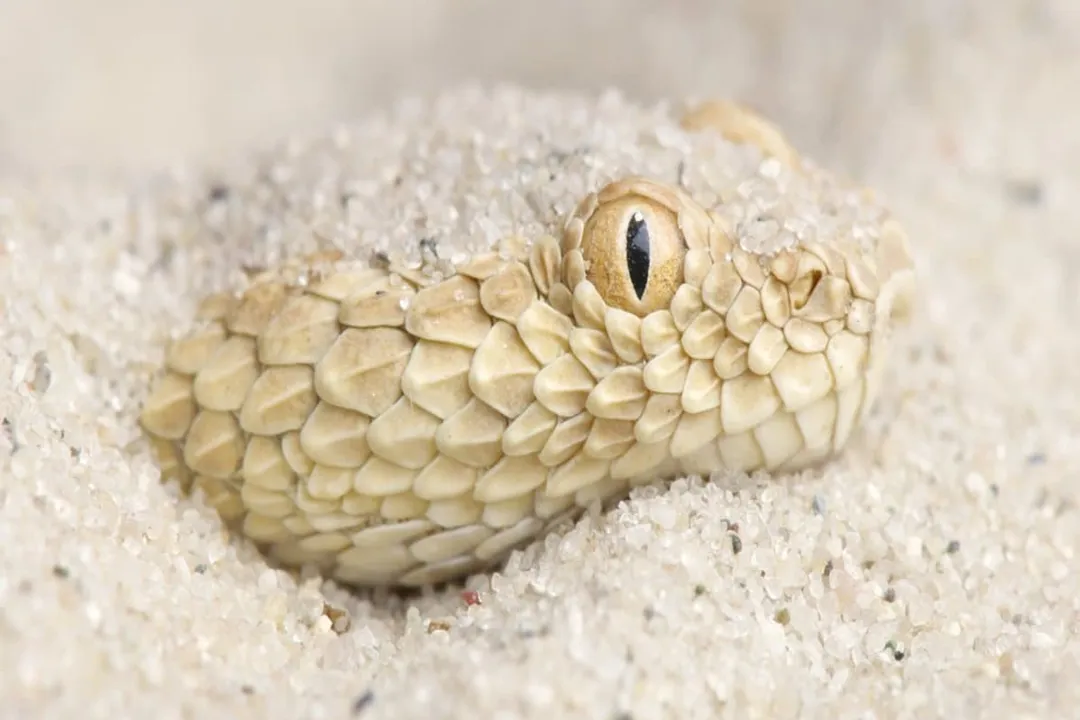
The behavioral pattern of the sand viper is largely dictated by temperature regulation in its extreme environment. These snakes are predominantly nocturnal, meaning they emerge to become active hunters after the intense heat of the day has subsided and the desert temperatures have dropped significantly following sunset. While they are highly adapted to insulation by burying themselves during the day, their active hunting phase, when they seek out prey such as lizards or rodents, occurs during the cooler nighttime hours.
#Videos
Sahara Sand Viper info - YouTube
Related Questions
What is the reproductive method of the Sahara sand viper, Cerastes vipera?What primary action defines the venom characteristic of the sand viper?What is a major purpose of the sand viper's specialized sidewinding locomotion?How does Cerastes vipera generally differ in appearance from Cerastes cerastes?What specific texture do the scales of the adult sand viper possess?What time of day are sand vipers predominantly active hunters?What unique shape of track marks is often left by the sidewinding Cerastes vipera?Why is the viviparous strategy advantageous for Cerastes vipera in arid zones?Which coloration trait helps the sand viper blend into the desert floor?What is the reality concerning aggression and the sidewinding motion in sand vipers?In which geographical areas do Cerastes vipera thrive in arid environments?