Which coloration trait helps the sand viper blend into the desert floor?
Answer
Sandy, brownish, or grayish tones with irregular crossbands
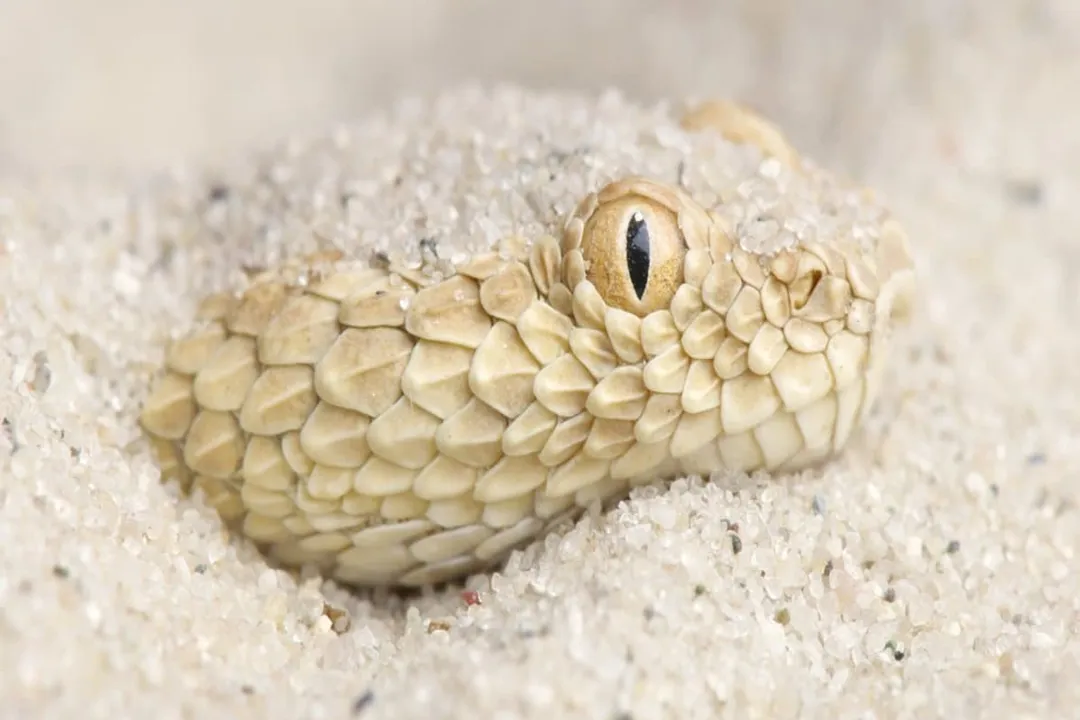
The appearance of the sand viper is perfectly engineered for crypsis within its sandy habitat. Adults exhibit a primary coloration palette consisting of sandy, brownish, or grayish tones that mimic the color of the desert floor. This base color is often overlaid with dark, irregular crossbands. This combination of color and the texture provided by the keeled scales allows the snake to disappear when lying still against the desert substrate. Furthermore, the subtle mottling pattern on many individuals closely matches the grain size of the local dunes, making detailed visual identification difficult unless the animal is in motion.
#Videos
Sahara Sand Viper info - YouTube
Related Questions
What is the reproductive method of the Sahara sand viper, Cerastes vipera?What primary action defines the venom characteristic of the sand viper?What is a major purpose of the sand viper's specialized sidewinding locomotion?How does Cerastes vipera generally differ in appearance from Cerastes cerastes?What specific texture do the scales of the adult sand viper possess?What time of day are sand vipers predominantly active hunters?What unique shape of track marks is often left by the sidewinding Cerastes vipera?Why is the viviparous strategy advantageous for Cerastes vipera in arid zones?Which coloration trait helps the sand viper blend into the desert floor?What is the reality concerning aggression and the sidewinding motion in sand vipers?In which geographical areas do Cerastes vipera thrive in arid environments?