What are some interesting facts about Goldcrest?
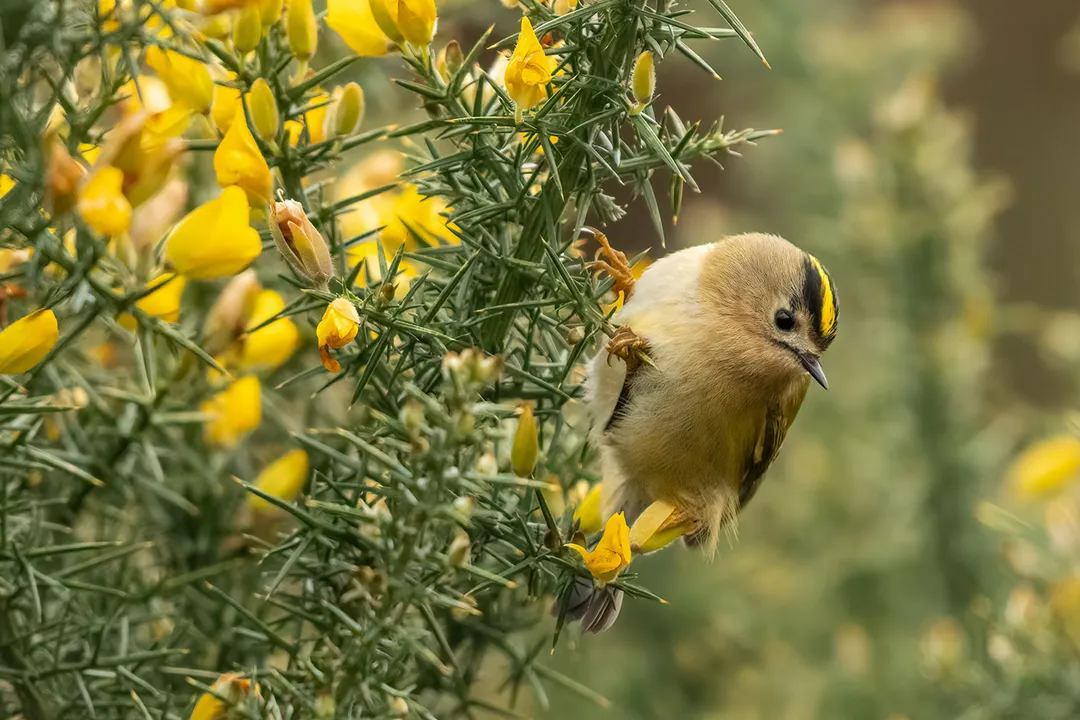
The Goldcrest, a bird so minuscule it often seems like a fleeting emerald spark among the branches, holds the title of Britain’s smallest native bird, a distinction that immediately sets it apart in the avian world. Measuring perhaps only about 8.5 to 9.5 centimetres from beak to tail, its diminutive stature is matched by its feather-light weight, frequently recorded at around 5 grams—less than the weight of a standard UK one-penny coin. This incredible smallness dictates much of its existence, requiring near-constant activity just to maintain its body temperature and secure enough fuel for survival. Its plumage offers excellent camouflage, featuring olive-green upperparts blending perfectly with coniferous needles, contrasting subtly with paler, whitish underparts.
# Crest Colors
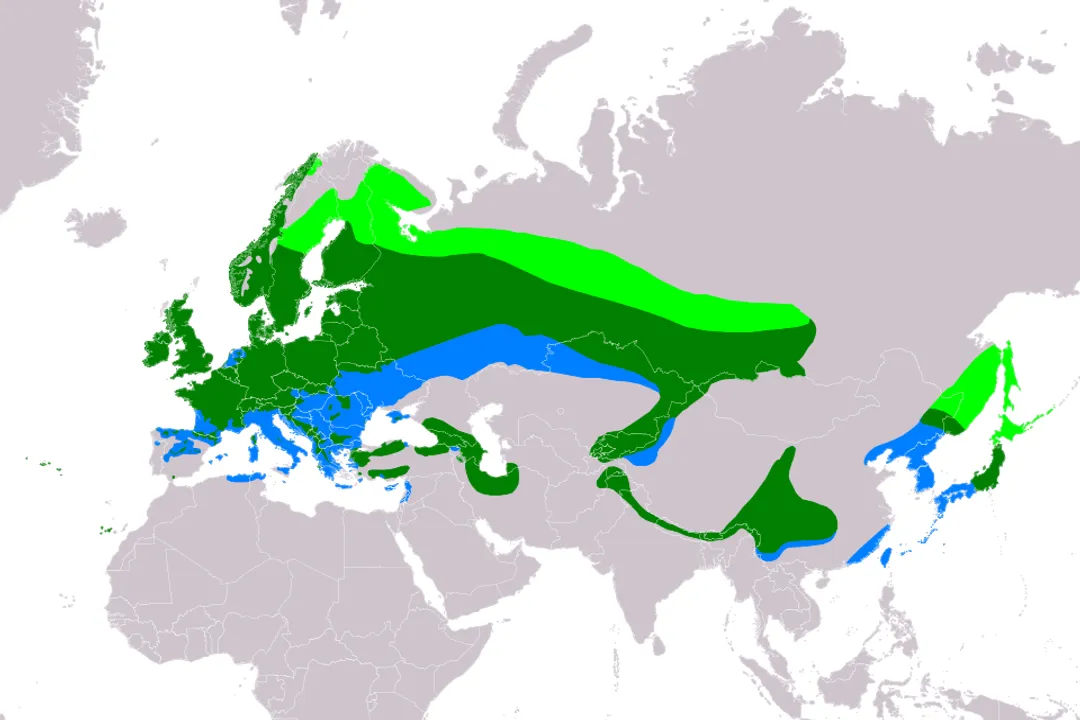
The feature that grants the Goldcrest its name is, without a doubt, its signature crown, which is visible on both sexes but differs slightly in coloration, providing an easy field mark for the observant birder. In males, this crest is striking: a bright stripe of vibrant yellow, often overlaid or bordered centrally with a fiery streak of orange, set against dark feather edges. Females share the general shape but possess only the yellow coloring, lacking the deeper orange hue seen in their male counterparts. While this crest is usually flattened when the bird is calm or foraging quietly, it becomes dramatically raised during territorial displays or courtship rituals, acting as a visible signal in the dense foliage where they spend much of their time.
# Habitat Preferences
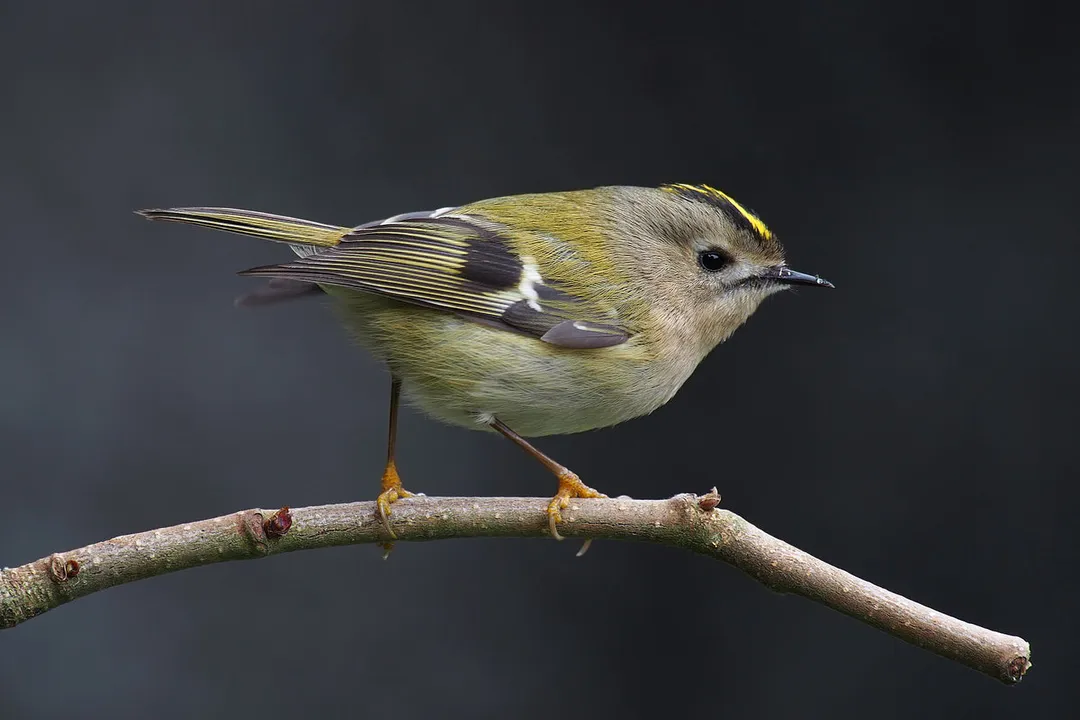
Goldcrests exhibit a strong preference for dense woodland environments, making them a common sight wherever conifers dominate the landscape. They are very much creatures of the evergreen, thriving in spruce, pine, and fir plantations. However, this preference isn't absolute; they can also be found in mixed woodlands, particularly those with mature trees, and sometimes venture into large, well-treed parks and extensive gardens. Their reliance on high canopy cover means that birdwatchers often have to crane their necks considerably, as these tiny foragers rarely linger on lower branches or the ground, preferring the relative safety and insect life found near the tops of trees. The density of the forest canopy is likely crucial, not just for protection from predators but also as a microclimate moderator against harsh weather.
# Foraging Style
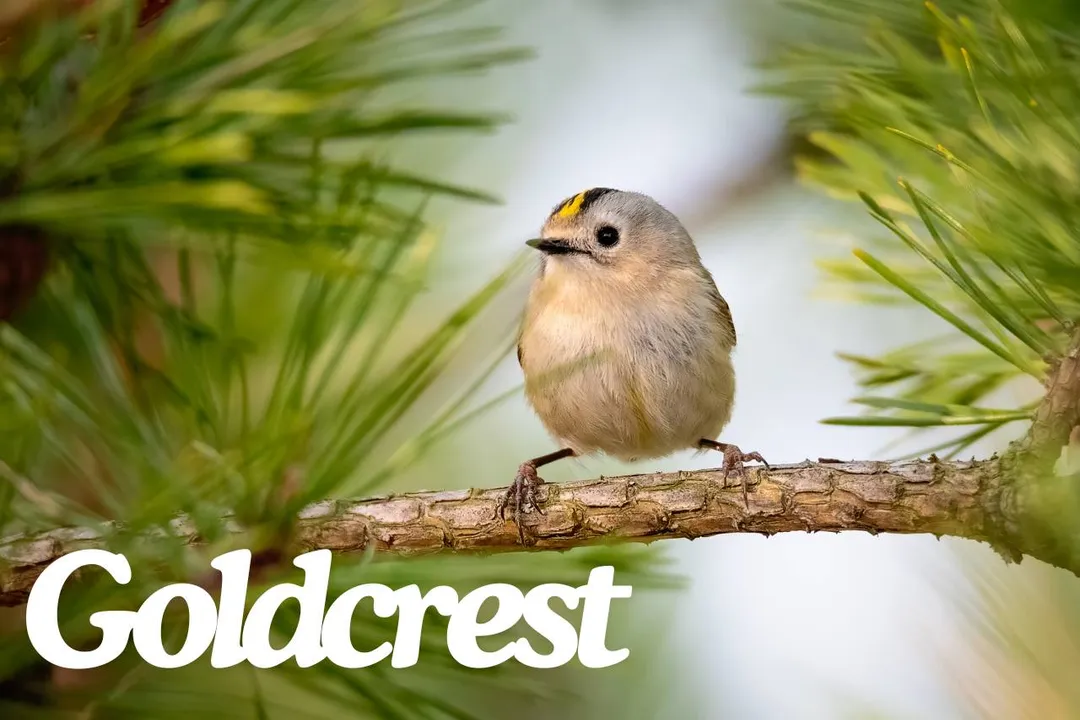
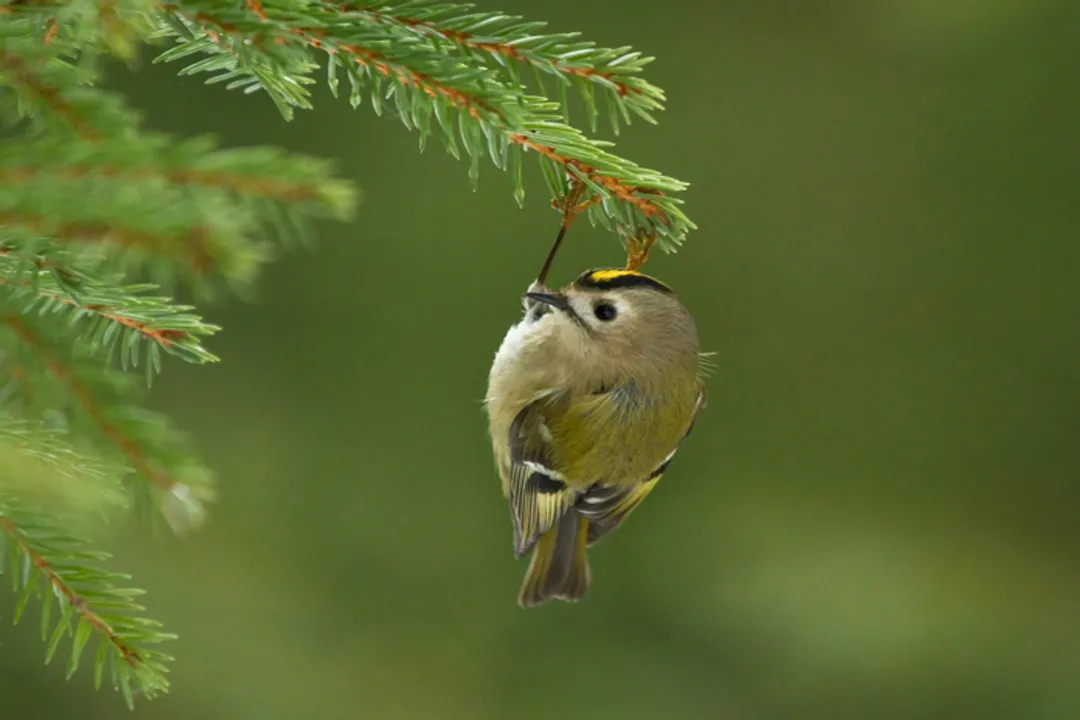
If you are looking for a Goldcrest, you are looking for movement. This bird is characterized by its frantic, almost perpetual motion. They rarely sit still for long, constantly flitting, hovering, and creeping along twigs and branches, inspecting the undersides of needles and small leaves for their minuscule meals. Their diet is composed almost entirely of small invertebrates, including spiders and various tiny insects. To meet their high metabolic demands—especially considering their incredibly low body mass—they must feed almost continuously throughout the daylight hours. It is fascinating to observe how such a small body can support the constant energy expenditure required for this hyperactive foraging style; they are essentially miniature engines running at full throttle from dawn till dusk. This persistent, acrobatic search method allows them to exploit food sources that larger insectivores might overlook or be unable to access within the tight clusters of pine needles.
# Winter Flocks
While they can be territorial during the breeding season, the communal spirit of the Goldcrest emerges when the weather turns cold. As autumn progresses, these birds often join mixed-species foraging parties. It’s common to see them moving alongside tits, warblers, and firecrests as they sweep through the woodland in search of winter sustenance. Being part of a larger group offers safety in numbers, and the combined vigilance of several species increases the chances of spotting an approaching predator. For the dedicated observer, listening for the high-pitched calls of a tit flock often leads to the discovery of the smaller, harder-to-see Goldcrests tucked in amongst them.
When you are trying to locate a Goldcrest in the winter, the key is often to listen first, as their song is often too high-pitched or faint to immediately register against the background noise of a forest. A practical tip for spotting them involves focusing your attention after you hear the faint calls of a foraging party; rather than scanning the whole tree, concentrate your search on the very highest outer branches of evergreens where they are known to work diligently, almost like living pine-cone ornaments.

# Song Features
The Goldcrest’s vocalization is incredibly high-pitched, a thin, silvery sound that easily gets masked by wind noise or the chatter of larger birds. The male takes on the main role of singing, performing this song frequently throughout the breeding season to advertise his territory and attract a mate. While the song may sound weak to the human ear compared to the robust melodies of a robin or blackbird, its high frequency is surprisingly effective in penetrating the dense foliage of their preferred habitat.
# Nesting Craft
The construction of the Goldcrest’s nest is a marvel of avian engineering, rivaling that of the much larger long-tailed tit for its intricacy and camouflage. They create a compact, dome-shaped structure, which is then meticulously decorated and hidden using materials like lichen, moss, and spider silk, often resembling a small, mossy lump on a branch. The use of cobwebs is particularly clever; as the spiders repair and add to their webs, the nest subtly grows and remains securely fastened to its anchor point. Females are the primary architects, though they may receive assistance from the male. Once built, this tiny cup can be filled with a surprisingly large clutch of eggs—anywhere from six to as many as eleven, each barely larger than a pea. Given the small size of the parents and the large number of mouths to feed, this breeding effort is a significant undertaking.
# Range Shifts
The Goldcrest's presence across its range is influenced by climate and seasonality. In many parts of its European distribution, particularly milder areas, it is considered a resident bird, staying put year-round. However, populations further north or east often undertake migratory movements to escape severe winter conditions, heading south or west in search of more hospitable foraging grounds. This migratory behaviour means that the overall apparent population in a given area can fluctuate significantly between summer and winter months.
Considering the pressures of climate change, these migratory habits are particularly interesting to monitor. A milder winter might encourage more northern Goldcrests to attempt to overwinter further north than historical norms suggest, potentially increasing local breeding densities in subsequent years—or, conversely, if extreme, short cold snaps occur, the low body weight of the bird makes it exceptionally vulnerable to rapid temperature drops when food resources are scarce. It is this vulnerability due to minimal insulation and rapid energy depletion that makes the survival statistics for any single Goldcrest across a harsh winter particularly impressive.
Related Questions
#Citations
Top 10 Facts About Goldcrests - Happy Beaks Blog
Goldcrest Bird Facts - RSPB
Goldcrest - Facts, Diet, Habitat & Pictures on Animalia.bio
Goldcrest - Wikipedia
Goldcrest Facts for Kids
Goldcrest guide: how big they are, what they eat - and how to identify
Goldcrest Facts For Kids | AstroSafe Search - DIY.ORG
Learning to See Goldcrests - Terrain.org
Bird Fact File: Goldcrest - Beaky Bites