What are some interesting facts about Pere David's deer?
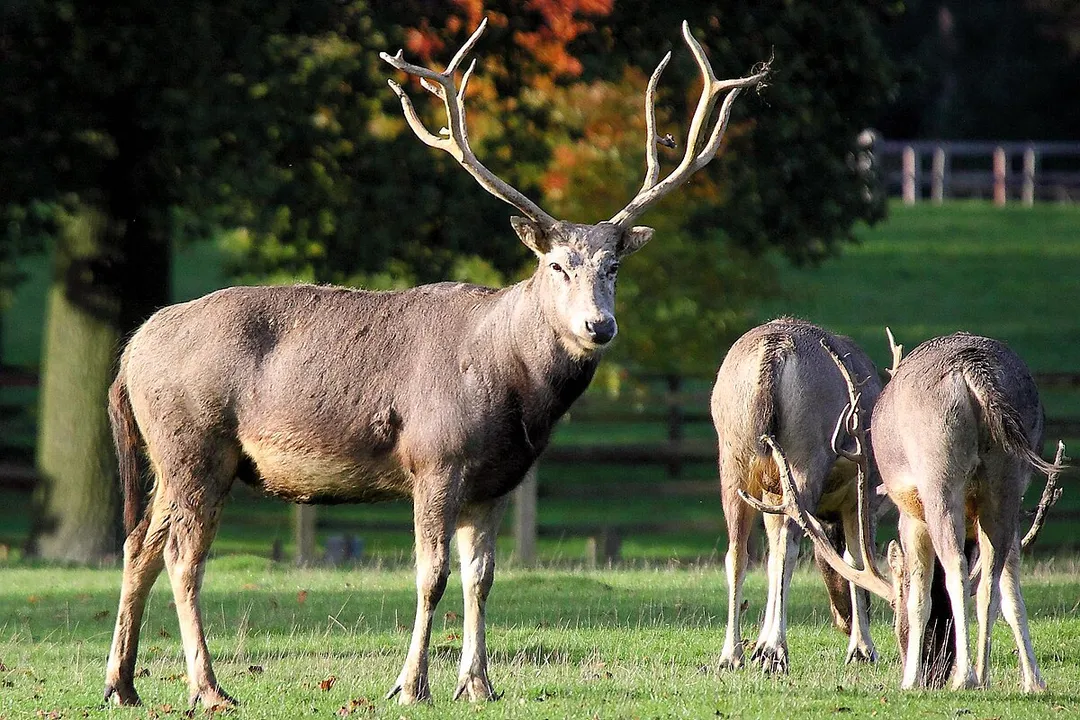
The Père David's deer, also known by its Chinese name Milu or the scientific name Elaphurus davidianus, is a creature steeped in historical mystery and modern conservation triumph. This magnificent animal possesses features so distinct that it seems almost like an assemblage of traits from several different species—a long tail of a giraffe, the cloven hooves of a cow, and antlers that baffle taxonomists. [1][2] Perhaps the most striking fact about the Père David's deer today is its status: it vanished from its native range in China centuries ago, surviving solely because a handful of animals were preserved in private parks and breeding collections outside of its homeland. [4]
# Naming Origin
This unusual ungulate owes its introduction to the Western world to a French missionary and naturalist named Armand David. [1] Father David encountered the species while traveling in China in $1865$. [2] He was drawn to the large deer kept within the imperial hunting grounds near Beijing. [1] David managed to secure some skins and antlers, which he sent back to the Muséum national d'Histoire naturelle in Paris, bringing the animal to European scientific notice. [1][2] The creature's scientific name honors him, though its local designation, Milu, is perhaps more evocative of its long history within Chinese culture. [3]
# Physical Distinctions
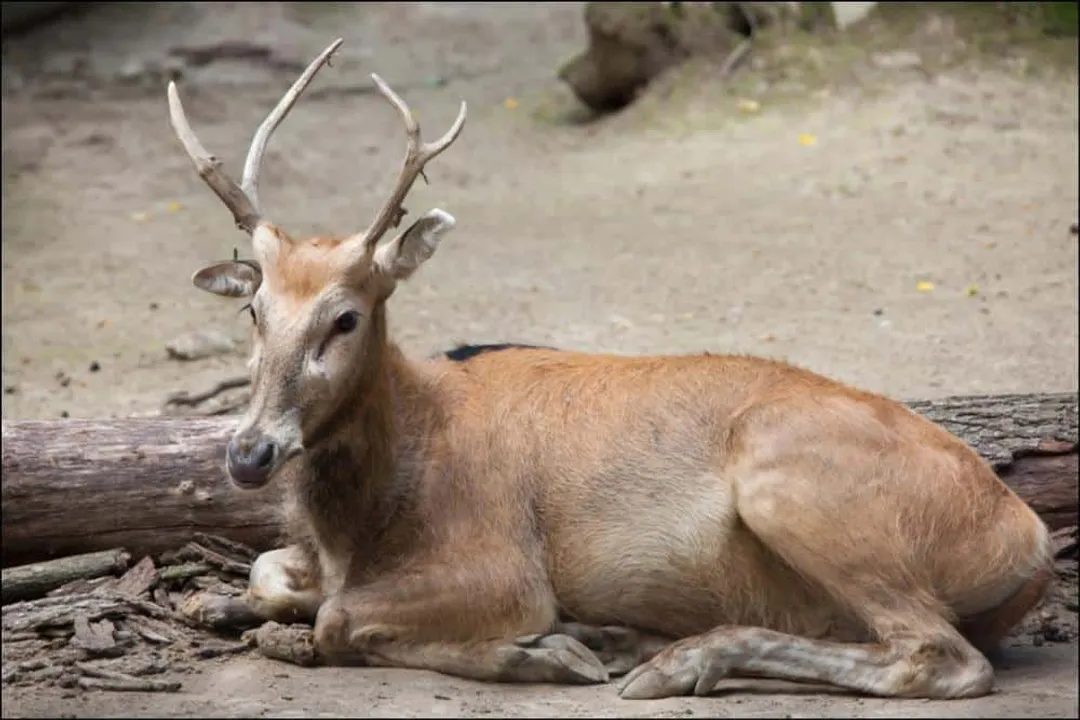
The Père David's deer is large, with males weighing between $110$ and $200$ kilograms and standing up to $1.35$ meters tall at the shoulder. [2] Females are generally smaller. [2] The coat color shifts seasonally, typically a reddish-brown in summer that darkens to a gray-brown in winter. [1][3] While they share some features with other deer, their distinct characteristics set them apart dramatically. [3]
Their tail is notably long, resembling that of a giraffe more than a typical deer. [1] Their hooves are broad and splayed, an adaptation well-suited for their preferred soft, swampy terrain. [1][3]
# Antler Peculiarities
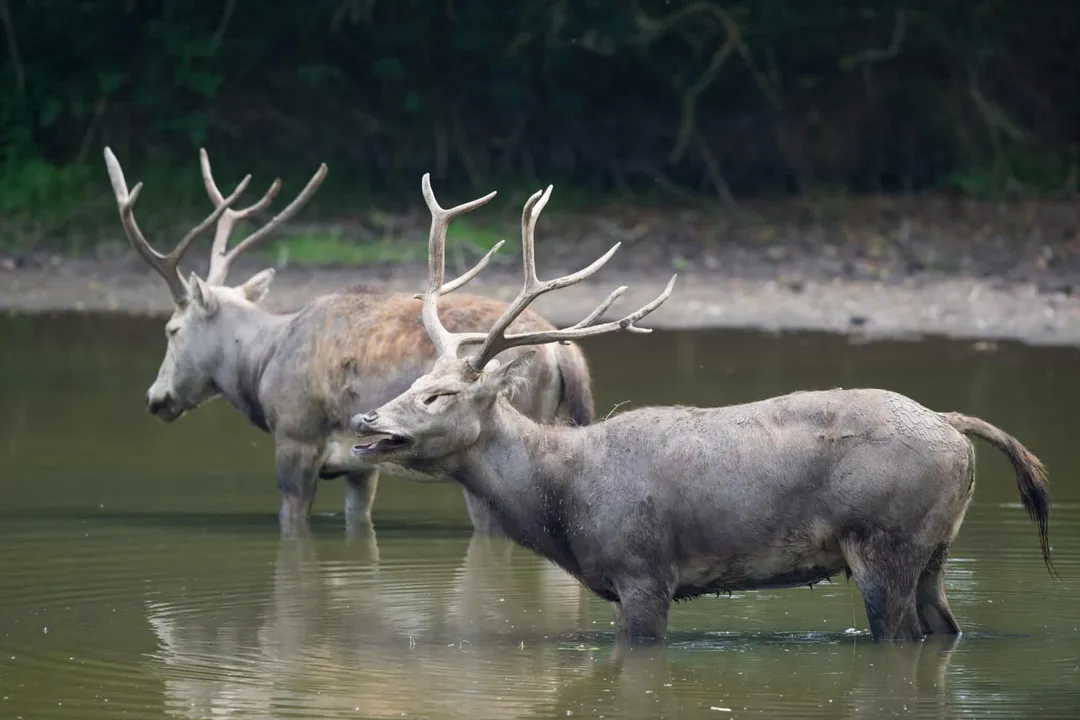
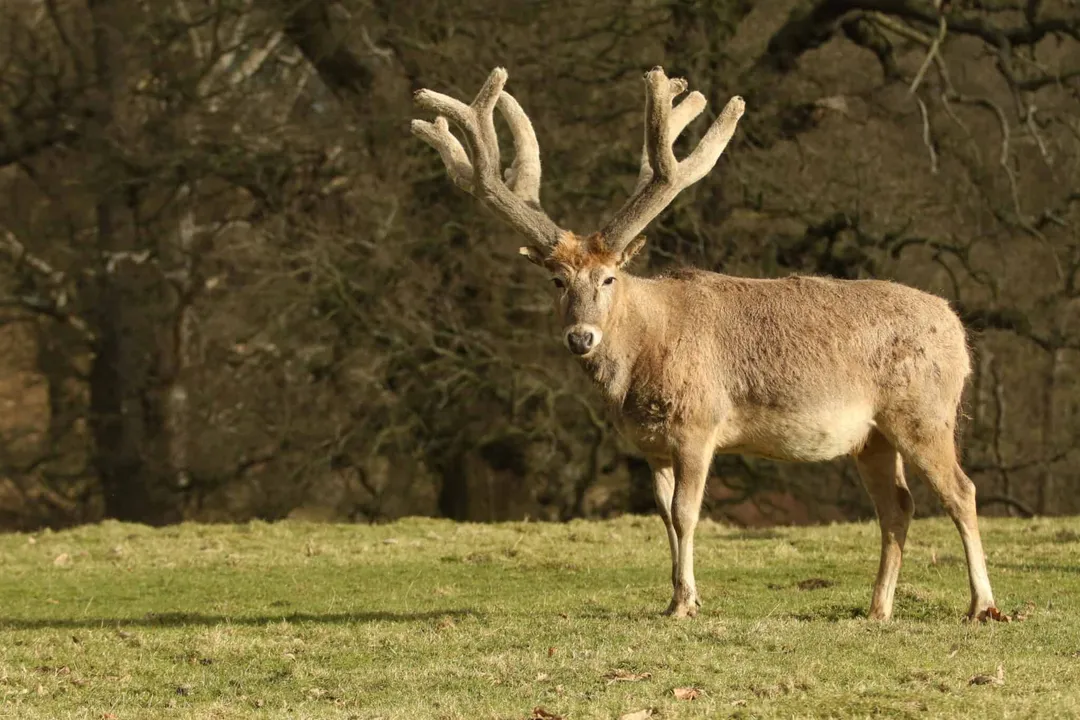
The most visually arresting feature is the male's antlers. Unlike most cervids, which have antlers that sweep backward or slightly forward, the Père David's deer sports massive racks that grow backward and then curve sharply upward at the tip. [3] A fully developed rack can span over a meter in length. [2]
One fascinating aspect of their biology, often cited by observers familiar with the species in captivity, relates to the timing of their antler cycle, which seems entirely out of sync with many common temperate deer species. For example, while many North American or European deer species shed their antlers in late winter or early spring, the Père David's deer typically casts its antlers much earlier, often in winter or early spring, and then begins its rapid summer regrowth phase. [1][3] This results in the males carrying their fully developed, hardened antlers during the autumn rutting season, which is essential for dominance displays, though the regrowth period places a significant metabolic demand during the warmer months. [3] If we compare this to, say, a White-tailed Deer, which carries hard antlers through autumn and sheds them in winter, the Milu's schedule is temporally inverted regarding summer growth and winter casting, an evolutionary quirk that must have been finely tuned to the ancient Chinese wetland environment. [1]
# Habitat and Diet
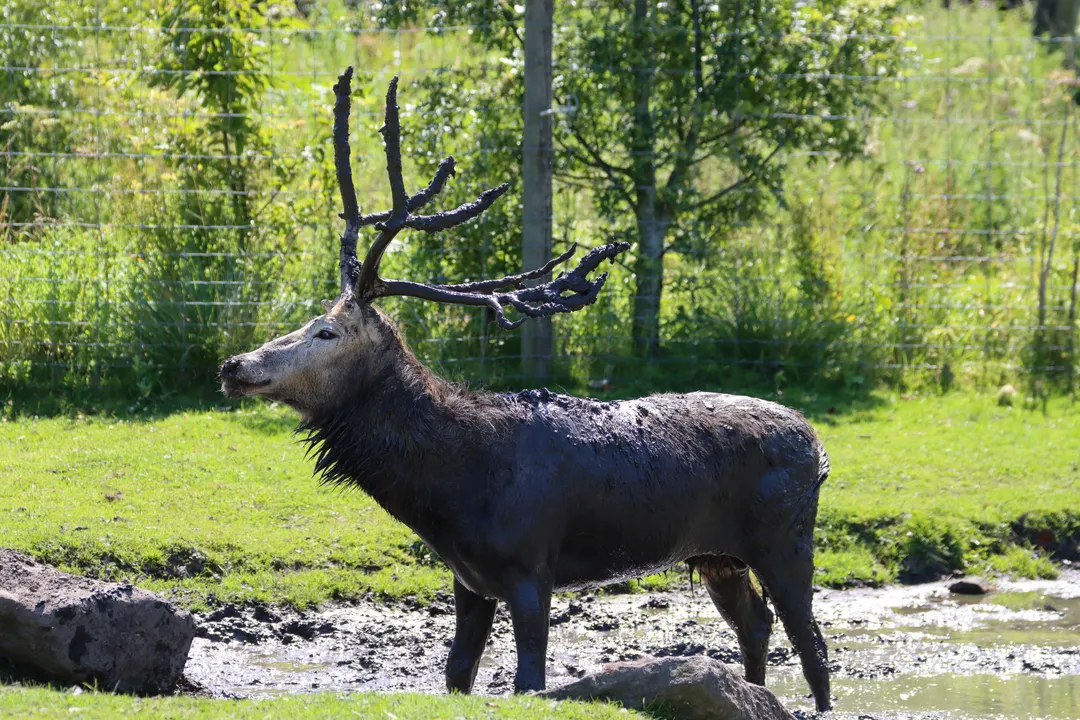
Historically, the Père David's deer inhabited the marshlands, floodplains, and river valleys of central China. [1][4] They are classified as generalist herbivores, capable of both grazing on grasses and browsing on shrubs and other vegetation. [1][2] Their broad, splayed hooves give them an advantage in soft, waterlogged ground, indicating a strong ecological reliance on wetland systems where other, perhaps better-adapted, deer species might struggle. [3] This dependence on specific, often flood-prone, low-lying areas likely contributed to their vulnerability when human encroachment and drainage projects altered their native landscape. [1]
# The Four Excellences
Within Chinese folklore and historical descriptions, the Père David's deer was sometimes attributed with four excellences, which humorously described the traits they appeared to lack during certain seasons, highlighting their unique physical transitions. [3][5] These supposed lacks were:
- Antlers in summer.
- Hooves in winter.
- Tail in spring.
- Color in autumn.
This phrase serves as a folk mnemonic for the deer's ever-changing appearance. For instance, the "antlers in summer" refers to the period when the velvet is still growing or freshly shed, making them appear different from the fully hardened racks seen in the rut, while the "hooves in winter" references the animal’s coat changes during the colder months. [3]
# Global Rescue Effort
The true extent of the Milu's dire situation was revealed when the last wild herds disappeared, believed to have been wiped out by hunting or flooding within the imperial grounds sometime in the late or early century. [1] The species only survived thanks to the foresight of preserving individuals in zoological collections across Europe. [1][4]
The Duke of Bedford, Herbrand Russell, played an absolutely central role in the species' continued existence. [4] In $1898$, he acquired several deer, establishing a core breeding herd at his estate, Woburn Abbey, in England. [4][5] This single private herd became the genetic foundation for nearly all Père David's deer living today. [4] The success of this captive breeding program underscores a critical point in conservation history: sometimes, the immediate act of physically removing animals from a collapsing native ecosystem, regardless of the political or ethical considerations at the time, is the only thing that prevents total extinction. [1]
While the species is classified as Extinct in the Wild (EW) by the IUCN Red List, their numbers in managed environments are significant. [1] Zoos and safari parks worldwide, such as Whipsnade Zoo, Knowsley Safari, and others, now participate in managed breeding programs. [4][6][7] For instance, Whipsnade Zoo participates in the international studbook management, vital for maintaining genetic diversity among scattered populations. [7]
| Feature | Characteristic Detail | Significance |
|---|---|---|
| Native Range | Marshlands/Floodplains of China | Specific habitat requirement makes reintroduction challenging. [1] |
| Antler Cycle | Sheds in Winter/Spring, Regrows in Summer | Unusual timing compared to many Northern Hemisphere deer. [3] |
| Tail Length | Long, Giraffe-like | A primary distinguishing morphological feature. [1][2] |
| Genetic Basis | Derived primarily from Woburn Abbey stock | Highlights dependence on historical private conservation efforts. [4] |
The contemporary management of Elaphurus davidianus often involves international cooperative breeding, ensuring that the population does not suffer from too much inbreeding due to its bottlenecked origins. [1] When you see a Père David's deer today, whether at a park in the Netherlands or a safari experience in the UK, you are observing a lineage that literally walked a knife’s edge between total disappearance and continued existence, saved not by coordinated international policy, but by the actions of one determined aristocrat and his estate managers. [4][5][8] The current distribution is almost entirely confined to these managed, protected settings, making their survival a testament to dedicated, if historically accidental, curation. [6][7]
Related Questions
#Citations
Père David's deer - Wikipedia
Père David's Deer Animal Facts - Elaphurus davidianus
Pere David's deer, Milu - The Ultimate Ungulate
Meet Our Pere David's Deer | Animals - Knowsley Safari
Pere David's deer conservation status and history - Facebook
Pere David's Deer - Ox Safari
Père David's deer | Whipsnade Zoo
Père David's deer | All the facts - AquaZoo Leeuwarden
Père David's Deer - Facts, Diet, Habitat & Pictures on Animalia.bio