How does Cerastes vipera generally differ in appearance from Cerastes cerastes?
Answer
Lacks the prominent horns above each eye
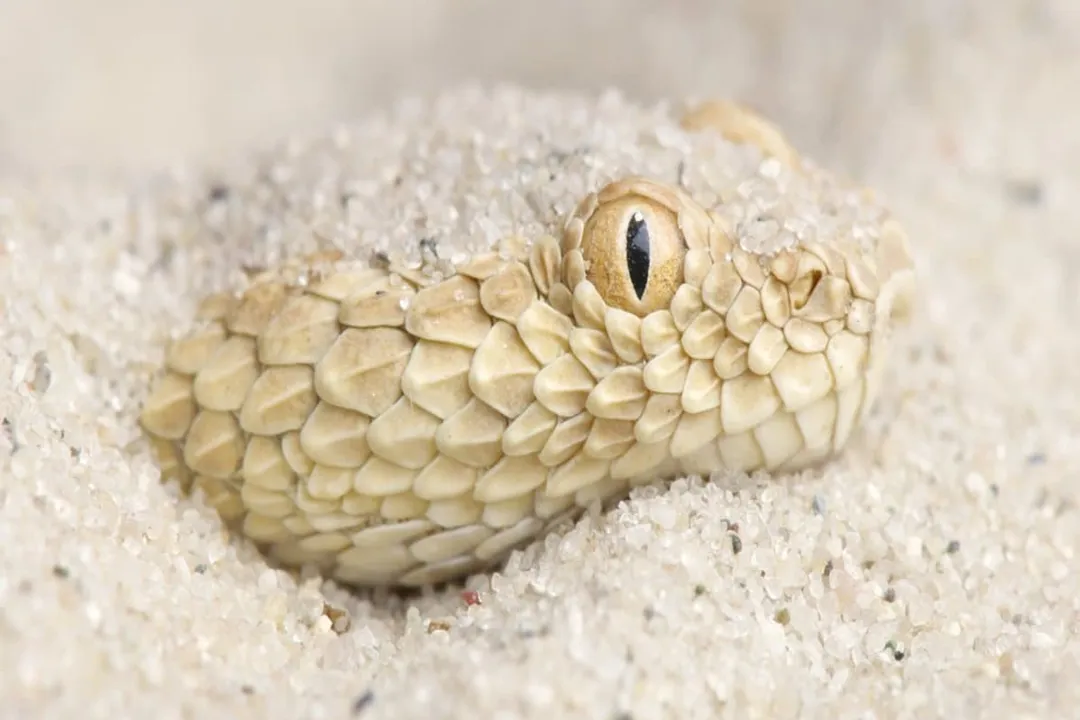
When comparing the sand viper (*Cerastes vipera*) with its closely related counterpart, the horned viper (*Cerastes cerastes*), the most obvious physical distinction lies on the head. The *Cerastes cerastes* possesses a small, distinct horn situated above each eye, which lends it its common name. In contrast, the *Cerastes vipera* generally lacks these prominent structures, or they may be extremely reduced to an unnoticeable state. This structural difference is an important visual marker for field identification, even though both species share similar arid habitats and rely heavily on camouflage and sidewinding techniques to thrive in the desert.
#Videos
Sahara Sand Viper info - YouTube
Related Questions
What is the reproductive method of the Sahara sand viper, Cerastes vipera?What primary action defines the venom characteristic of the sand viper?What is a major purpose of the sand viper's specialized sidewinding locomotion?How does Cerastes vipera generally differ in appearance from Cerastes cerastes?What specific texture do the scales of the adult sand viper possess?What time of day are sand vipers predominantly active hunters?What unique shape of track marks is often left by the sidewinding Cerastes vipera?Why is the viviparous strategy advantageous for Cerastes vipera in arid zones?Which coloration trait helps the sand viper blend into the desert floor?What is the reality concerning aggression and the sidewinding motion in sand vipers?In which geographical areas do Cerastes vipera thrive in arid environments?