What unique shape of track marks is often left by the sidewinding Cerastes vipera?
Answer
J-shaped
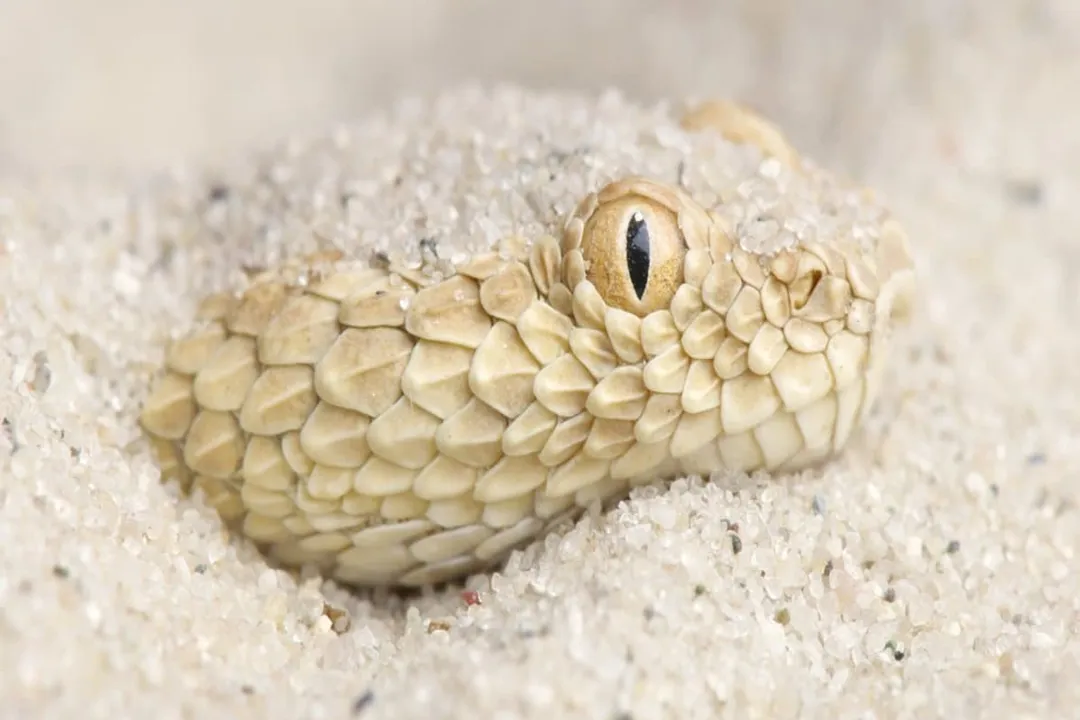
The specialized sidewinding movement results in a distinctive signature left in the loose sand substrate. Because the snake throws its body into loops and only contacts the ground at minimal points while propelling itself sideways, the pattern left behind is unique. Observers often note that the snake appears to jump or loop sideways, leaving track marks that are specifically described as J-shaped. These unique impressions in the sand are frequently the first observable evidence that a sand viper has passed through an area.
#Videos
Sahara Sand Viper info - YouTube
Related Questions
What is the reproductive method of the Sahara sand viper, Cerastes vipera?What primary action defines the venom characteristic of the sand viper?What is a major purpose of the sand viper's specialized sidewinding locomotion?How does Cerastes vipera generally differ in appearance from Cerastes cerastes?What specific texture do the scales of the adult sand viper possess?What time of day are sand vipers predominantly active hunters?What unique shape of track marks is often left by the sidewinding Cerastes vipera?Why is the viviparous strategy advantageous for Cerastes vipera in arid zones?Which coloration trait helps the sand viper blend into the desert floor?What is the reality concerning aggression and the sidewinding motion in sand vipers?In which geographical areas do Cerastes vipera thrive in arid environments?