How to tell the difference between a diamondback and a Mojave rattlesnake?

Identifying the exact species of a coiled rattlesnake can be one of the most challenging—and critical—field identifications in areas where different species overlap. When faced with a diamondback and a Mojave rattlesnake, the stakes are significantly higher because the venom profiles of these two serpents are vastly different. [1] While both are impressive creatures native to the American Southwest, mistaking one for the other can have severe medical consequences. [1]
# Venom Potency
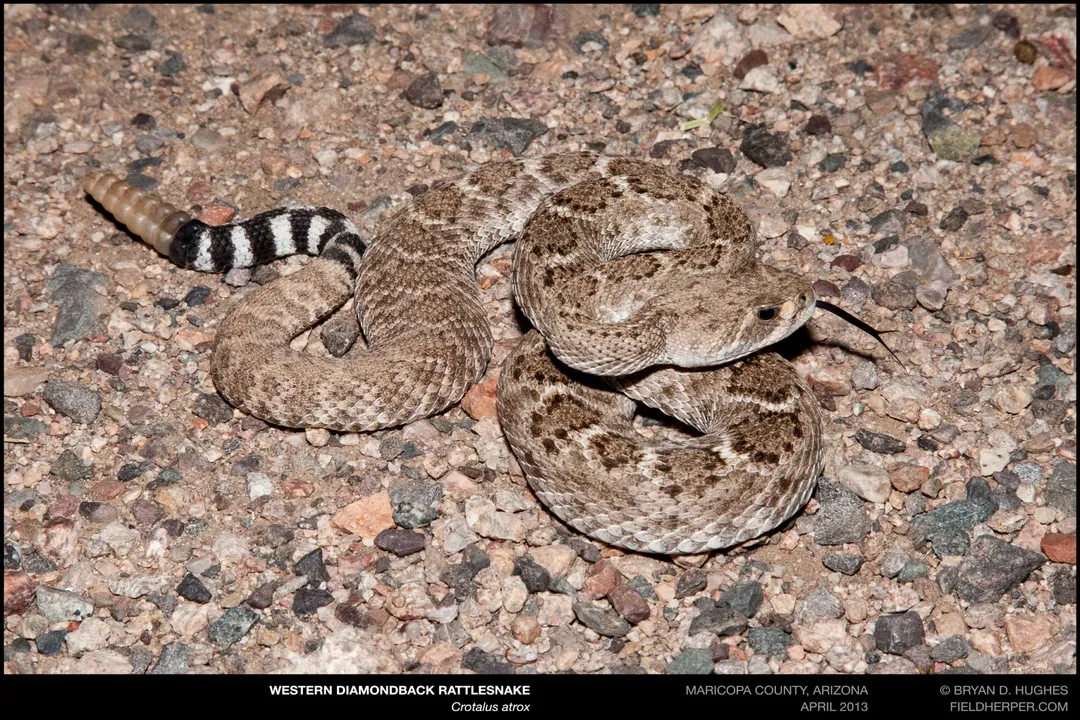
The most crucial distinction between the Western Diamondback Rattlesnake (Crotalus atrox) and the Mojave Rattlesnake (Crotalus scutulatus), often called the Mojave Green, lies in their toxicology. [1] Understanding this difference is paramount for safety, even when visual identification is uncertain. [1]
Western Diamondbacks possess venom that is primarily hemotoxic. [1] This means their venom attacks the blood cells and tissues, leading to severe localized swelling, bruising, and tissue death (necrosis) at the bite site. [1] While this is extremely serious and requires immediate medical attention, the effects are generally localized to the area around the bite. [1]
The Mojave Rattlesnake, however, is renowned for its highly potent venom, which frequently contains strong neurotoxic components alongside hemotoxins. [1] Neurotoxins affect the nervous system, potentially leading to paralysis, difficulty breathing, and systemic failure, even from a seemingly small bite. [1][4] Because of this high toxicity profile, bites from the Mojave snake are often considered far more dangerous than those from the Western Diamondback, even if the snake appears smaller or less aggressive. [1][4]
# Tail Band Pattern

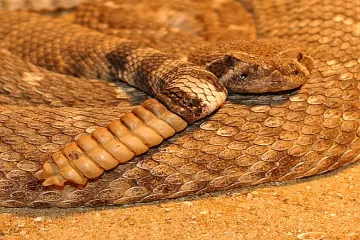
Field guides frequently suggest looking at the tail bands, the segments of color just before the rattle segment, as a primary distinguishing feature. [1][6] This method relies on observing the ratio of the dark bands to the light bands. [1]
For the Western Diamondback, the general rule is that the dark (black or dark brown) bands are typically wider than the pale (white or cream-colored) bands. [1]
For the Mojave Rattlesnake, the pattern is often reversed: the light bands are usually wider than the dark bands. [1] Another way this is sometimes described is that the Mojave's dark bands are narrow, while the light bands are wider. [1] Furthermore, the Mojave's tail bands are sometimes noted for being more uniform in color compared to the WDB. [1]
It is important to note the caveat here: these rules, while helpful, are not absolute iron laws for every single specimen. [3] Visual identification based solely on tail banding can be unreliable, especially when dealing with juveniles or specimens that might be intergrades—snakes resulting from the interbreeding of the two species where their ranges meet. [3][4] Experienced observers caution that if you cannot clearly see this ratio, relying on tail bands alone to rule out a Mojave is a dangerous gamble. [3]
# Head Coloring
If the tail bands are unclear, turning attention to the head can sometimes provide a clue, though this too requires careful observation, particularly in the Southwest, where both species thrive. [5][6]
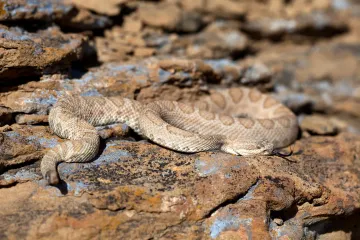
Mojave Rattlesnakes, often referred to as the Mojave Green, sometimes exhibit a distinct pale or slightly greenish tint to their heads. [5][6] This coloration can give the snake a somewhat lighter overall appearance compared to its cousin. [5]
The Western Diamondback, conversely, usually presents with a more uniform, often grayish or brownish head coloration that blends more consistently with the diamond pattern across the body. [1] However, environmental factors and lighting conditions can dramatically alter how these colors present in the field, making this a secondary—not primary—identification tool. [1]
# Range Overlap
The difficulty in distinguishing these two species is compounded by their overlapping geographical ranges, most famously in regions of Arizona. [1][7] In areas where the Western Diamondback and Mojave ranges meet, you might encounter intergrades, which are hybrids showing a mix of characteristics from both parents. [3] A hybrid snake might have tail bands that are equally wide or possess ambiguous head coloration, rendering the standard identification rules useless. [3]
When a snake is found in a known overlap zone, local context becomes incredibly important. For instance, while WDBs are widespread across the Southwest, the Mojave Green often favors areas with more creosote or specific soil types, though habitat boundaries are notoriously fluid in the desert. [7] A helpful mental exercise when assessing an unknown snake in this overlapping environment is to consider the frequency of highly neurotoxic bites reported in the immediate vicinity; high rates usually point toward a greater Mojave presence. [1]
| Feature | Western Diamondback (C. atrox) | Mojave Rattlesnake (C. scutulatus) |
|---|---|---|
| Primary Venom | Hemotoxic (tissue damage) [1] | Neurotoxic and Hemotoxic (systemic/nerve damage) [1] |
| Tail Bands (General) | Dark bands wider than light bands [1] | Light bands wider than dark bands [1] |
| Head Color | Generally uniform gray/brown [1] | Often exhibits a pale or greenish tint [5] |
| Danger Level | High | Extreme (due to neurotoxins) [1] |
# Field Safety Protocol
Given the severe difference in venom toxicity, making a definitive identification under duress or poor viewing conditions is a situation to avoid entirely. The goal in the field should not be identification, but safe distance maintenance. [3]
When you encounter a rattlesnake in an area known to host both species, always default to the assumption that you are looking at a Mojave rattlesnake. [1][3] This conservative approach prioritizes life safety over accurate classification. If you cannot clearly and confidently establish the diagnostic criteria—specifically the tail band ratio—the safest course of action is to back away slowly and leave the animal undisturbed. [3] Furthermore, if a snake is present but its tail is obscured by dense brush or debris, any attempt to maneuver around it to check the tail bands introduces an unnecessary risk of provoking a defensive strike. [6] Maintaining a distance of at least six feet is a baseline for safety, but if identification is truly in question, retreating entirely is the only appropriate action. [1][3] Relying on only one marker, such as head color, when multiple markers conflict or are obscured, is a common pitfall that seasoned herpetologists strictly avoid when dealing with potentially lethal snakes. [4]
#Videos
How to tell the difference between a Mojave Rattlesnake ... - YouTube
Mojave Rattlesnake vs. Western Diamondback- What are ... - YouTube
Related Questions
#Citations
Can you tell the difference between a Western Diamondback ...
Mojave and western diamondback rattlesnake identification
How to tell the difference between a Mojave Rattlesnake ... - YouTube
Help with Mojave vs diamondback? : r/snakes - Reddit
Unlike the previous post (all jokes aside) here are some tips on how ...
Question about the Mojave rattlesnake and W. Diamondback
What is the difference between a Mojave and a diamondback ...