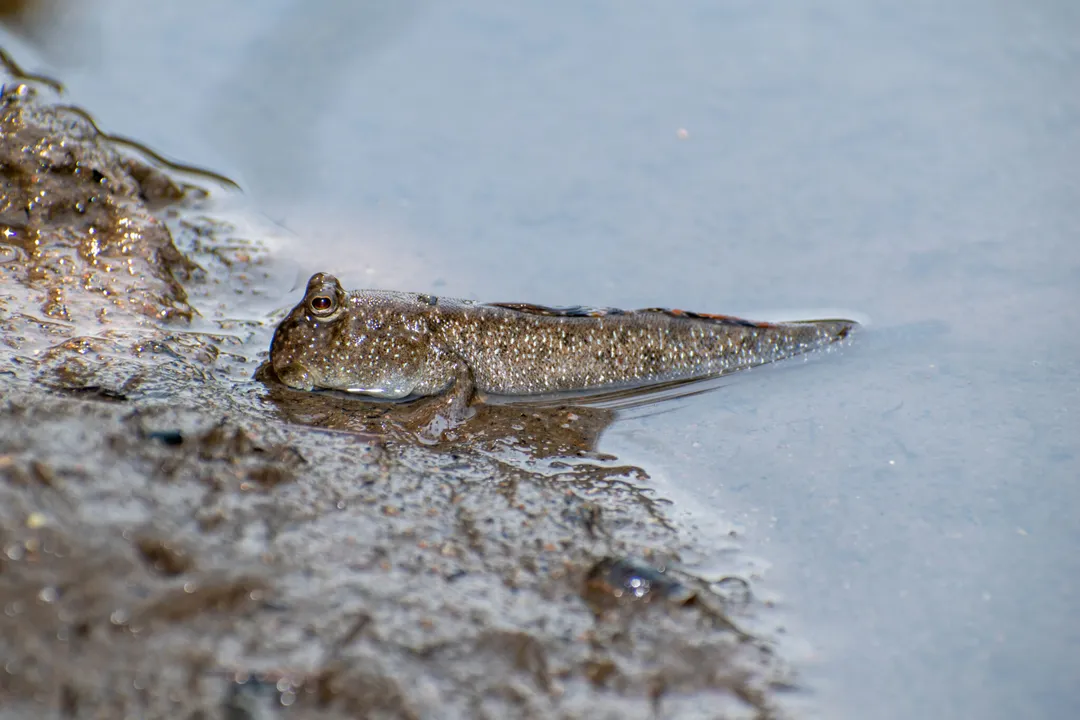
Why does the catfish only commit to walking behavior despite its capability?
The high energy expenditure of moving against gravity on a solid surface outweighs the ease of swimming in water
Behavioral ecology dictates that organisms generally employ complex or strenuous adaptations only when the potential benefit outweighs the cost. For the walking catfish, moving across a solid substrate against the force of gravity requires a significantly higher physiological energy expenditure compared to the relatively energy-efficient process of swimming through water. Consequently, the catfish reserves this active, high-cost walking behavior only for situations where escape from a lethal aquatic environment—such as water that is too hot or oxygen-depleted—is absolutely necessary for survival. This balancing act confirms that the overland journey is a last resort driven by necessity.