Walking Catfish Physical Characteristics
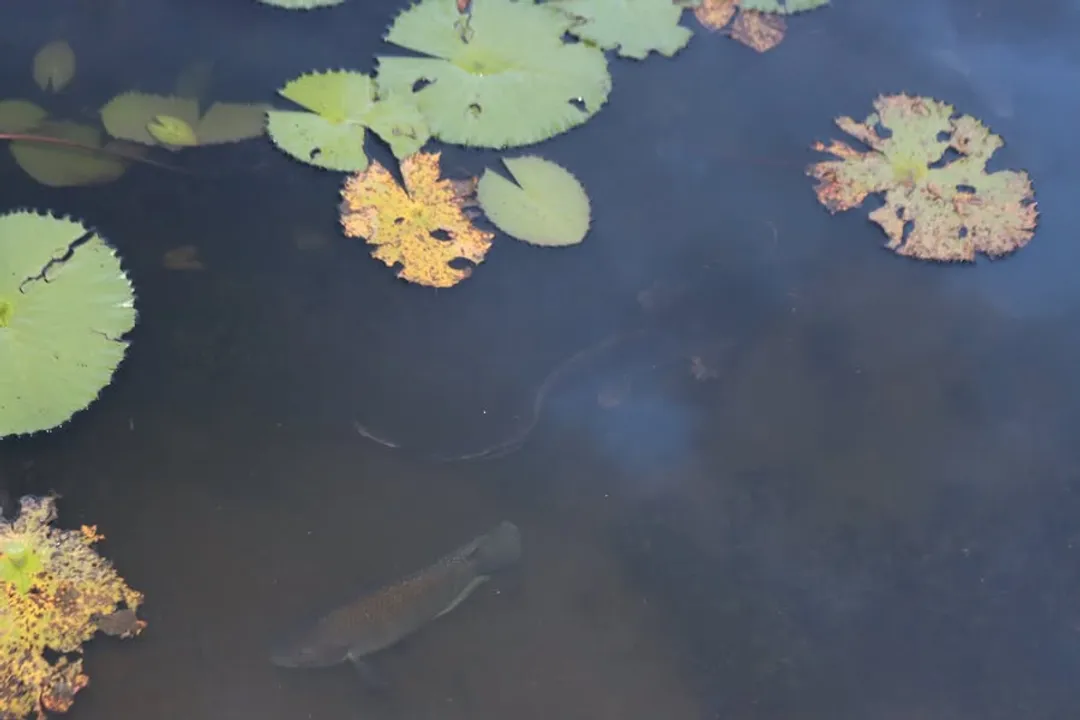
The walking catfish, scientifically known as Clarias batrachus, possesses a suite of physical traits that make it instantly recognizable, especially when observed outside of its native aquatic environment. These features speak directly to its survival strategies in fluctuating, often harsh, freshwater habitats across Southeast Asia. [1][8] When one encounters this species, whether in an aquarium or, alarmingly, in an introduced ecosystem, its elongated body shape and specialized anatomy immediately stand out from more conventional freshwater fish.
# Body Form
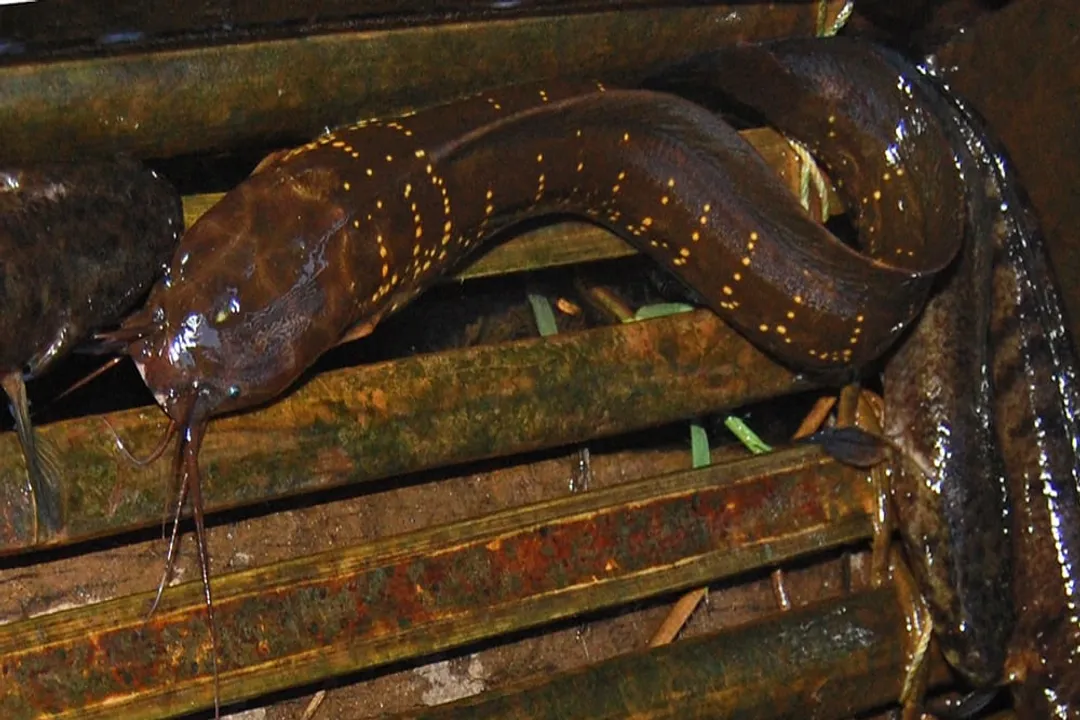
The overall body structure of the walking catfish is distinctly slender and elongated, giving it an eel-like appearance. [1] This morphology aids in navigating dense vegetation and burrowing in soft substrates, behaviors common to this species. [1] While their appearance might suggest they are similar to eels, they are definitively catfish, belonging to the family Clariidae. [1][6]
In terms of size, the typical adult specimen generally reaches lengths of around 14 inches (35 cm). [1][3][4][7] However, in optimal conditions or depending on the specific regional population, some individuals have been recorded reaching slightly larger dimensions. [4] A distinguishing feature is the relative length of the dorsal and anal fins; they are notably long, extending significantly along the posterior half of the fish's body. [1]
# Coloration Details
The coloration of the walking catfish offers excellent camouflage within its preferred murky or muddy habitats. [1][7] The typical shade ranges from dark brown to grayish or black. [1][3][7] This dark pigmentation is not uniform across all individuals or life stages, however. Variations exist, sometimes including lighter sides or mottling. [7] It is interesting to note that individuals kept in captivity, especially in artificial tanks without natural substrate, may exhibit slightly different, perhaps duller, coloration compared to their wild counterparts who need to match silty riverbeds perfectly. [7] When observing juvenile fish, one must be mindful that their patterning might be less developed or look distinctly different from the mature adults, making identification based solely on color tricky in transitional habitats. [4]
# Sensory Organs
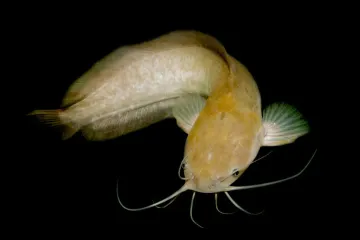
Like many catfish, the walking catfish relies heavily on non-visual senses, primarily facilitated by its barbels. [1][7] The mouth area is equipped with eight prominent barbels. [1][7] These fleshy, whisker-like appendages are crucial sensory organs, helping the fish detect vibrations, chemical cues, and food sources in dark or turbid waters where sight is limited. [7] The arrangement and relative size of these barbels are key characteristics used by ichthyologists to differentiate between catfish species. [1] The eyes, in contrast to the elaborate barbels, are relatively small. [7]
# Fin Structure
The fins of Clarias batrachus are specialized, contributing both to swimming and terrestrial locomotion. [1][6] The long dorsal and anal fins, mentioned previously, run almost the entire length of the body. [1] This extensive finnage, combined with the powerful, muscular body, provides excellent propulsion in the water. [1]
However, the most celebrated physical characteristic is what allows the fish to earn its common name: its ability to move on land. This movement is achieved primarily through the use of its stiff, strong pectoral fins. [1][7] These fins act almost like front legs, allowing the fish to prop its body up off the ground and use a wriggling motion to propel itself forward across mud or damp surfaces. [1][7] This terrestrial movement is usually necessitated by environmental stress, such as drying ponds or low oxygen levels in the water. [3][6]
# Air Breathing
Perhaps the most physiologically significant physical attribute of the walking catfish is its ability to breathe air directly from the atmosphere. [1][3][6] This adaptation is facilitated by a specialized structure located in the head region known as the labyrinth organ. [1][3][6]
The labyrinth organ is analogous to the labyrinth organ found in gouramis and bettas, consisting of numerous folds of bone covered in a thin layer of skin and tissue, which are rich in blood vessels. [1][6] The fish surfaces, gulps air, and passes it over this organ, which extracts the necessary oxygen before the spent air is expelled. [1] This mechanism allows the walking catfish to survive in water bodies that become highly anoxic (low in oxygen), a common occurrence in tropical, densely vegetated, or stagnant waters. [3][6] This adaptation is a major reason why this species has proven so successful as an invasive entity in environments like Florida, where native fish perish during seasonal drought or high temperatures. [4]
# Species Distinction Context
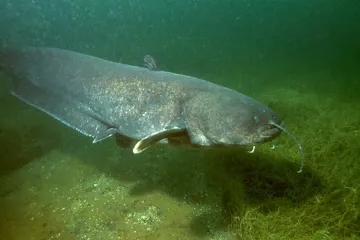
While the focus here is on Clarias batrachus, it is useful to briefly note the existence of related species, such as the African Sharptooth Catfish, Clarias gariepinus, to provide physical context. [6] Both species share the defining characteristic of the labyrinth organ. [1][6] However, C. gariepinus is significantly larger, with documented specimens growing over five feet long, whereas C. batrachus is firmly established in the under-one-foot range. [6] Recognizing the typical size difference is one simple, though not definitive, way to assess which species might be encountered when dealing with invasive Clarias catfish populations in new regions. [4]
| Feature | Clarias batrachus (Walking Catfish) | Clarias gariepinus (African Sharptooth) |
|---|---|---|
| Typical Max Length | ~14 inches (35 cm) [1][3] | Can exceed 60 inches [6] |
| Body Shape | Slender, elongated [1] | More robust/larger overall [6] |
| Key Adaptation | Labyrinth Organ (Air Breathing) [1] | Labyrinth Organ (Air Breathing) [1][6] |
| Native Range | Southeast Asia [1][8] | Sub-Saharan Africa [6] |
The physical characteristics of the walking catfish—its streamlined, dark body, the array of sensory barbels, its powerful fins used for terrestrial movement, and most importantly, the specialized labyrinth organ—all combine to define an extremely hardy and adaptable fish. [1][3][7] These anatomical blueprints allow it to exploit ecological niches unavailable to fish restricted solely to aquatic respiration. [1][6] Understanding these specific features is key to understanding its persistence in both its native and non-native ranges. [4]
#Videos
Walking Catfish Facts: a FISH that WALKS | Animal Fact Files
Related Questions
#Citations
Walking catfish - Wikipedia
Walking Catfish - FWC
Walking Catfish - Texas Invasive Species Institute
Five Facts: Walking catfish in Florida
African Walking Catfish (Clarias gariepinus) - Facebook
Clarias gariepinus (Barbel) | INFORMATION - Animal Diversity Web
Walking Catfish Fish Facts - Clarias batrachus - A-Z Animals
Clarias batrachus - GISD
Walking Catfish Facts: a FISH that WALKS | Animal Fact Files