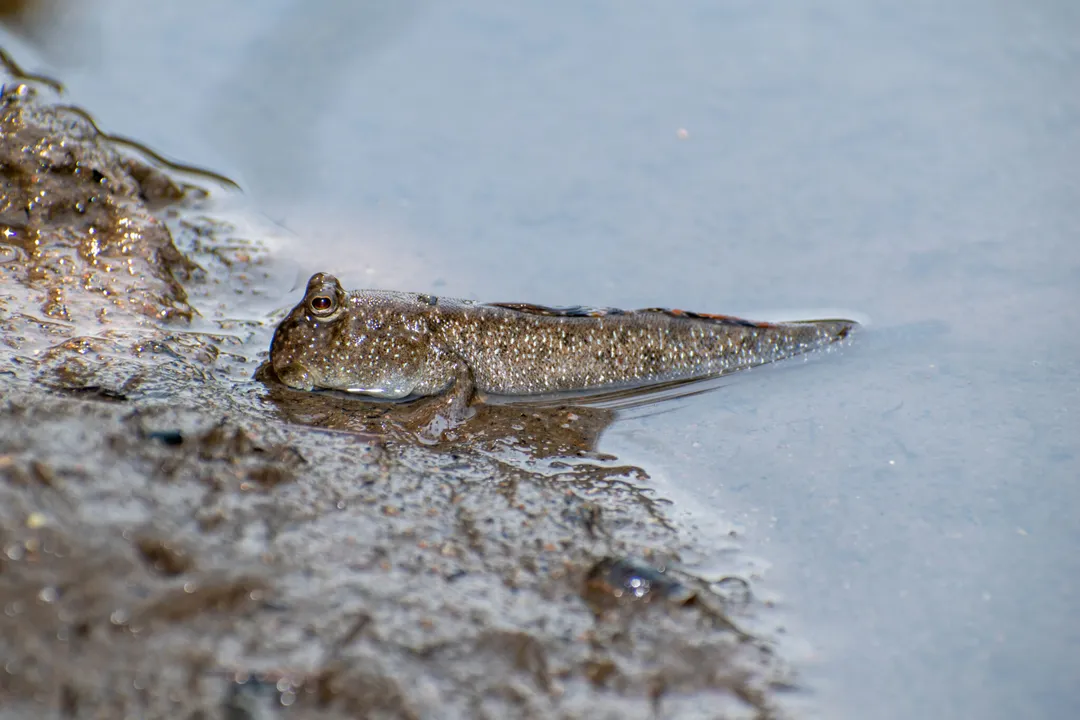
How does the Clarias batrachus generally propel itself during terrestrial movement?
By using its strong, ray-finned pectoral fins for forward thrust
Locomotion across dry land by the walking catfish is an active and sophisticated process, moving beyond simple flopping or sliding. The primary mechanism involves utilizing its robust, ray-finned pectoral fins to generate forward propulsion. This fin action is coupled with a secondary movement where the fish arches its body. This coordinated movement involves muscular undulations, which are comparable in style to the motion seen in snakes or eels, effectively aiding the thrust generated by the pectoral fins. The pectoral fins, which typically function as stabilizers and maneuvering aids in water, are repurposed on the substrate to serve as makeshift appendages capable of directional movement.