What is the scientific name for a catfish?
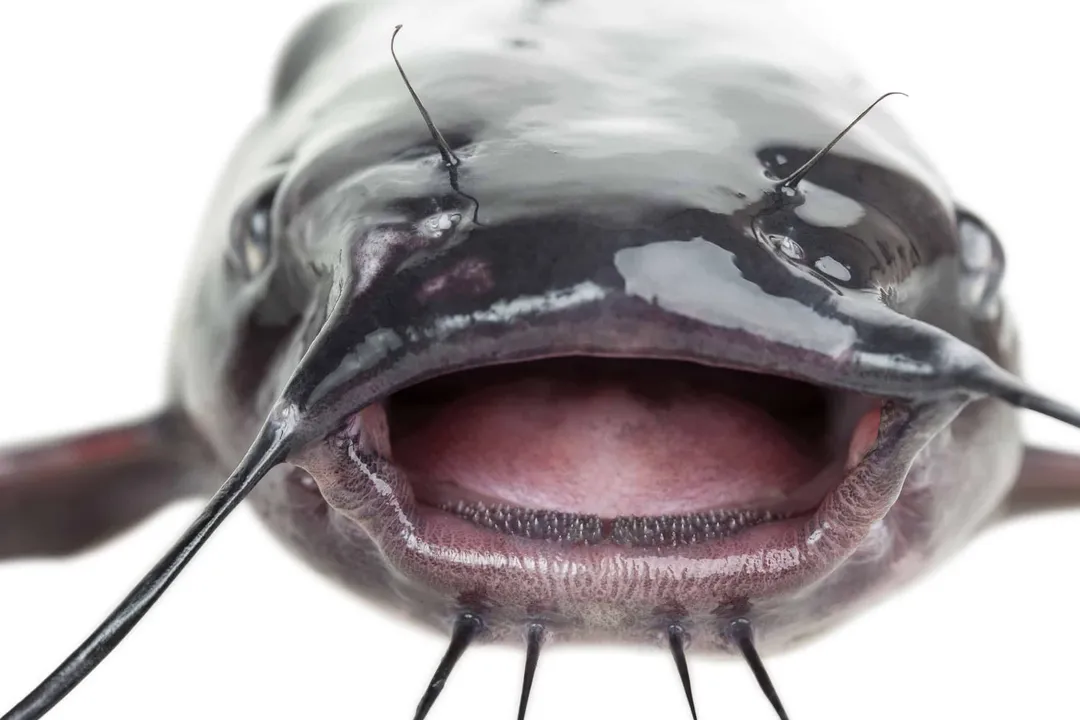
The simple question of what the scientific name for a catfish is yields a surprisingly complex answer, because "catfish" itself is not a single species but a common name applied to a vast and varied group of ray-finned fish belonging to the order Siluriformes. [1][2][9][10] Like asking for the scientific name of a "bird," you need to specify which bird you mean. In the world of taxonomy, every distinct species has a unique two-part scientific name, following the system of binomial nomenclature established by Carl Linnaeus: the Genus followed by the species epithet. [9]
# The Order

All fish referred to as catfish share a fundamental scientific grouping: they are members of the superorder Ostariophysi and, more specifically, the order Siluriformes. [1][5][10] This classification unites them based on shared anatomical and genetic characteristics, even if they look wildly different across continents. [2] One of the most universal traits defining members of this order is the presence of barbels projecting from the head, which resemble a cat's whiskers—hence the common name. [2][4][9] These barbels are packed with taste buds, making them essential sensory organs for locating food in murky waters. [4]
Furthermore, the vast majority of catfish are characterized by having smooth skin instead of scales. [2][4][9] While some species do possess bony plates or scutes, the general rule for the order is the absence of typical fish scales. [1][4] The diversity within Siluriformes is staggering, encompassing over 3,000 species found globally in freshwater environments, though a few groups inhabit marine settings. [1][2][9] They range in size from the tiny Phreatocichla piscivora, which measures less than an inch, up to giants like the Mekong giant catfish, Pangasianodon gigas, which can exceed nine feet in length. [2]
# Scientific Naming
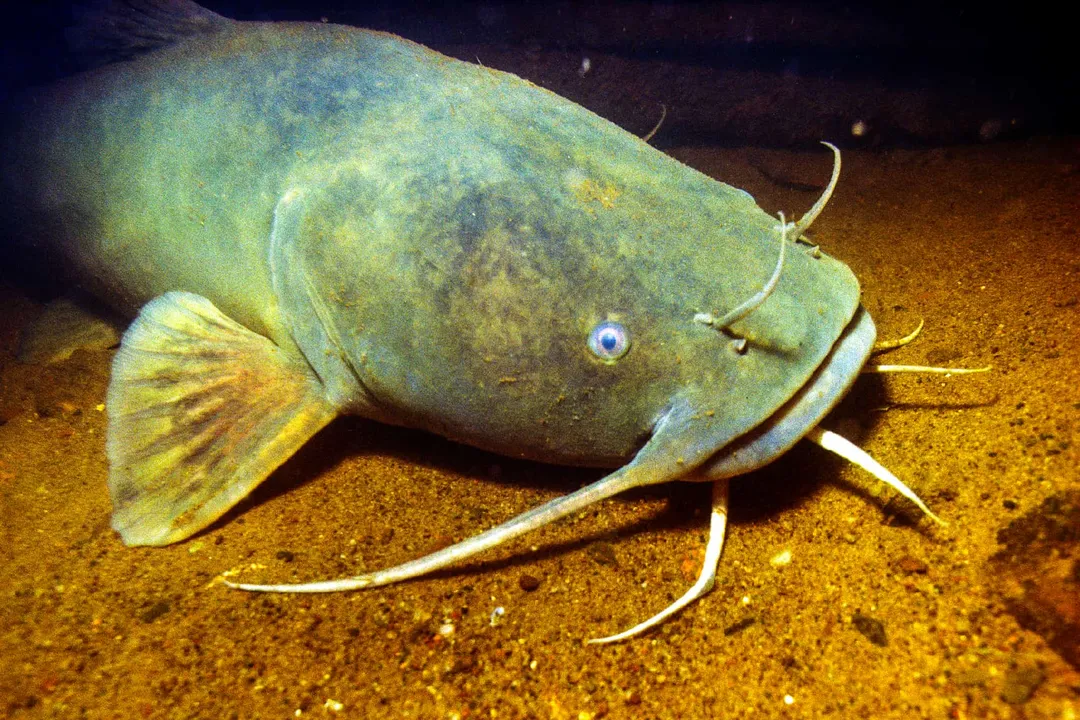
To answer the initial question precisely, one must identify the exact species. For instance, the well-known Blue Catfish found in North America is scientifically designated as Ictalurus furcatus. [5] Here, Ictalurus is the genus, and furcatus is the specific epithet. [5] If you were referring to the Channel Catfish, its scientific name is Ictalurus punctatus. [7] This precision is vital because common names can be misleading or shared across unrelated species in different parts of the world. [1][9]
The structure itself provides clues. The genus name, Ictalurus, is derived from Greek words meaning "fish cat". [5] When you encounter a different genus name, such as Bagrus or Clarias, you know you are dealing with a different evolutionary branch of the catfish lineage, even if they share the common physical traits like barbels and smooth skin. [2][10] This genus classification often groups fish that share more recent common ancestry or similar life histories. [1]
# Major Families
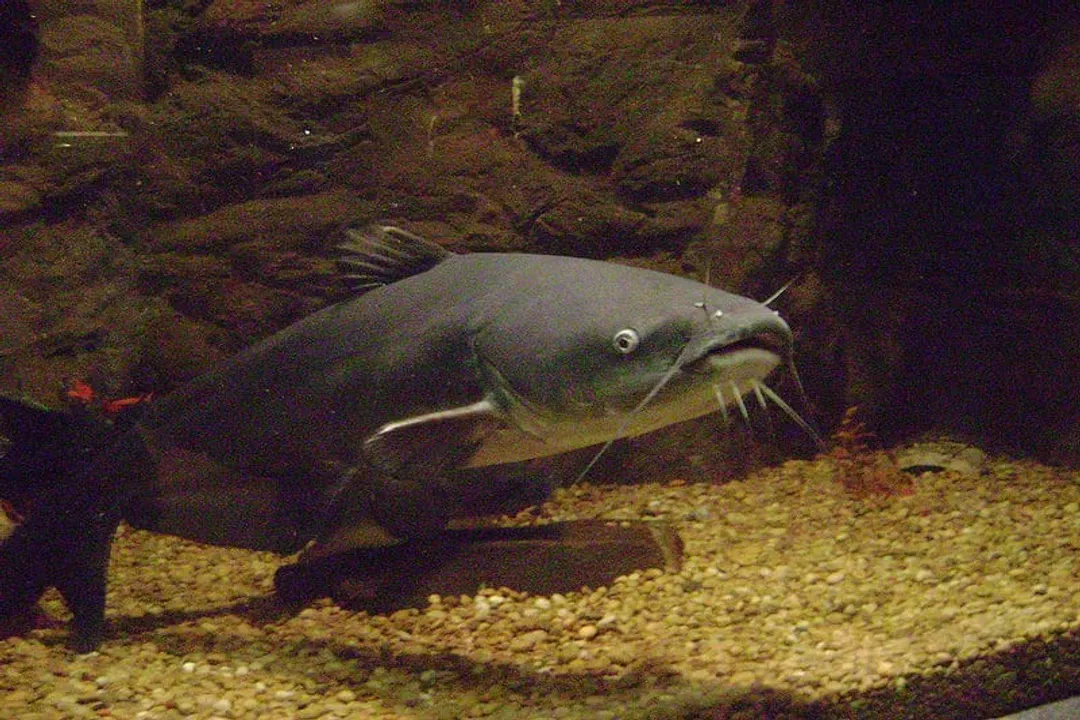
In North America, especially within the United States, many of the most commonly encountered catfish belong to the family Ictaluridae, often called the "North American freshwater catfish". [5][10] This family includes several commercially and recreationally important species. [5]
Consider the close relationship between two prominent species within this family:
| Common Name | Scientific Name | Key Distinguishing Feature |
|---|---|---|
| Blue Catfish | Ictalurus furcatus | Deeply forked tail fin [5] |
| Channel Catfish | Ictalurus punctatus | Often displays dark spots on the sides [7] |
Both Ictalurus furcatus and Ictalurus punctatus belong to the same genus, Ictalurus, indicating their close evolutionary relationship. [5][7] However, their specific epithets reflect differences: furcatus relates to the forked tail characteristic of the Blue Catfish, while punctatus refers to the spots typically seen on the Channel Catfish. [5][7] This naming convention offers immediate identification assistance if one is familiar with the Latin roots. A useful point for anglers or naturalists is that while the common name "catfish" might suggest a homogeneous group, the differences between species within Ictaluridae—like the anal fin ray count or the degree of tail fork—are substantial enough to warrant the specific scientific distinction. [7]
# Global Classification Contrast
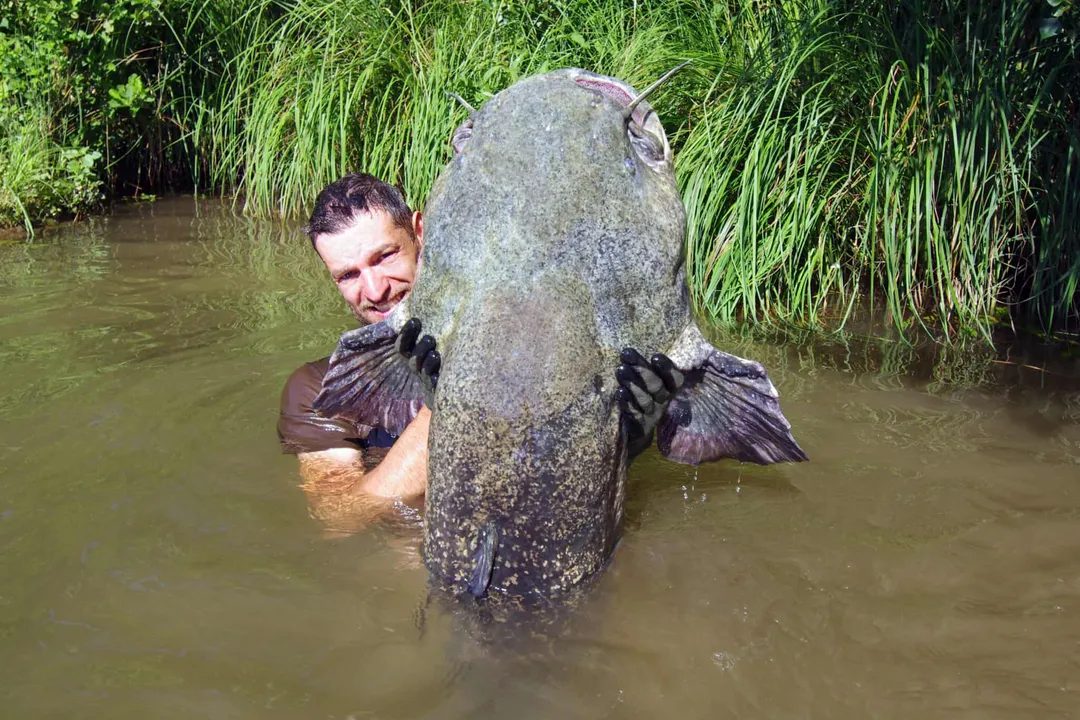
The scientific naming system highlights massive evolutionary distance when moving outside the Ictaluridae family. For instance, the Walking Catfish, Clarias batrachus, is a species common in the aquarium trade and sometimes introduced outside its native Southeast Asian range. [7] While it is scientifically classified within the order Siluriformes and possesses barbels and scaleless skin, it belongs to the family Clariidae, not Ictaluridae. [1][7]
If you look at the data regarding invasive species monitored by organizations like the U.S. Geological Survey (USGS), you often see the scientific name used exclusively to avoid ambiguity in regulatory and ecological contexts. [7] The walking catfish, for example, is noted for its ability to move across land, a behavior not typically associated with the North American Ictalurus species. [7] This difference in ecological niche is reflected in their separate family classifications, even though both are fundamentally "catfish" based on the general order characteristics. [10] The sheer number of recognized families—over 30—within Siluriformes shows just how much evolutionary separation exists between species that share the whiskered face. [2]

# Ecological Naming Insight
It is interesting to observe how scientists choose the specific epithet, as it often relates directly to morphology, geography, or sometimes even pays homage to a person. [9] When a scientist identifies a new species, the two-part name must be unique across the entire order for that specific organism to be recognized globally. This contrasts sharply with local common names, which can vary from one county or state to the next, even for the same species. For example, a particular sunfish or bass might have three different common names depending on which rural waterway you are fishing in, but its scientific name, say Micropterus salmoides (Largemouth Bass), remains universally fixed. [9]
For those studying the biology of these fish, knowing the genus is often more important than the species for initial grouping related to physiology or diet. For instance, the genus Ictalurus is almost exclusively associated with the North American freshwater environment, whereas genera like Plotosus are strictly marine. [1][5] By focusing on the genus, one can immediately narrow down the likely habitat and general life strategies of the fish being observed, which is a helpful analytical step that goes beyond just knowing the common name for the fish you caught on your local river. [10]
# Identification and Scale Absence
A key point across many sources relates to identification, which is tied back to the scientific grouping. The defining features that place fish in the order Siluriformes are the barbels and the lack of true scales. [4][9] While scales are absent, some catfish are protected by a tough, slick skin or by bony plates or spines, particularly at the front of the dorsal and pectoral fins. [4][10] These spines can be quite rigid and sharp, serving as a defense mechanism against predators or sometimes even for locomotion, as seen in some groups. [4]
When observing catfish in environments like those managed by state wildlife agencies, such as the North Carolina Wildlife Resources Commission regarding the Blue Catfish (Ictalurus furcatus), identification keys often rely on fin morphology—like the shape of the anal fin—because external features like coloration can be highly variable based on the specific water quality, age, or diet of the individual fish. [5] The scientific name, however, is invariant regardless of whether the Blue Catfish is pale or dark; I. furcatus remains I. furcatus. [5]
# Habitat and Distribution
The scientific classification also helps track species distribution, especially when issues like invasiveness arise. [7] The Florida Museum of Natural History, for example, documents the catfish species found in that region, many of which fall into Ictaluridae but also include others native or introduced to the Southeastern US. [3] When a species is classified under a genus that is not native to a continent, it immediately signals that the fish is either an accidental introduction or a deliberate stocking for sport or aquaculture. [7]
In environments like Fairfax County, Virginia, where stormwater systems interact with local waterways, recognizing native versus non-native catfish is critical for local ecological management. [4] The scientific name is the standardized identifier that allows an ecological manager in Virginia to precisely communicate with a researcher in California about the same species, avoiding the confusion that common names create. [4][7]
# Summary of Naming Structure
To summarize the effort required to nail down the correct scientific designation, imagine a flow chart based on the sources:
- General Group: Is it a "catfish"? Yes, likely Order Siluriformes. [1][10]
- Physical Traits Check: Does it have barbels and lack scales? Yes. [2][4]
- Geographic/Family Check: Is it North American? If yes, likely Family Ictaluridae. [5][10]
- Species Specifics: Does it have a deeply forked tail? If yes, the species name is likely furcatus (Genus Ictalurus). [5]
- Final Name: Ictalurus furcatus. [5]
This multi-step process confirms why a single answer for "What is the scientific name for a catfish?" is impossible; the common name is too broad, encompassing organisms that diverged millions of years ago, even though they converged on the catfish body plan. [2][9] The scientific names, like Ictalurus punctatus or Pangasianodon gigas, are the precise labels that unlock the knowledge specific to that creature’s biology, evolutionary path, and ecological role. [5][7] The sheer breadth of the Siluriformes order demonstrates that while the barbels unite them casually, only the binomial name separates them scientifically. [1][2]
# Analyzing Family Relationships
Diving deeper into the relationships within the Ictaluridae family, we see that scientific classification groups fish not just by appearance, but by internal structures and genetics, which are often more consistent indicators of lineage than external looks that can be influenced by environment. [5][10] For instance, the family Ictaluridae is characterized by having a toothed plate on the upper jaw, a feature that helps differentiate them from other catfish families like the marine Plotosidae. [10]
When examining the data provided by aquarium trade sources or fisheries reports, the consistent use of the scientific name allows for precise tracking of species origins. If you read a report detailing the genetics of catfish—perhaps concerning issues like disease resistance or aquaculture efficiency, areas where molecular biology is applied to fish populations [10]—the reliance on names like I. punctatus is absolute. This scientific language forms a universal shorthand that transcends regional dialect and focuses purely on genetic positioning within the tree of life. [9] This commitment to specificity is what allows conservationists, aquaculturists, and casual observers to speak the same biological language about these fascinating, whiskered bottom-dwellers. [1][3]
Related Questions
#Citations
Catfish - Wikipedia
Catfish Fish Facts - A-Z Animals
All Catfish Species Inventory - Florida Museum of Natural History
[PDF] Catfish - cs.wisc.edu
Blue Catfish - NC Wildlife
Types of Catfish and How to Identify Them - Wired2Fish
White Catfish (Ameiurus catus) - Species Profile
Catfish - Family Ictaluridae | Public Works and Environmental Services
Catfish | Tank Setup, Diet & Species | Britannica
Catfish - an overview | ScienceDirect Topics