How many Pictus Catfish should I keep together?
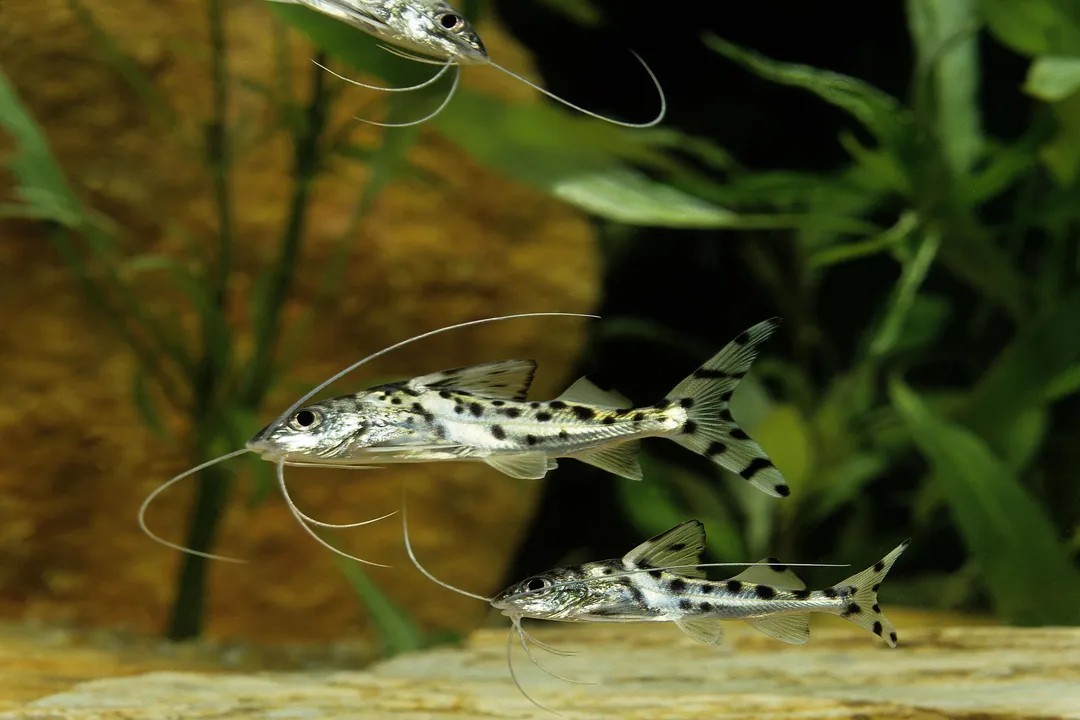
The decision to keep Pictus Catfish, Pimelodus pictus, often centers on their striking appearance and active nature, but the primary question for any prospective owner revolves around their social requirements: how many of these silver, spotted torpedoes can safely share an aquarium? While they are undeniably beautiful, these fish are not a casual addition; understanding their need for companionship, combined with their significant adult size and active swimming habits, is essential for long-term success. Getting the group number wrong can lead to stressed fish, poor behavior, or an unmanageable bioload for the aquarium system.
# Social Needs
Pictus Catfish possess a social dynamic that leans heavily toward companionship, despite claims that they can survive alone. Several experienced keepers state that these fish really should be kept in groups. While you can technically house a single one, the general sentiment suggests that solitary individuals may exhibit signs of distress or "pine away". The benefits of a group are clear: owners often report seeing more interesting, natural behavior when these fish have companions of their own kind.
However, the level of social requirement is not as rigid as a true schooling fish like a tetra. Anecdotal evidence suggests that sometimes, individuals bond in pairs, while other groups may show little interaction or even mild dislikes for one another. This variability means that while company is highly recommended, the specific chemistry between individuals can vary. A successful group often involves a minimum number to establish a social structure where they feel secure, especially given their nocturnal tendencies.
# Group Size
When looking for a specific number, the advice tends to converge on a moderate to large group, directly correlating with the tank size deemed necessary for their full development. Many hobbyists suggest that a proper grouping starts at six or more individuals. Another common recommendation settles on a minimum of five or six fish to ensure adequate social interaction.
In larger setups, some dedicated keepers have managed groups of eight or more, feeling that this density is necessary to see their most natural behaviors, such as group foraging after lights-out. Conversely, some keepers have found that even a group of two in a very large tank (125 gallons) seemed perfectly content, constantly together under driftwood, suggesting that sometimes a strong pair bond can suffice, though this is the exception rather than the rule for a first-time setup. For the typical aquarist aiming for a thriving community, planning for at least five to eight Pictus Catfish is the safer, more responsible approach.
# Tank Footprint
The question of how many Pictus Catfish you can keep together rapidly becomes a question of tank dimensions, not just volume. While their adult size is often conservatively listed around 5 to 6 inches, there are verified reports and community consensus that they can easily exceed this, reaching closer to 10 inches or more in some environments. Since they are active, constantly moving bottom dwellers, floor space is far more critical than mere water capacity.
A notable conflict arises when considering standard aquarium sizes. A 55-gallon tank, while holding sufficient water, is frequently criticized because its typical footprint is too narrow, often only 12 inches wide. If you plan on keeping even a small group of four or five, that narrow floor space severely restricts their ability to swim freely without constantly bumping into décor or tank walls, which is highly stressful for an active fish.
This leads to a crucial analytical point: For active, bottom-dwelling swimmers like the Pictus, the length and width of the tank provide the functional space. In this context, a longer, wider tank like a 75-gallon or larger is vastly superior to a taller, narrower tank of the same volume. If a group size of six is targeted, one must look toward tanks offering significant horizontal swim space, like a 75-gallon or larger, to prevent them from feeling confined, even if they are only 6 inches long.
# Stocking Calculations
To place the group size requirement into hard numbers, some community figures have offered a stark metric based on their high activity level. One perspective suggests that a base minimum of a 50-gallon tank is needed for a single specimen, with an additional 50 gallons required for each additional catfish. If this highly conservative estimation is followed literally for a group of six, the requirement would balloon to 300 gallons (50 base + 5 x 50 additional), illustrating the sheer space these fish can utilize when behaving naturally.
While this calculation seems extreme for most home setups, it serves as an important warning about underestimating their needs, particularly if you house the larger end of their size spectrum or find your individuals are exceptionally active. For most hobbyists aiming for a healthy group of 5 to 6 fish, a tank of at least 75 gallons, preferably longer or wider than a standard 75, should be the absolute minimum starting point, factoring in filtration capacity to manage the increased bioload from a larger group.
# Habitat Needs
Beyond the general footprint, the internal setup must cater to their dual nature: they are nocturnal and require security during the day. Expect minimal daytime activity unless the lighting is intentionally kept dim or subdued. It is vital to provide ample hiding places—caves, driftwood structures, or dense planting—to ensure every member of the group has a private resting spot. If you house multiple nocturnal bottom-dwellers, you must ensure there are enough distinct shelters for everyone.
Furthermore, as they originate from river basins, they often appreciate some water movement. While tankmates must be selected with similar needs, providing some current can be beneficial, provided it is not too severe for slower-moving companions. Be mindful that if you choose a heavy jungle scape with many plants, the fish still need clear avenues along the bottom to cruise unimpeded, especially at night when they are most active.
# Community Considerations
The social grouping affects tankmate selection because Pictus Catfish can be predatory, especially during their nocturnal feeding sessions. Their large mouths are deceptively capable of consuming smaller tankmates if the opportunity arises in the dark.
For tankmates, the key is selecting fish that are large, fast, and boisterous, preferring the mid to upper water columns, thus minimizing direct competition or temptation for the bottom-dwelling Pictus.
Species generally suggested as compatible include:
- Large, fast tetras (though caution is needed, as some nippy species can irritate the Pictus's long barbels).
- Rainbowfish, particularly the larger species.
- Giant Danios.
- Other, larger catfish species, provided they have separate territories.
Conversely, you should strongly avoid slow-moving or docile species such as Angelfish, Discus, or Gourami, as the nocturnal activity of the Pictus may stress them. Similarly, avoid known fin-nippers like Tiger Barbs, as they may harass the Pictus's sensitive barbels, leading to severe stress or injury for the catfish. When building a community, always assume the fish will exhibit their natural tendencies—a swift, hungry catfish will investigate anything small enough to eat when the lights go out.

# Safe Handling
A non-grouping factor that is incredibly important for ownership is safe handling. Pictus Catfish possess sharp spines on their dorsal and pectoral fins. These spines are notoriously effective at snagging nets, and if a fish is captured in a net, it may engage in a "death roll," creating a dangerous situation for both the fish and the handler. Because of this, many experienced keepers advise against netting them altogether, suggesting instead the use of plastic cups or containers for transfers to minimize injury risk to the fish and to protect the owner from puncture wounds. Punctures from these spines carry a risk of secondary bacterial infection, sometimes referred to as "fish-handler's disease," necessitating immediate, careful wound treatment.
# Commitment to Space
Ultimately, the number of Pictus Catfish you should keep together is dictated by the size of the tank you can sustainably provide for their adult size. While a group of two might look comfortable in a smaller setup, the fish will grow, and their need to roam actively cannot be ignored. A large, active group provides the best social environment, but this necessitates significant filtration and space planning. A helpful editorial perspective is to view the stocking requirement not just by the number of fish, but by the total length of swimming path required. If a standard 75-gallon tank seems like the maximum practical size, then a smaller group—perhaps three or four—might be a more realistic upper limit to ensure all individuals have ample room to cruise comfortably day and night, rather than crowding six into a space that forces constant competition for territory. Commitment to regular, large water changes is non-negotiable when housing groups of large, messy catfish in an enclosed system.
Related Questions
#Citations
Pictus Catfish | MonsterFishKeepers.com
Pictus Catfish : r/Aquariums - Reddit
Pictus Catfish: Fish Species Profile - The Spruce Pets
How Many Pictus Catfish In 75 Gallon? - Fish Forum
Your experience with pictus catfish - Aquarium Co-Op Forum