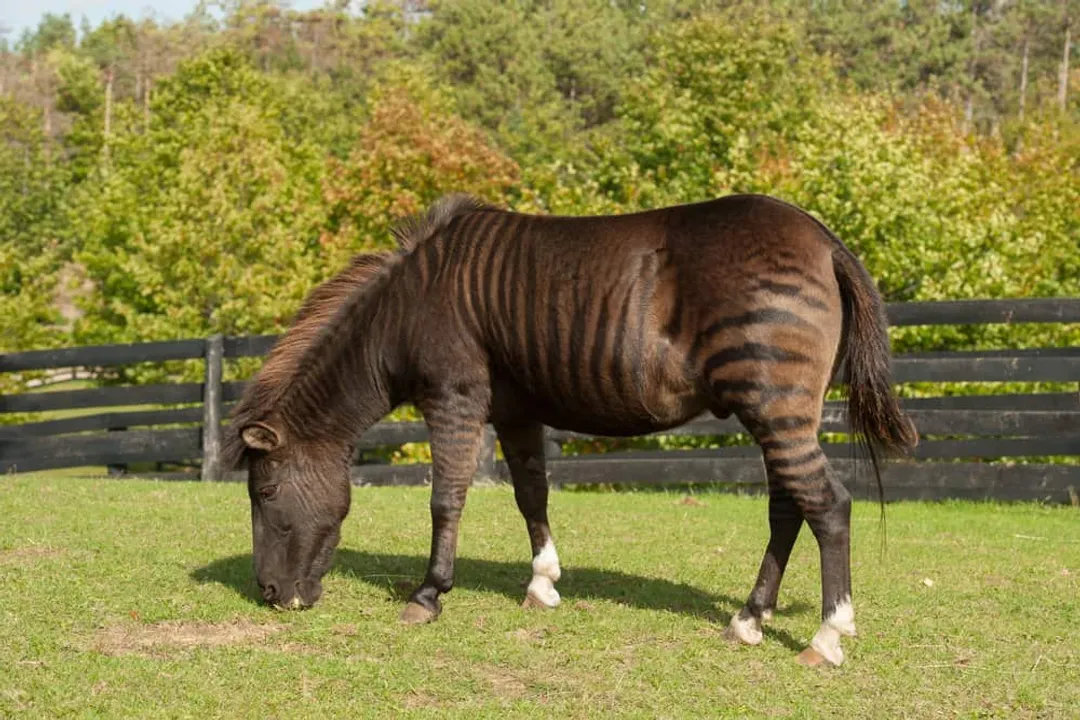
Why are zorses generally unable to reproduce due to their genetic makeup?
The chromosomal mismatch between the parents results in an uneven, unpaired set of chromosomes in the offspring.
The fundamental biological barrier preventing zorses from establishing self-sustaining populations lies in the significant difference in chromosome numbers between horses and zebras. Horses typically carry 64 chromosomes, whereas different species of zebra can possess between 32 and 46 pairs. When the sex cells unite, the resulting zygote inherits an unbalanced, unpaired configuration of chromosomes. This inherent genetic imbalance is the primary cause that leads to sterility in the hybrid offspring, mirroring the infertility seen in the horse-donkey hybrid, the mule. This characteristic confirms their status as anomalies resulting from controlled breeding rather than evolutionary successors.