Which North American terrain types are typically favored by the white-tailed deer (*O. virginianus*) range compared to the mule deer?
Answer
Forests and mixed woodlands
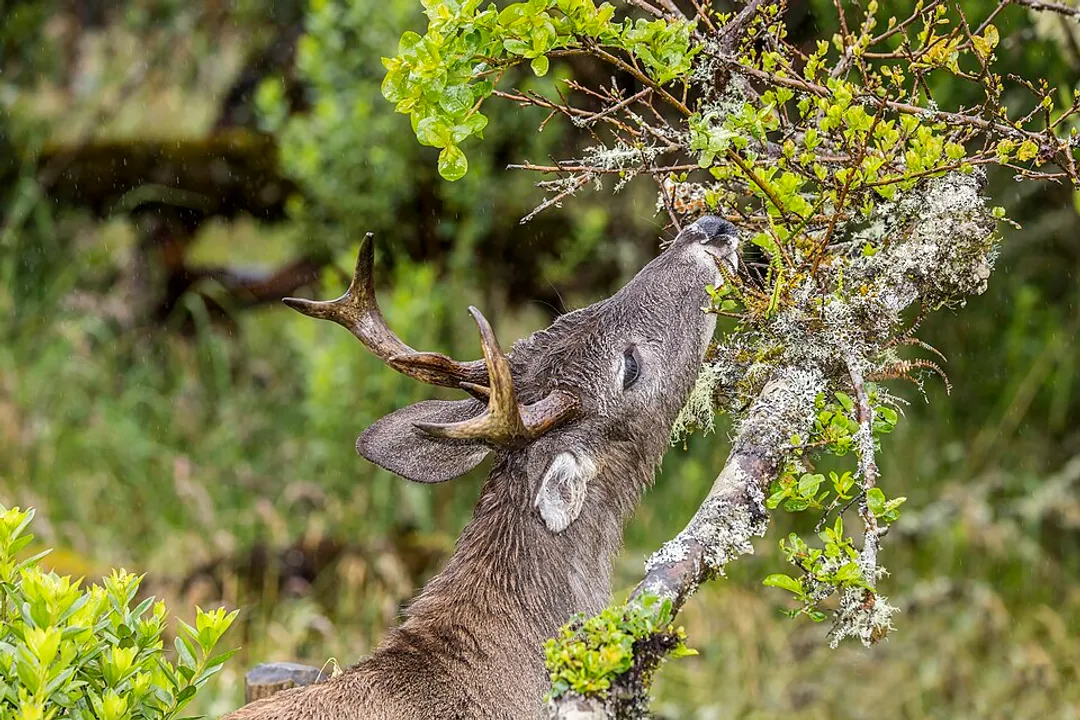
The geographical specialization of the two deer species is closely tied to the environments their ancestors adapted to following the last major glacial periods. The white-tailed deer’s range generally encompasses areas like the Eastern US, Mexico, and Central America, historically favoring environments characterized by dense vegetation, such as forests and mixed woodlands. This habitat benefits their agility and ability to utilize cover while fleeing. In contrast, the mule deer typically favors terrain that is more open, arid, or mountainous, where their stotting locomotion may provide a greater advantage.
#Videos
The History Of Whitetail Deer - YouTube
Related Questions
What feature gives the white-tailed deer (*Odocoileus virginianus*) its common name?How does the primary escape locomotion of *O. virginianus* differ from *Odocoileus hemionus*?Where does evidence suggest the history of the deer family, Cervidae, originated before entering North America?What term describes the white-tailed deer’s non-specialized diet that contributes to its evolutionary success?What specific physical expressions in some bucks can be interpreted as throwbacks to older *Odocoileus* forms?What survival trait was favored in white-tailed deer populations due to sustained predation pressure from the Gray Wolf (*Canis lupus*)?Besides locomotion, what is the contrasting primary signaling mechanism between the white-tail and the mule deer?Which North American terrain types are typically favored by the white-tailed deer (*O. virginianus*) range compared to the mule deer?What dynamic illustrates the white-tailed deer’s capacity for rapid demographic recovery following significant population crashes?What specific ecological niche, influenced by recent human land use, has *Odocoileus virginianus* excelled at exploiting?