What term describes the white-tailed deer’s non-specialized diet that contributes to its evolutionary success?
Answer
Generalist herbivores
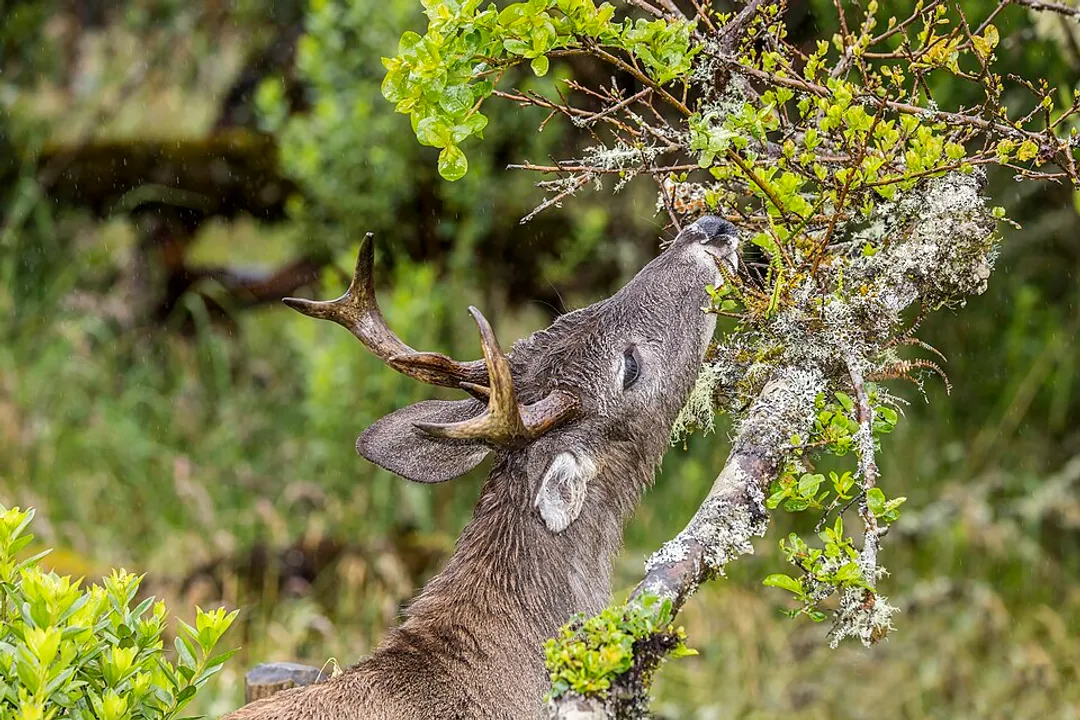
The white-tailed deer possesses profound adaptability largely due to its feeding strategy, classified as being generalist herbivores. This means their diet is not narrowly restricted to one specific set of plants, allowing them significant physiological plasticity. They are able to process a wide variety of browse, including leaves, twigs, forbs, and even agricultural crops. This flexibility is an invaluable trait because it permits them to shift their forage preferences dynamically based on seasonal changes or localized environmental disturbances, making them far less susceptible to ecosystem collapse than species that rely on a very narrow diet.
#Videos
The History Of Whitetail Deer - YouTube
Related Questions
What feature gives the white-tailed deer (*Odocoileus virginianus*) its common name?How does the primary escape locomotion of *O. virginianus* differ from *Odocoileus hemionus*?Where does evidence suggest the history of the deer family, Cervidae, originated before entering North America?What term describes the white-tailed deer’s non-specialized diet that contributes to its evolutionary success?What specific physical expressions in some bucks can be interpreted as throwbacks to older *Odocoileus* forms?What survival trait was favored in white-tailed deer populations due to sustained predation pressure from the Gray Wolf (*Canis lupus*)?Besides locomotion, what is the contrasting primary signaling mechanism between the white-tail and the mule deer?Which North American terrain types are typically favored by the white-tailed deer (*O. virginianus*) range compared to the mule deer?What dynamic illustrates the white-tailed deer’s capacity for rapid demographic recovery following significant population crashes?What specific ecological niche, influenced by recent human land use, has *Odocoileus virginianus* excelled at exploiting?