Which landscapes do Whinchats prefer for breeding rather than dense woodlands?
Answer
Rough grasslands, heathlands, moorlands, bogs, and marsh edges
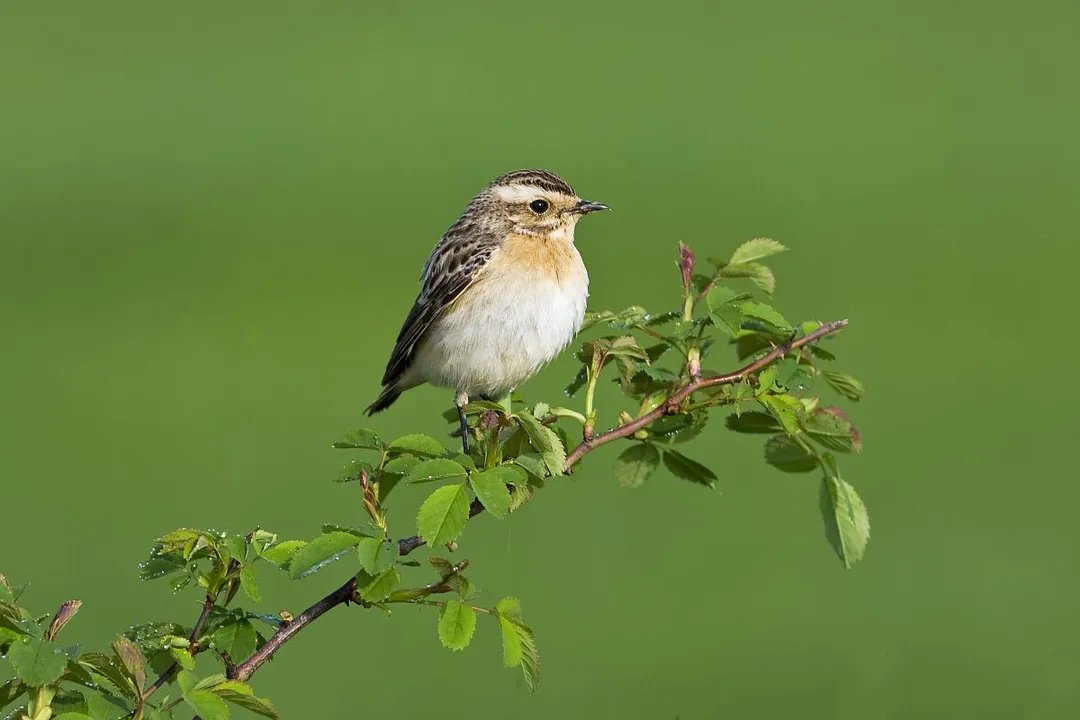
The Whinchat displays a strong ecological preference for specific types of open landscapes characterized by low vegetation structure. They actively avoid dense woodland areas. Their ideal breeding territories are open, low-vegetation landscapes such as rough grasslands, areas of heathland, moorlands, and the transitional zones found at the edges of bogs and marshes. The availability of low perches, like thistle heads or gorse bushes, within these open areas is also a key requirement for territorial display.
Related Questions
What is the approximate length and weight of the Whinchat?How is the breeding male Whinchat's head distinctly patterned?What reliable field mark is present on the wing of both male and female Whinchats?How far can the total round trip migration for some Whinchats exceed?Which landscapes do Whinchats prefer for breeding rather than dense woodlands?What are the primary terrestrial invertebrate food sources for the Whinchat diet?For approximately how many days is the female Whinchat solely responsible for incubating the eggs?Who is solely responsible for the construction of the Whinchat nest?Despite significant local declines in the UK, what is the Whinchat's current IUCN global conservation status?How is the male Whinchat's distinctive song described vocally?