Which fossil example is described as an ancient walrus cousin lacking tusks?
Answer
*Pontolis magnus*
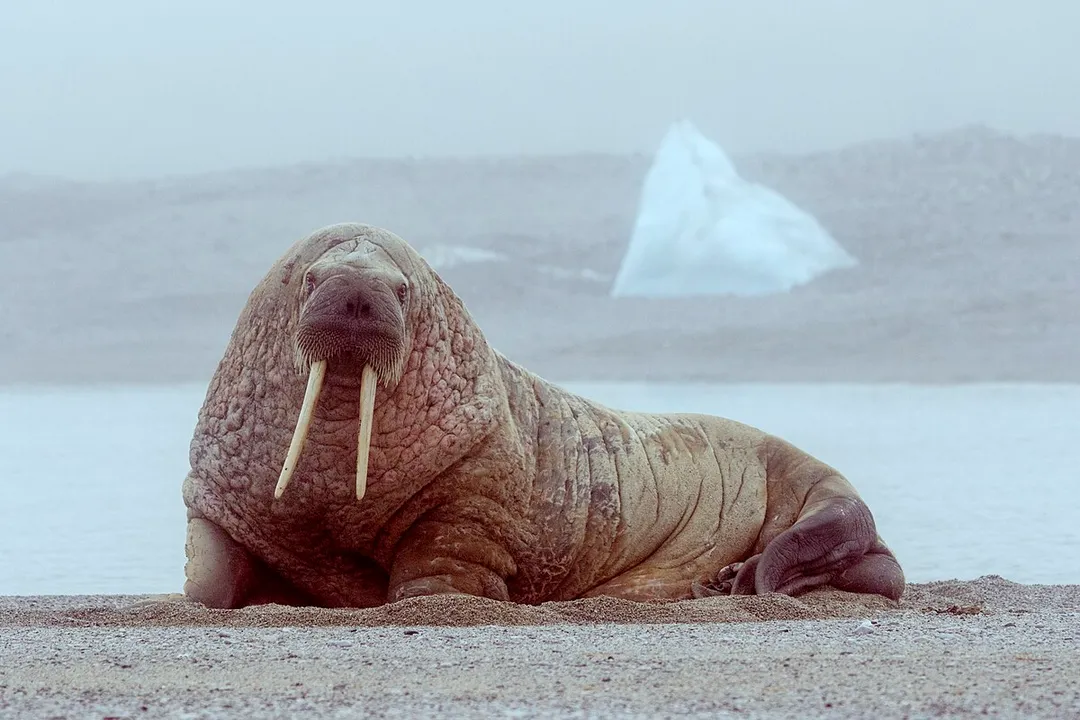
*Pontolis magnus* serves as a key example illustrating the evolutionary path before the development of prominent tusks within the Odobenidae family. Fossils of this nature are described as lacking tusks entirely, suggesting that the basic morphology necessary for a walrus-like creature—a body capable of hauling out and navigating water—was established prior to the massive modification of the canines into tusks. The existence of such tuskless forms underscores that the feature defining the modern walrus name ('tooth-walkers') is a later specialization, not an initial requirement for membership in the early walrus stem lineage.
#Videos
The Evolution of Seals, Sea Lions, and Walruses - YouTube
How the Walrus Got Its Tusks - YouTube
Related Questions
What is the scientific name for the modern walrus?Which unique family is the modern walrus the sole survivor of?Where did fossil evidence show ancient walrus relatives flourishing during the Miocene?What material forms the external surface of walrus tusks, which lack enamel?How is the evolution of walrus tusks classified in relation to ancestral pinniped traits?Which fossil example is described as an ancient walrus cousin lacking tusks?What locomotion feature do walruses share structurally with sea lions (Otariidae)?Approximately how long ago did the earliest true pinnipeds begin their transition to sea life?What specialized structure does the modern *Odobenus rosmarus* use to locate food on the seafloor?What required significant structural remodeling in the skull to anchor walrus tusks?