What specialized structure does the modern *Odobenus rosmarus* use to locate food on the seafloor?
Highly sensitive whiskers, or vibrissae
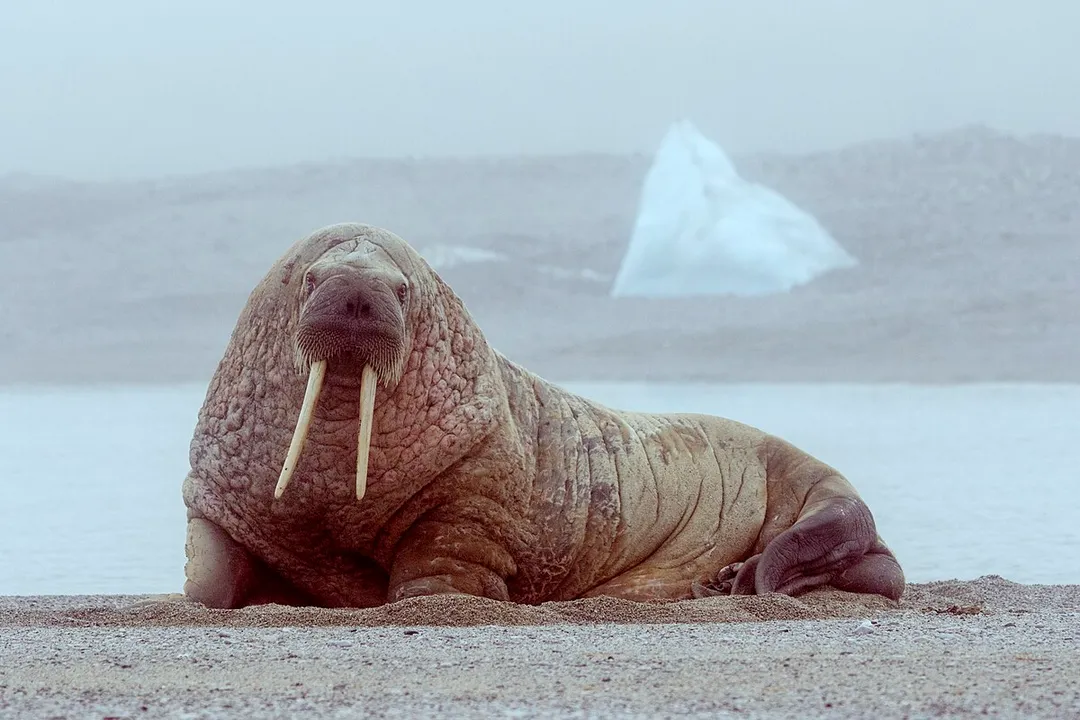
The modern walrus, *Odobenus rosmarus*, relies heavily on its highly sensitive whiskers, known as vibrissae, for its primary feeding strategy. This adaptation allows the walrus to effectively feel for and locate clams and other benthic invertebrates buried in the sediment on the seafloor in shallow, often icy, waters. This specialized benthic foraging method contrasts with the more pelagic or open-water foraging strategies often associated with seals and sea lions. The vibrissae serve as crucial sensory input in dark or turbid conditions typical of the environment beneath sea ice, highlighting the animal's deep specialization for bottom-feeding.
#Videos
The Evolution of Seals, Sea Lions, and Walruses - YouTube
How the Walrus Got Its Tusks - YouTube