Which feature distinguishes *Rena humilis* from many pit vipers regarding head shape?
Answer
It lacks the broad, triangular head shape associated with many pit vipers
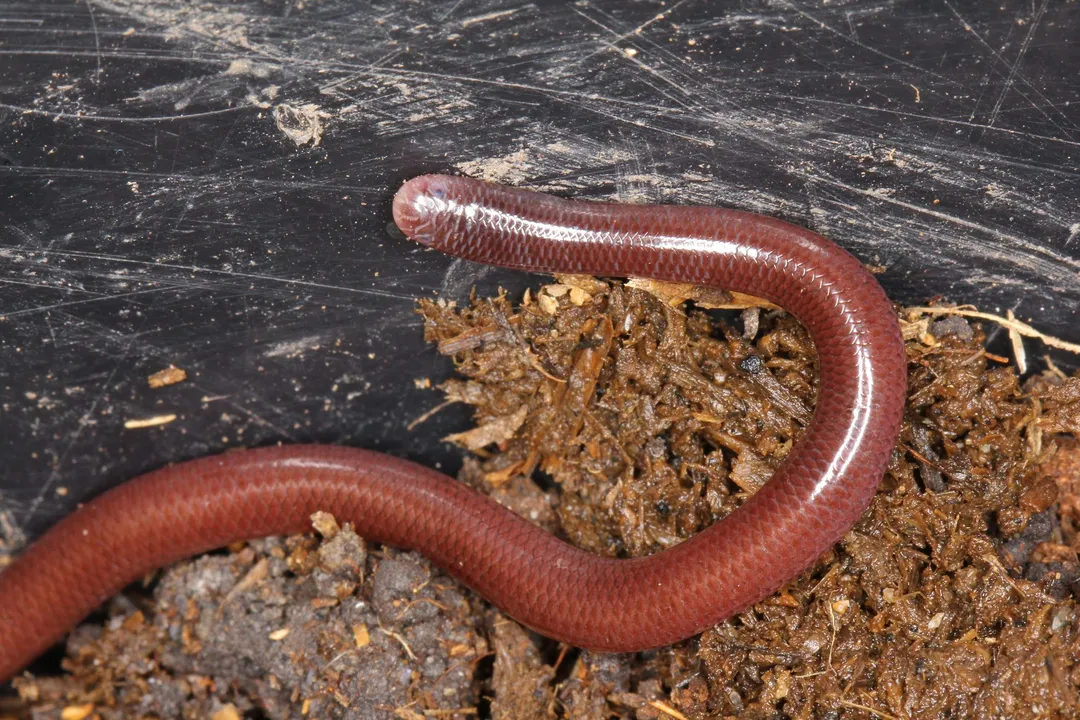
A critical point for differentiation, especially when considering human interaction, is the venom status and corresponding head morphology. The Western Blind Snake is non-venomous, and this is visually supported by its head shape. Unlike many venomous snakes, particularly pit vipers, which often exhibit a distinct, broad, and triangular head shape—a feature sometimes related to accommodating venom glands—the *Rena humilis* possesses a rudimentary head that is not distinctly separated from its neck, maintaining a uniform profile.
Related Questions
What common objects compare to the diameter of the slender Western Blind Snake?What texture characterizes the scales of *Rena humilis* that aids its subterranean movement?What specific marking is found at the very terminus of the blunt tail of *Rena humilis*?What anatomical feature causes the eyes of the Western Blind Snake to be largely non-visible externally?What common food sources are reflected by the small mouth structure of *Rena humilis*?What coloration feature often distinguishes the belly region of *Rena humilis* from its dorsal side?Which feature distinguishes *Rena humilis* from many pit vipers regarding head shape?What is the generally reported maximum length for adult Western Blind Snakes?How do the scales of *Rena humilis* compare to True Blind Snakes (Typhlopidae) regarding pattern uniformity?What characteristic of the *Rena humilis* head contributes to its rudimentary profile?